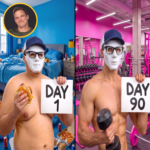
In a recent YouTube interview on the Fitness FAQs channel, exercise scientist Dr. Pak made a bold claim: building muscle takes far less gym time than most lifters assume.
His research centers on the “minimum effective dose” for strength and size.

Numbers he shared surprised even the host.
One sneaky mindset trap, he says, keeps countless lifters grinding without results.
Ready for the catches nobody mentions?
Jump to:
- How Little Is Enough?
- The “Illusion of Optimal”
- Stay on the “Gain Train”
- Progressive Overload Isn’t the Whole Story
- Choosing Your Dose
- Your Body Adapts Faster Than You Think
- Smarter Exercise Selection
- Shorter Workouts, Same Results
- Technique, Injury and Setbacks
- Will Time Off Cost You Gains?
- The Real Downside
- A Simple Way to Start
How Little Is Enough?
Asked for the least exercise that still builds muscle and strength, Dr. Pak answered in one word: very little.

If you want something simple that actually works, this is one of the most effective tools I’ve used to build strength, conditioning, and endurance without needing a full gym setup.
- Full-body training with one weight using swings, squats, and presses
- Solid cast iron build that feels stable and lasts for years
- Comfortable grip that makes high-rep workouts easier to handle
Even with just as little as four fractional sets per week… you are making substantial gains in terms of muscle size.
“Fractional” sets are the key. A bench press counts as a full set for chest, but also as a half set for triceps and front delts.
- Muscle size, 4 fractional sets per muscle weekly: roughly one-third of potential gains.
- Muscle size, closer to 10 sets: almost half of potential gains.
- Strength, one heavy set per exercise weekly: a set of 1 to 5 reps above roughly 80% of your one-rep max can deliver solid progress.
- Strength, four sets per exercise weekly: “really, really solid” gains.
These percentages are rough estimates. Pak himself warns that treating the highest volumes in the literature as a perfect “100%” is a mistake.
The “Illusion of Optimal”
Why does more is better feel so true? Pak points to survivorship bias.
Social media showcases the top 0.1%, people with exceptional genetics who responded fast and became influencers. Everyone else concludes they must be doing something wrong.
The idea that unless you’re doing the maximum that you can do… it’s not worth doing anything.
His reality check: you can become much more muscular than today, yet not look like a magazine cover. Tripling your workload brings extra recovery demands, overuse aches and meticulous planning, often without changing how you look.
Stay on the “Gain Train”
Pak’s core advice: make minimum effective dose your absolute base. Do more whenever time and energy allow.
If you want something simple that actually works, this is one of the most effective tools I’ve used to build strength, conditioning, and endurance without needing a full gym setup.
- Full-body training with one weight using swings, squats, and presses
- Solid cast iron build that feels stable and lasts for years
- Comfortable grip that makes high-rep workouts easier to handle
You could legitimately just ensure that you’re always doing something so you’re always on the gain train.
Newborn at home? A single full-body session of chin-ups and dips still keeps progress alive. Slower, yes. Zero? No.
Who Shouldn’t Default to Low Volume
- Optimizers chasing every last percent
- High-level strength athletes
- Gym lovers who enjoy chasing diminishing returns
For these groups, minimal training works best as a fallback.
Progressive Overload Isn’t the Whole Story
Here comes the twist. Adding weight to the bar is not what makes muscle grow, according to Pak.
Progressive overload is not the input that you apply in order to gain muscle, but rather it’s a result of you adapting to whatever you’re doing.
The real culprit behind stalled progress? Sets finishing far from failure. Telling such lifters to add load works only because they suddenly train hard.
His target: every set at zero to three reps in reserve. Strength also plateaus, he notes. Analyzing Open Powerlifting data, his team saw big early gains, followed by a similar total improvement across a decade.
Another project from his group examines whether PRs predict growth. Over short periods, he says, the answer so far is no. Getting stronger doesn’t automatically mean getting bigger.
If you want something simple that actually works, this is one of the most effective tools I’ve used to build strength, conditioning, and endurance without needing a full gym setup.
- Full-body training with one weight using swings, squats, and presses
- Solid cast iron build that feels stable and lasts for years
- Comfortable grip that makes high-rep workouts easier to handle
The Best-of-Both-Worlds Template
- One heavy single.
- Optional back-off set at 80 to 90% of that single.
- Volume work closer to failure.
Then just do your volume training, and you are absolutely cooking.
Choosing Your Dose
Pak doesn’t believe in wildly individual minimums. Goals and training experience matter more.
- Beginners and intermediates: around four fractional sets per muscle weekly.
- Advanced lifters who care about size: “minimum effective dose plus,” roughly six to ten sets.
Why higher for veterans? Growth slows to maybe half a kilo yearly, so small differences matter more.
Failure matters with fewer sets. In a study from his lab, two reps in reserve and failure both produced great results, though the failure group gained slightly more.
If you’re only going to do it a bit, just yeah, take it to failure.
Your Body Adapts Faster Than You Think
Pak once got wrecked by a few deadlift sets. Chasing a bigger pull, he slowly built up to deadlifting four to six times weekly and felt fine.
Just because you can’t fathom it, it doesn’t mean that it’s not possible.
Soreness often reflects under-exposure, not weak hamstrings. Ramp up gradually, and the body adjusts.
Smarter Exercise Selection
Pak favors movements that train the muscle’s function, feel comfortable and allow close-to-failure effort.
If you want something simple that actually works, this is one of the most effective tools I’ve used to build strength, conditioning, and endurance without needing a full gym setup.
- Full-body training with one weight using swings, squats, and presses
- Solid cast iron build that feels stable and lasts for years
- Comfortable grip that makes high-rep workouts easier to handle
- Machines are “golden.” Skip high-rep hack squats; a leg press for six to eight reps hurts less.
- Bodyweight work is underrated. Hand-assisted pistol squats deliver tons of quad stimulus quickly.
- Variety is fine. Swapping a lat pulldown grip hardly matters.
Technical lifts deserve more patience. Hosts suggested keeping compound barbell or bodyweight staples steady for 8 to 12 weeks, rotating accessories freely.
Shorter Workouts, Same Results
- Pick low-warm-up exercises: chin-ups, dips, deficit push-ups, pistol squats.
- Use agonist-antagonist supersets: a chest press paired with dumbbell rows saves equipment hogging and time.
- Add drop sets on stack machines: failure, 20% drop, failure, repeat.
A chin-up, dip and lateral raise triset could tick many boxes in 10 to 15 minutes, Pak suggests.
Rest Less Than You Think
A recent meta-analysis from Pak’s group indicates around 1.5 minutes maximizes growth. Longer is fine; under one minute isn’t ideal but doesn’t destroy progress.
In another study, self-selected rest took about 40% more gym time than fixed two-minute rests, yet produced identical gains. Squats and hinges may deserve longer breaks, but small muscle groups rarely need them.
Technique, Injury and Setbacks
Pak claims there’s no direct evidence that minor deviations from textbook form cause injury. His caveat: suddenly lifting very heavy in an unfamiliar position can go wrong.
You will get it. No matter the technique, no matter what.
Load management matters most. Pain after six weeks of heavy benching isn’t proof something’s broken, just that your workload rose.
If you want something simple that actually works, this is one of the most effective tools I’ve used to build strength, conditioning, and endurance without needing a full gym setup.
- Full-body training with one weight using swings, squats, and presses
- Solid cast iron build that feels stable and lasts for years
- Comfortable grip that makes high-rep workouts easier to handle
The Fitness FAQs host, a physiotherapist, agreed, adding that time alone solves plenty. Persistent or severe pain still deserves professional attention.
Will Time Off Cost You Gains?
Not really. A week away shows no effect on hypertrophy, per Pak’s reading of the literature.
In a classic study, people who rested three weeks out of every six still made top gains, though continuous trainers gained more. Past two weeks, expect looking flatter and losing some strength.
It’s all going to come back.
The Real Downside
Is minimum enough for the mind? Pak’s honest answer: probably not, if you love the gym.
If you have more time to spend, spend it in the gym. Happy days.
Lost interest in lifting? Pursue other hobbies guilt-free. Loving it? Train more; it needn’t carry deeper meaning.
A Simple Way to Start
- Hit four fractional sets per muscle weekly as your floor.
- Push sets to zero to three reps in reserve.
- Choose comfortable, low-setup exercises.
- Add sets gradually when time allows.
- Prioritize consistency over perfection.
Pak also released a book on this approach, Train Smarter, Not Longer, available at trainsmarternotlonger.com.
If you want something simple that actually works, this is one of the most effective tools I’ve used to build strength, conditioning, and endurance without needing a full gym setup.
- Full-body training with one weight using swings, squats, and presses
- Solid cast iron build that feels stable and lasts for years
- Comfortable grip that makes high-rep workouts easier to handle