You’ve probably heard that strength training is important—but few realize just how central it is to every other physical quality you might want.
Whether your goal is to run marathons, cycle long distances, or simply feel confident lifting groceries, your progress hinges on one thing: strength.
In a thought-provoking discussion, strength coach and StrongFirst founder Pavel Tsatsouline explained why strength is the “mother quality” of all fitness.
He highlighted not only its importance for athletes across disciplines but also for everyday individuals who want to live a capable, pain-free life.
This article unpacks Pavel’s philosophies and gives practical advice for building a minimalist yet powerful strength training routine—one that boosts performance, health, and longevity, without unnecessary complexity.
Jump to:
- Strength Is the Foundation of All Physical Abilities
- How Much Strength Do You Need?
- First, Become Mobile and Symmetrical
- Minimalist Strength Training: Less is More
- The Best Exercises to Build Whole-Body Strength
- What About Hypertrophy and Aesthetics?
- Putting It All Together: A Minimalist Weekly Program
- Final Thoughts: Strength First, Always
Strength Is the Foundation of All Physical Abilities
“Strength is the mother quality of all the other qualities,” said Tsatsouline. Without it, you simply can’t build endurance, speed, agility, or even mobility effectively. Regardless of your sport or activity level, being stronger makes everything easier.
Supporting this, research has shown that runners and cyclists who follow a heavy, low-rep strength regimen actually improve their race times—even though the training doesn’t add significant muscle mass. This type of training enhances neurological efficiency rather than size.
It’s about teaching your nervous system to recruit more muscle fibers more efficiently. The result? Greater force production with less effort—exactly what you want whether sprinting, climbing stairs, or carrying groceries.
How Much Strength Do You Need?
Of course, the needed level of strength depends on your goals. A powerlifter will require more raw strength than a marathon runner, but both benefit from a foundational base. Drawing from Soviet sports science, they once built a model athlete profile for each discipline based on measurable strength standards—like squat and vertical jump benchmarks—to assess athletic potential.
For the non-competitive enthusiast, consider using military or law enforcement PT standards as a benchmark. Meeting those standards ensures you’re not just fit by appearance, but also in function.
First, Become Mobile and Symmetrical
Before building strength, make sure you’re capable of moving well. In Pavel’s words, “As long as you’re mobile and symmetrical… strength has to be your priority.”
This idea aligns with the work of physical therapist Gray Cook, whose Functional Movement Screen (FMS) assesses fundamental movement patterns. Only after you’ve addressed basic asymmetries or restrictions is it wise to load the body heavily.
Minimalist Strength Training: Less is More
According to Pavel, most people complicate training unnecessarily. You don’t need a vast list of exercises—you need a few that offer the most return per rep. These should be:
- Safe: Don’t aggravate joints or previous injuries.
- Simple: Easy to coach and consistent to perform.
- Scalable: Able to be progressed in load or difficulty.
- Transferable: Build strength that carries over into life and sport.
The Best Exercises to Build Whole-Body Strength
Whether using barbells, kettlebells, or bodyweight, there are cornerstone exercises that stand the test of time. Pavel’s top picks include:
1. Narrow-Stance Sumo Deadlift
Often demonstrated by elite lifters like Ed Coan, the narrow sumo deadlift teaches critical movement: the hip hinge. It’s vital for protecting the back and powering through everyday tasks. Importantly, the narrow stance is more transportable to general fitness than the wide sumo, which is highly specialized.
Learn the hip hinge first—this movement is the cornerstone of everything from kettlebell swings to deadlifts. It’s also a core component for back health, a point emphasized by spine expert Dr. Stuart McGill.
2. Zercher Squat
The Zercher squat—holding a barbell in the crook of your elbows—offers a surprising array of benefits:
- Builds full-body tension and core stabilization
- Accessible even for people with shoulder or wrist issues
- Reinforces upright posture and powerful leg drive
It’s a forgiving alternative to the back or front squat and quickly teaches athletes how to “get tight” in the midsection, improving stability and strength transfer.
3. Bench Press
Often maligned by association with gym “bros,” the bench press is still a fantastic strength-builder when used wisely. Unlike more technical pressing movements, the bench press allows you to gain strength with relatively little training volume.
Just a few sets per week—such as 3×5—can deliver measurable improvements, particularly when paired with balanced pulling work like rows or pull-ups.
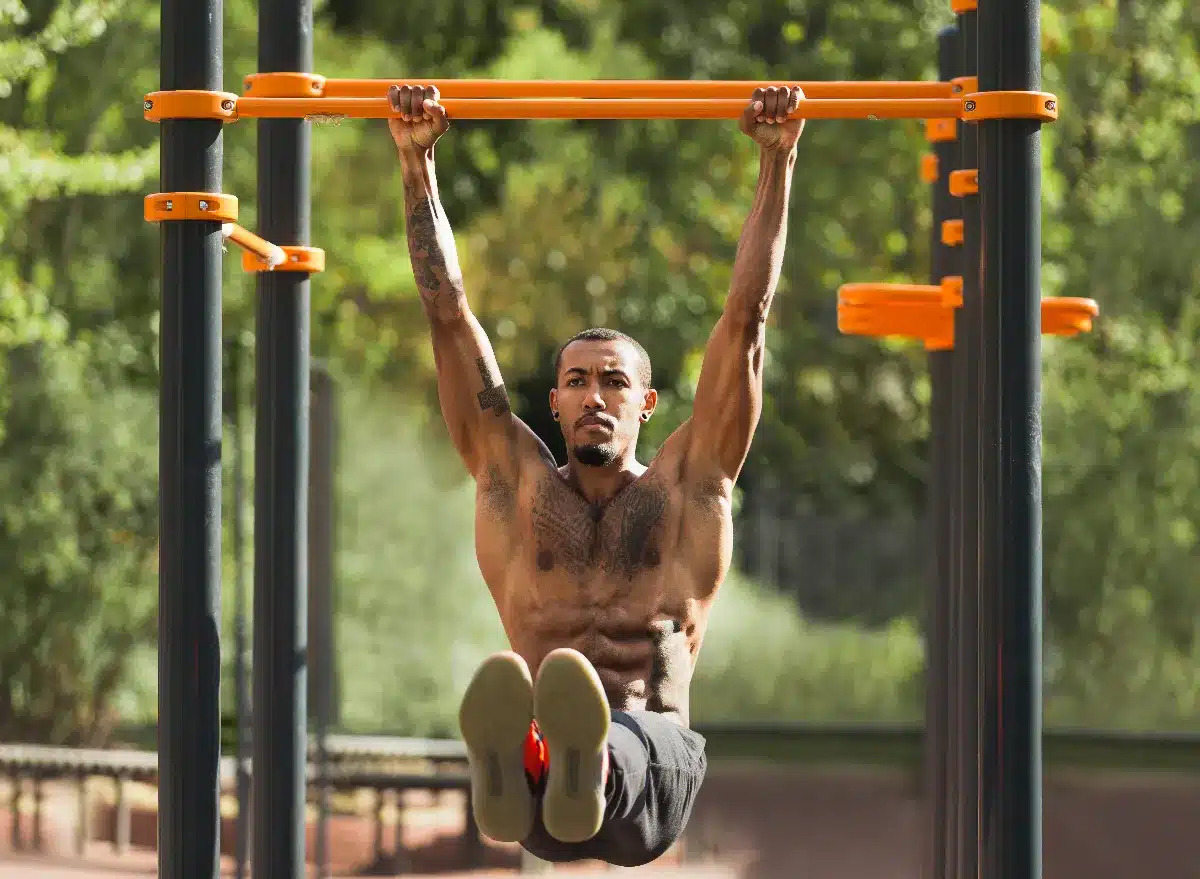
4. Pull-Ups and Dips
Pavel called pull-ups one of the best general strength exercises because they carry over into nearly every movement in life and sport. Same for dips, though they require stronger shoulders and may not be suitable for everyone.
“Pull-ups… you are going to get a carryover far beyond these exercises, which is exactly the reason you do them,” Pavel explained.
For dips, once you move past 15–20 repetitions, it starts shifting toward endurance. Instead, keep them in the strength rep range (5–8 reps) and load them with weight if necessary for continued progress.
What About Hypertrophy and Aesthetics?
Not everyone wants to get big. Many people, both men and women, seek a lean, athletic build. According to Pavel, keeping reps low and the total volume modest helps maximize strength gains without excessive muscle growth.
“Anything over six reps is bodybuilding,” he quoted from strength athletes of the old school. While not literally true, this approach helps separate size-focused training from pure strength development.
Putting It All Together: A Minimalist Weekly Program
With the right selection of exercises, you can develop multiple physical qualities in minimal time. Here’s a sample weekly plan using movements Pavel endorsed:
- Day 1: Lower Body Focus
- Sumo Deadlift – 3×5
- Zercher Squat – 3×5
- Hinge accessory (e.g., kettlebell swing) – 3×10
- Day 2: Upper Body Focus
- Pull-up – 3×5 or to failure
- Dips – 3×5–8 (weighted if needed)
- Bench Press – 3×5
Even training just twice a week with purposeful effort can produce profound results for general health, strength, and capability.
Final Thoughts: Strength First, Always
Whether you want to compete, look good, or just live with more energy and confidence, strength is the key that unlocks those doors. Train it smart, minimal, and consistently—and it will transform every aspect of your fitness.
As Pavel reminds us, “Find several exercises that you enjoy, that don’t hurt you, that you have the equipment for, and that you received proper coaching for—and stick with them.”
In a world overloaded with fitness fads and influencers pretending at novelty, going back to basics might be the most radical move of all.