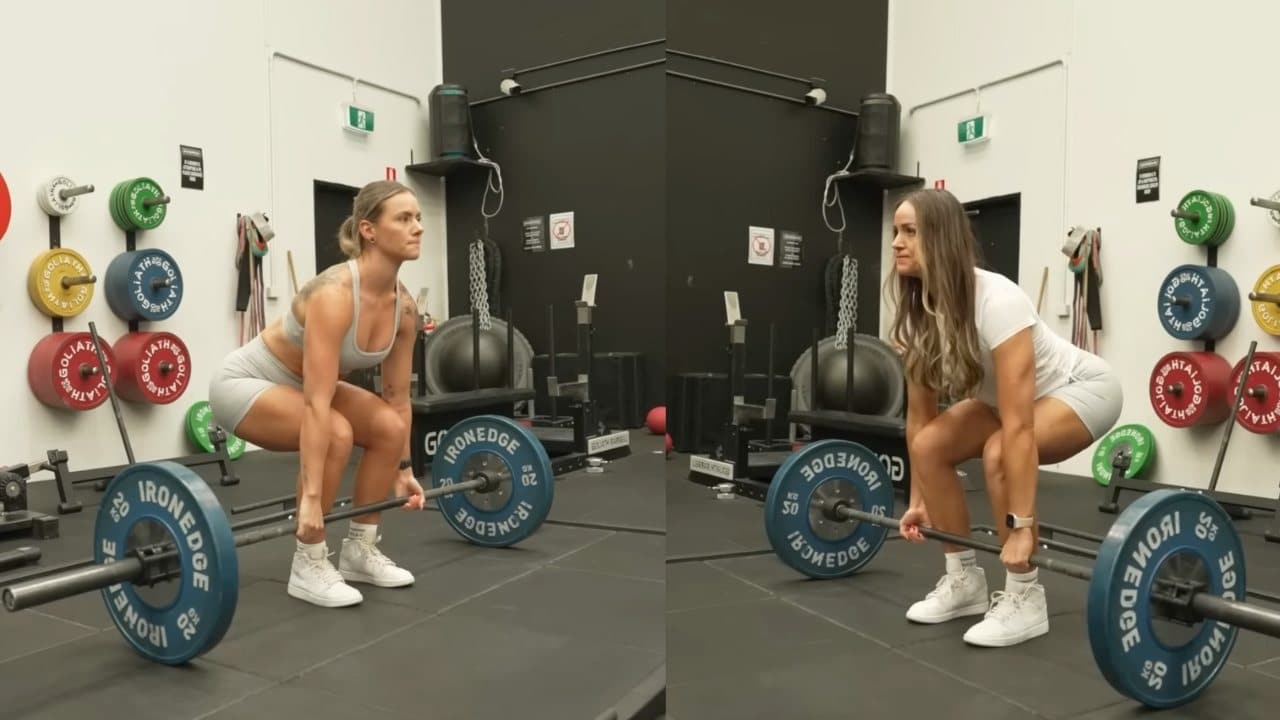
Not everyone should deadlift the same way. Your body—specifically your limb and torso lengths—can change how you should set up and pull.
In this guide from Squat University, you’ll learn how to tweak your deadlift based on your build for more power and less risk of injury.
You’ll also discover a simple test to find out if conventional or sumo fits you best. Plus, tips from powerlifting legend Ed Coan to lock in better form.
Ready to stop forcing positions that don’t fit your body?
Jump to:
The 3 Deadlift Rules That Apply to Everyone
Regardless of body type, every lifter should follow three core principles in their deadlift starting position:
- Barbell over midfoot
- Shoulders (posterior deltoid) aligned over the bar
- Bar in contact with shins
These fundamentals create the most biomechanically efficient setup. Even elite strongmen with extreme proportions apply them to lift safely and effectively.
But while these rules stay constant, how you achieve this position can vary dramatically depending on your anatomy.
How Limb and Torso Length Impact Deadlift Setup
Your body is essentially a system of levers. The length of your legs, torso, and arms influences your joint angles and muscle activation in the deadlift.
Measuring Your Anatomy
Use a measuring tape to get your individual proportions:
- Torso Length: From your hip bone to the top of your head
- Leg Length: From the same hip bone down to the floor
- Arm Length: From the shoulder (humeral head) to the tip of your middle finger
Now, plug those numbers into this key formula from a 2020 study published in Frontiers in Sports and Active Living to see which category you fall into:
If your arms account for significantly more or less than 38% of your total body height, this can influence your ideal deadlift stance.
Long Torso, Short Legs
If you have a long torso and short legs, your hips will naturally start lower in the setup. That’s because your torso has to angle more upright to keep the shoulders over the bar. Your knees will bend deeper, shifting more emphasis to your quads and leg drive.
Short Torso, Long Legs
Lifters with long legs and a short torso will need to position their hips higher to keep the shoulder-bar alignment. This often results in a more horizontal back angle, which can feel more stressful on the lower back—but isn’t inherently dangerous if done properly.
Is a More Horizontal Back Risky?
A common concern with a higher-hipped setup is the increased spinal loading due to a flatter back angle. But this doesn’t automatically mean danger.
If you apply two key steps, you can protect your spine and lift heavy safely:
1. Brace the Core Effectively
Proper bracing minimizes spinal movement. Here’s a quick self-test:
- Stick your fingers into the sides of your abdomen.
- Take a deep breath that expands your torso sideways and pushes your fingers out.
- Tighten your abs without sucking in — aim for maximum stiffness, like preparing to take a punch.
This intra-abdominal pressure creates a solid base for your spine.
2. Preload the Hips
As powerlifting legend Ed Coan explains:
“As I grab the bar and pull the tension out, every muscle from my neck to my lower back gets pulled tight… I try to wiggle my hips in closer under tension so my glutes are ready to explode.”
Pre-tensioning the glutes and engaging your entire posterior chain before the bar moves prevents the hips from shooting up too early—a common form breakdown that overloads the lower back.
Conventional vs. Sumo: Which Style Is Right for You?
Let’s clear this up right away: Sumo is not cheating. It’s a legal variation in powerlifting, and each style offers different challenges.
What the Research Says
- Conventional deadlift activates more posterior chain muscles like the hamstrings, glutes, and spinal erectors.
- Sumo deadlift shifts load to the quads, adductors, and requires more hip mobility but less torso lean.
The best choice comes down to what suits your anatomy and feels natural.
Arm Length Matters
If your arms are longer than 38% of your height, conventional may feel easier. Less torso lean is needed, and the bar travels a shorter distance.
If your arms are shorter, sumo might suit you better. The more upright position reduces the back angle and makes it easier to keep a neutral spine.
When Either Works
People with average limb proportions can usually train both. In fact, rotating between sumo and conventional during training blocks may even help reduce overuse injuries and build a more balanced posterior chain.
Final Takeaway: Train Smart for Your Frame
Your skeleton determines your potential setup — not Instagram form checks.
Instead of forcing a textbook posture, adjust your hip height, stance, and technique based on your actual proportions. Here’s how to figure it out:
- Measure your torso, leg, and arm length
- Try both sumo and conventional using the three universal rules
- Pay attention to what feels strong, safe, and natural
If you’re struggling with chronic aches or technique issues, resources like Rebuilding Milo by Dr. Aaron Horschig can guide you through corrective exercises based on your unique movement patterns.
Ultimately, deadlifting isn’t one-size-fits-all. It’s about finding your best leverage and building strength on that foundation.