Fitness after 40 doesn’t require complicated routines or expensive supplements.
In fact, most men spinning their wheels with overcomplicated programs are doing too much of what doesn’t work and not enough of what actually matters.
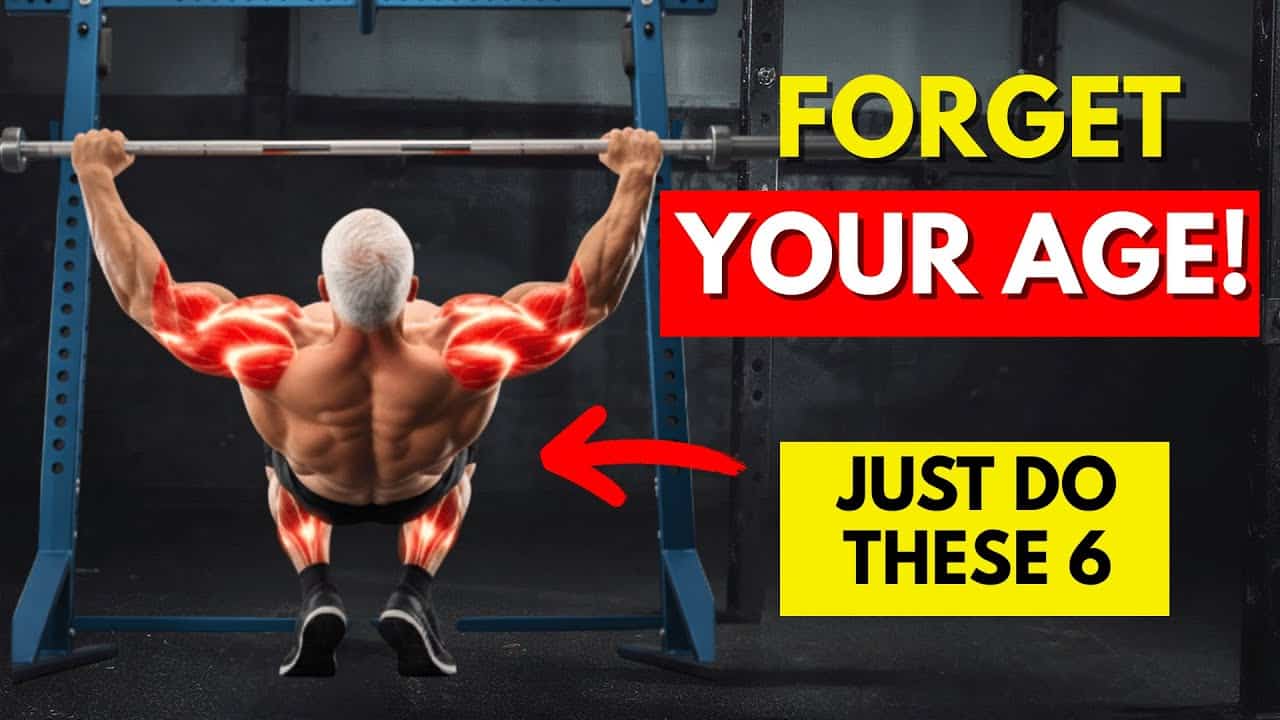
Recent fitness guidance suggests that just six foundational movements can build more muscle, strength, and vitality than dozens of random exercises ever could.
These primal movements force bodies to adapt, grow, and become resilient against aging—without fancy machines or 12-exercise split routines.
Jump to:
Single Leg RDL: Building Real-World Strength
Every time someone bends down to pick up groceries, reaches for something on the floor, or walks upstairs, they’re performing a variation of the single leg Romanian deadlift. This movement isn’t just another exercise—it’s a blueprint for how bodies move through daily life.
The single leg RDL delivers deep functional strength that translates into explosive power. It hammers hamstrings and glutes while simultaneously improving balance and stability, which becomes increasingly crucial with age.
The core gets torched without a single crunch because the entire midsection must fire up to maintain stability on one leg.
Proper Form and Progression
Stand on one leg with a slight knee bend, then hinge forward at the hips while the opposite leg extends straight back. The body should resemble a seesaw—as the torso descends, the back leg rises.
Keep the back flat, not rounded, and feel that hamstring stretch. Start with bodyweight for three sets of eight reps per leg.
Once comfortable, grab a dumbbell in the opposite hand of the standing leg. Progress by adding weight gradually—about five pounds every couple weeks—or by slowing the tempo to three seconds down, three seconds up.
For those struggling with balance initially, lightly touching a wall or chair with fingertips provides support until stability improves. From there, variations like the B-stance RDL (where the back foot lightly taps the ground) or holding kettlebells in both hands offer additional challenges.
Squats: The King of Lower Body Movements
Decades of sitting in chairs has left most men with hips tighter than rusty bolts and knees that sound like Rice Krispies. But squatting remains fundamental—every toilet sit, car exit, or floor play with kids requires this pattern.
If someone can’t squat properly, they’re not just losing muscle-building potential—they’re literally losing independence as they age.
Squats hit quads, glutes, hamstrings, and core simultaneously, forcing bodies to produce growth hormone and testosterone. They bulletproof knees by strengthening surrounding connective tissue, improve bone density, and teach bodies to move as coordinated units rather than collections of separate parts.
Starting With Goblet Squats
Begin with a goblet squat, holding a dumbbell or kettlebell at chest height—25 to 35 pounds depending on current strength. Position feet shoulder-width apart with toes slightly pointed out.
While descending, think about sitting back into a chair while keeping the chest proud and weight on heels. Descend until thighs reach at least parallel to the ground, then drive through heels to stand.
- Starting point: Three sets of 10-12 reps
- Progression: Advance to barbell back squats or front squats
- Focus: Gradually add weight while maintaining tight, controlled form
Calf Raises: The Overlooked Foundation
Calves carry people through life—every step, every day. Whether walking to cars, running to catch elevators, or standing at barbecues, lower leg muscles work nonstop to maintain upright movement.
Weak calves mean poor ankle stability, leading to rolled ankles, knee problems, and that shuffling gait nobody wants. Beyond aesthetics, strong calves improve athletic performance in jumping, running, and changing direction. They enhance balance and proprioception while improving circulation in lower legs.
Stand on the edge of a step with just the balls of feet on the surface and heels hanging off. Hold something for balance, then raise up onto toes as high as possible, squeezing at the top for one second. Lower heels below step level for a deep stretch.
Perform three sets of 15-20 reps with bodyweight initially, focusing on smooth, controlled movement. Once this becomes easy, add a weighted backpack or hold a dumbbell while performing single-leg calf raises, starting with 20-25 pounds.
Inverted Rows: Balancing Push With Pull
Most men spend days pushing—keyboards, shopping carts, themselves out of bed. But bodies weren’t designed to only push; they need to pull equally.
Inverted rows mimic the movement pattern used when climbing over fences, pulling out of pools, or dragging heavy objects. This exercise builds back, rear delts, and biceps while correcting hunched-over posture developed from years at desks.
The movement strengthens rhomboids and mid-traps—muscles between shoulder blades that pull shoulders back and down, creating taller, more confident posture.
Setup and Execution
Position a sturdy table, Smith machine bar, or TRX straps at waist height. Lie underneath, grab the bar with hands slightly wider than shoulder-width, and create a straight line from heels to head.
Pull chest to bar by squeezing shoulder blades together, keeping elbows close to body. Lower back down with control.
Start with the bar higher (easier) for three sets of 8-10 reps. As strength increases, lower the bar closer to ground to increase difficulty. Eventually, perform these nearly horizontal for maximum challenge.
Push-Ups: The Complete Upper Body Movement
Push-ups aren’t basic exercises to outgrow—they’re one of the most complete upper body movements available. This ancient exercise has built warriors, athletes, and strong men for thousands of years.
Beyond engaging chest, shoulders, and triceps, proper push-ups activate core and even legs when performed correctly. They build functional pressing strength that transfers to real life—pushing stuck doors, moving furniture, or getting up off floors.
Research shows that guys who can bang out 40-plus push-ups have significantly lower risk of heart disease.
Push-ups build shoulder stability and core strength simultaneously, teaching bodies to generate force while maintaining rigid, neutral spines. Because practitioners move their bodies through space rather than just pushing barbells, they develop better body awareness and control.
Perfect Form Protocol
Get into plank position with hands directly under shoulders, feet together, and body forming one straight line from head to heels—no sagging hips or elevated butts.
Lower down until chest almost touches ground, keeping elbows at approximately 45-degree angles from body, not flared to sides. Press back up explosively.
For those unable to perform full push-ups yet, start on knees or against walls/countertops. Shoot for three sets of maximum reps with good form. As strength builds, aim for three sets of 15-20 reps, then explore variations like diamond push-ups (tricep emphasis), wide grip (chest emphasis), or decline push-ups with elevated feet.
Mountain Climbers: Cardio Meets Core
Mountain climbers might look like running in place during a plank, but they combine cardio, core work, and functional movement into one explosive package. Pure strength without conditioning rarely applies to real life—whether chasing escaped dogs, sprinting to catch flights, or keeping up with daily demands.
This movement torches calories while simultaneously building core endurance, hip flexor strength, and shoulder stability. Heart rates spike quickly because practitioners essentially perform high-intensity cardio while holding planks.
Mountain climbers improve coordination and agility, forcing brains and bodies to work together at speed. Because of the plank position, practitioners constantly fight to keep hips level and cores tight, building anti-rotation strength that protects lower backs during everyday movements.
Execution Without Flopping
Start in solid plank position with hands under shoulders and body in straight line. Drive one knee toward chest, then quickly switch legs like running—but keep hips low and core engaged.
Don’t let the butt bounce up and down. Begin with three sets of 20 seconds, focusing on controlled movement rather than sloppy speed.
As conditioning improves over coming weeks, increase to 30-40 second intervals. Eventually add variations like crossbody mountain climbers (driving knees toward opposite elbows) or slow mountain climbers (holding each position for a count) to emphasize core control.
Making the Choice
Six exercises can completely transform bodies after 40. The real question: what happens with this information?
Men can close this article and forget everything, or they can take action today. Which version will they be six months from now—the guy who knew what to do but didn’t, or the guy who’s stronger, leaner, and more capable than ever?
Bodies are ready to grow. The only question is whether people are ready to show up and do the work.