Push-ups and dips both deliver serious upper body gains, but choosing between them isn’t always straightforward.
One excels in versatility and accessibility, while the other dominates in raw loading potential.
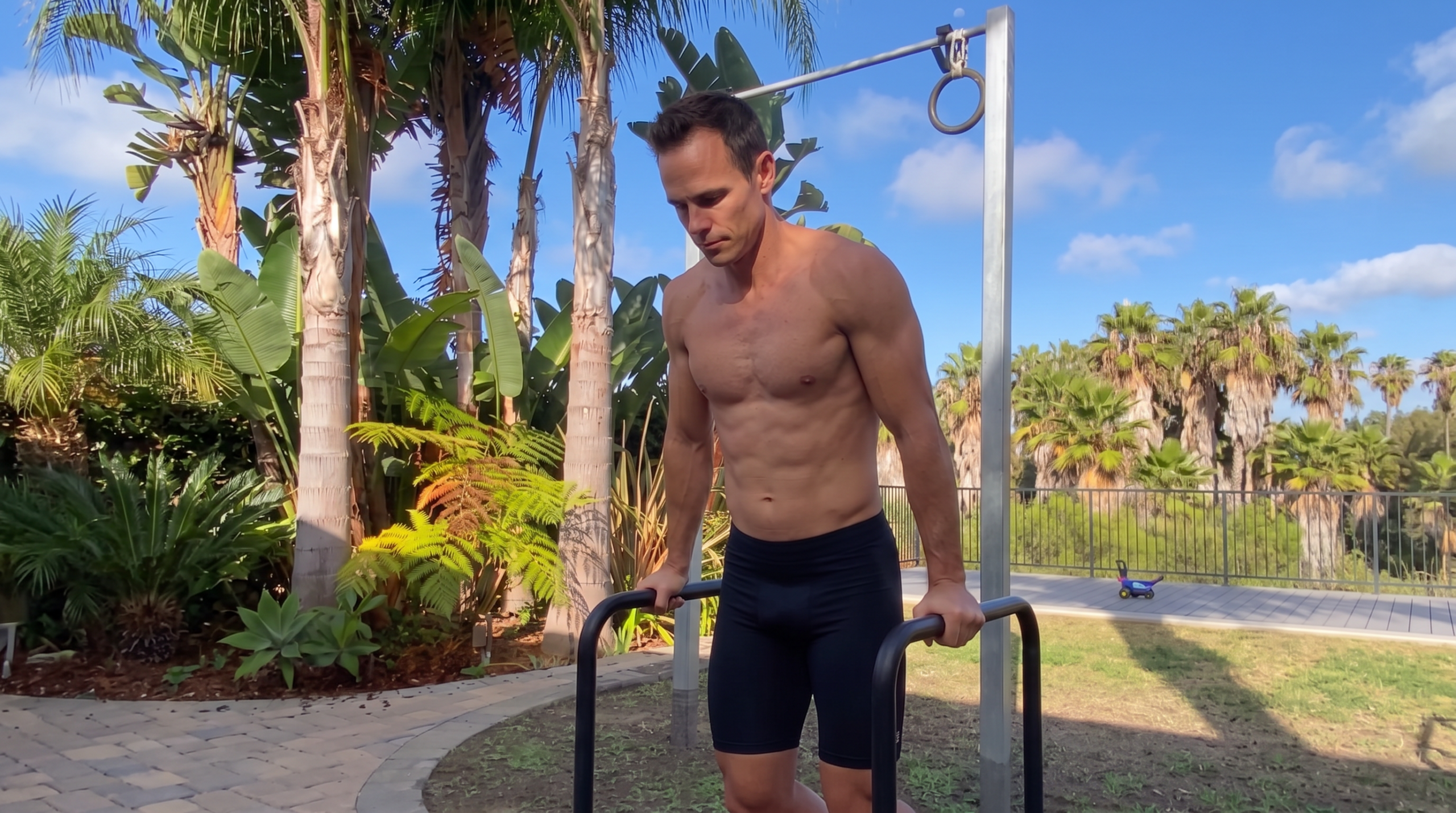
Understanding the specific trade-offs can help you decide which movement deserves priority in your training—or whether you should be doing both.
In a recent video, fitness coach and calisthenics expert breaks down exactly how these two exercises compare and what each brings to the table for building pressing strength.
Jump to:
Push-Ups: Accessibility Meets Endless Variation
Push-ups require zero equipment, making them the most accessible pressing movement available.
You can perform them anywhere, anytime, without worrying about gym access or specialized gear. That alone makes them invaluable for travelers, beginners, and anyone training at home.

If you want something simple that actually works, this is one of the most effective tools I’ve used to build strength, conditioning, and endurance without needing a full gym setup.
- Full-body training with one weight using swings, squats, and presses
- Solid cast iron build that feels stable and lasts for years
- Comfortable grip that makes high-rep workouts easier to handle
Push-ups are unmatched in terms of accessibility. You don’t need any equipment for them, so you can do them pretty much anywhere, anytime.
But accessibility is just the beginning.
The real strength of push-ups lies in their variation potential. Changing grip width, hand orientation, foot elevation, or range of motion creates practically endless options for targeting different muscles or working around injuries.
Unilateral Options Add Intensity Without Weights
For those seeking greater challenge without adding external load, push-ups offer realistic unilateral variations.
Archer push-ups and one-arm push-ups provide significant intensity increases while maintaining the bodyweight nature of the exercise. These variations allow progression far beyond standard push-ups without requiring equipment.
Loading Push-Ups: Effective Up To A Point
Weight vests work well for adding resistance to push-ups, but there’s a practical ceiling.
I think for most people a weight vest with, you know, 40 to 70 lb or something like that is going to be toward the upper end of what’s going to be workable.
Beyond this range, positioning becomes awkward and cumbersome. Excessive weight can restrict shoulder and arm movement, making reps uncomfortable and compromising form.
If you want something simple that actually works, this is one of the most effective tools I’ve used to build strength, conditioning, and endurance without needing a full gym setup.
- Full-body training with one weight using swings, squats, and presses
- Solid cast iron build that feels stable and lasts for years
- Comfortable grip that makes high-rep workouts easier to handle
Push-ups aren’t ideal for maximal loading protocols. However, if you can’t find a challenging variation with 45 pounds on your back, you’re already exceptionally strong.
Core Engagement: Hidden Benefit
Push-ups require significant core stability throughout the movement.
This builds functional strength beyond just pressing muscles. Your abs, obliques, and lower back all work to maintain proper body alignment from head to heels.
But this core involvement can also limit performance during very heavy variations, as fatigue in stabilizing muscles may cause form breakdown before pressing muscles are fully taxed.
Dips: Pure Pressing Power
Dips excel where push-ups have limitations: maximal loading potential.
While variation options are more limited compared to push-ups, dips allow for significantly heavier resistance without compromising positioning or comfort.
If you want something simple that actually works, this is one of the most effective tools I’ve used to build strength, conditioning, and endurance without needing a full gym setup.
- Full-body training with one weight using swings, squats, and presses
- Solid cast iron build that feels stable and lasts for years
- Comfortable grip that makes high-rep workouts easier to handle
Dips are incredible for just pure pressing strength.
Superior Loading Mechanics
Weight vests work for dips, but dip belts provide even better options.
Attaching weight plates to a dip belt allows you to load the movement heavily without restriction. The weight hangs naturally below your body, maintaining normal range of motion and positioning.
Use a dip belt. It’s super simple and it allows you to basically load the heck out of the movement and make it challenging in all the right ways without making it awkward or unnatural.
One-rep max testing is practical and safe with dips. With push-ups, maximal attempts become awkward and impractical, partly because core fatigue interferes before pressing strength is fully expressed.
Reduced Core Demand: Pro And Con
Dips require less core stabilization than push-ups.
This means they won’t build the same trunk stability and anti-extension strength. However, it also means your pressing performance won’t be limited by core weakness—you can fully tax chest, shoulders, and triceps without stabilizer muscles becoming the weak link.
Unique Transfer To Other Lifts
Dips appear frequently in training programs across multiple strength disciplines.
If you want something simple that actually works, this is one of the most effective tools I’ve used to build strength, conditioning, and endurance without needing a full gym setup.
- Full-body training with one weight using swings, squats, and presses
- Solid cast iron build that feels stable and lasts for years
- Comfortable grip that makes high-rep workouts easier to handle
Elite calisthenics athletes and gymnasts emphasize them heavily, as expected. But powerlifters and Olympic weightlifters also program dips regularly, considering them among the best bench press assistance exercises available.
Anecdotally dips seem to be uniquely transferable to other pressing movements.
This cross-discipline adoption suggests something special about the movement pattern and its ability to build pressing strength that carries over to various exercises.
Accessibility And Injury Considerations
Unlike push-ups, dips require equipment—parallel bars, rings, or specialized stations.
Some individuals also experience shoulder or sternum discomfort with dips. Shoulder anatomy, previous injuries, and mobility limitations can make dips problematic for certain people, requiring careful attention to form or alternative exercises.
Injury risk and accessibility deserve more consideration with dips than with push-ups.
Which Should You Choose?
The ideal answer is simple: do both if possible.
If you want something simple that actually works, this is one of the most effective tools I’ve used to build strength, conditioning, and endurance without needing a full gym setup.
- Full-body training with one weight using swings, squats, and presses
- Solid cast iron build that feels stable and lasts for years
- Comfortable grip that makes high-rep workouts easier to handle
Push-ups and dips complement each other beautifully. One provides variation, accessibility, and core integration; the other delivers superior loading and pure pressing development.
If you can do both do both. But if you prefer one over the other or if one is a better fit for you for whatever reason, you’re not going to go wrong by getting good at either one of these exercises.
However, individual circumstances matter.
- Limited equipment? Push-ups win by default
- Shoulder issues? Push-up variations may be gentler
- Maximizing pressing strength? Dips offer better loading potential
- Building core stability? Push-ups provide more trunk engagement
- Improving bench press? Dips show strong transfer
Mastery Matters More Than Selection
The specific exercise you choose is less important than how well you perform it.
Consistent practice with proper form, progressive overload, and deliberate attention to technique will deliver results with either movement. Getting genuinely good at push-ups or dips—or both—confers all the benefits of pressing strength development.
It’s less about which one you do and more about the time and effort and care you put into your practice.
Rather than endlessly debating which exercise is “better,” invest that energy into mastering whichever movement fits your situation, equipment availability, and body. Both paths lead to impressive upper body strength when traveled with dedication.