Skipping might seem like child’s play, but this simple movement pattern could be one of the most underutilized training tools for adults.
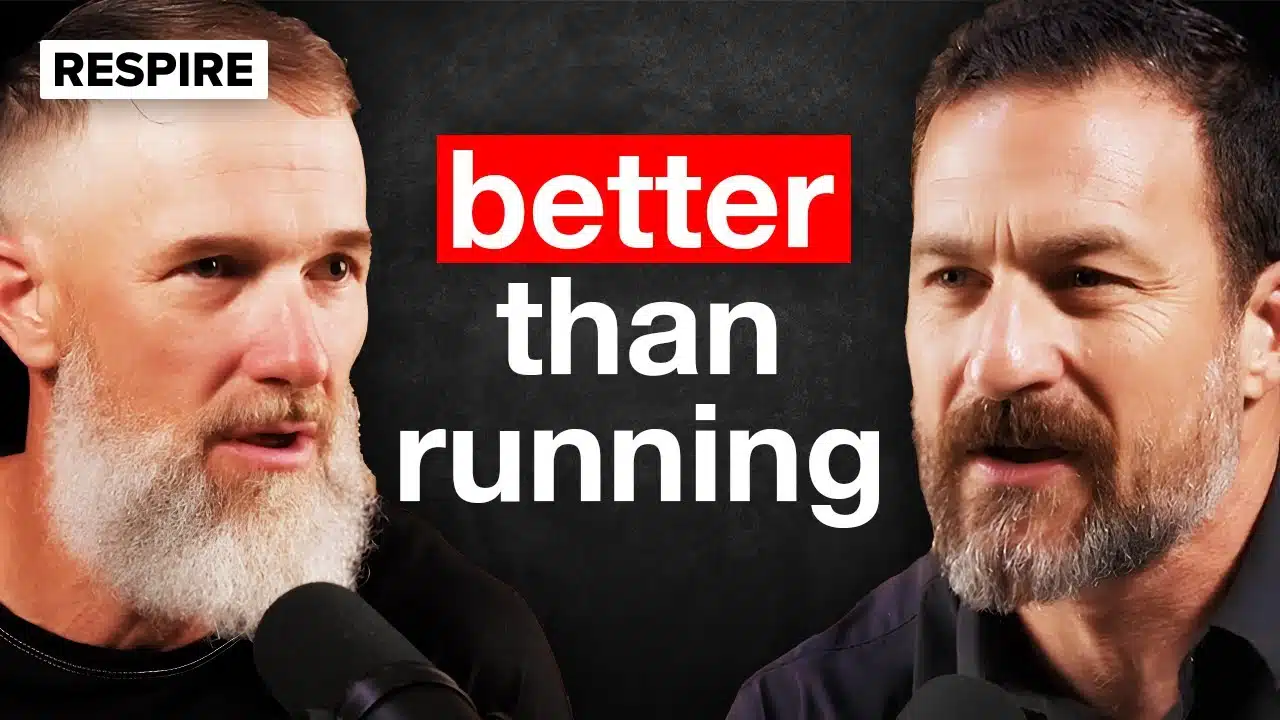
In a recent conversation, renowned speed and movement coach Ryan Flaherty explained why he has professional athletes skip regularly—and why everyday people should too.
The benefits go far beyond cardio, touching everything from joint health to coordination, posture, and even brain function.
Most importantly? It just feels incredible.
Jump to:
Why Most Adults Can’t Sprint Anymore
Flaherty gets straight to the heart of the problem: most people stop sprinting after childhood, and by their 30s and 40s, their bodies can’t handle it anymore.
We know that the movement of sprinting or running fast and we kind of know what this does and why this is good for you. Moving our body with intensity is probably something we should be able to do for as long as we possibly can, but we can’t because typically we’ve still got pretty good engines into our 30s and 40s and 50s, but we don’t have the bodies to be able to handle the stresses and the forces that this engine could put into the body.
The issue isn’t cardiovascular fitness—it’s tissue and joint capacity. Even with a proper 30-minute warm-up, asking someone to sprint all-out for 50 meters often leads to pulls, strains, or days of feeling terrible.
Our joints and connective tissue simply haven’t been exposed to those forces in years.
Two Safe Alternatives to Sprinting
Flaherty recommends two activities that provide similar benefits without the injury risk:
- Hill sprints: Significantly less stress on tissue and joints compared to flat-ground sprinting
- Skipping: Taxes coordination patterns, tissues, and joints in similar ways to sprinting, but with far less impact
Skipping works the same critical movement pattern—pushing the knee behind the hip, achieving hip extension—that makes sprinting so beneficial.
The Posture Benefits Are Immediate
After a skipping session, participants consistently report feeling taller, more open through the hips, and stronger overall.
I came out of that workout skipping yesterday feeling like my hips were nice and open. Tons of extension. My posture is up. I feel like I grew an inch. I was strong in the gym this morning. I just feel incredible.
This “knee behind butt” pattern creates hip extension, which naturally elevates posture. Sternum lifts, chin comes away from chest, shoulders naturally externalize.
Compare that to typical modern posture: sitting, standing hunched, walking folded forward. Even jogging tends to keep people in this collapsed, forward-falling position.
Skipping essentially reverses all of that.
Beyond Cardio: The Hidden Benefits
Flaherty emphasizes that skipping delivers benefits jogging simply cannot match:
- Plyometric training: Develops explosive power and tendon stiffness
- Fascial conditioning: Improves tissue elasticity and resilience
- Cross-body coordination: Enhances brain function through complex movement patterns
- Expression and rhythm: Encourages movement quality that’s been lost since childhood
While jogging, people rarely think about posture or how they’re holding themselves. Skipping demands presence and expression.
Skipping here’s your opportunity to truly express yourself. Be big and free and open and bouncy and rhythmical. All of these things that were at one point in our lives pretty important to us and we lose.
How to Start Skipping (The Right Way)
Don’t immediately go out for a 10-mile skip. That’s asking for trouble.
Flaherty’s recommended on-ramp is simple: incorporate skipping into existing jogs.
The Integration Method
After jogging about a mile at your normal pace, alternate between 30 seconds of skipping and 30 seconds of jogging (or walking).
I guarantee you that you will feel better with every skip that you do, every single one. Because there’s this self-organizing, coordinative aspect to it where you start feeling a little bit more bouncy, a little lighter, a little bit more coordinated, a little bit more rhythmic, which feeds your jogging.
This approach requires no additional time commitment. You’re simply enhancing your existing cardio routine.
Progression: From Integration to Workout
Once comfortable with basic skipping, progress to making it more powerful and expressive:
- Week 1-2: 30-second skip/jog intervals during normal runs
- Week 3-4: Increase amplitude—drive thigh up and back for greater hip extension
- Week 5+: Dedicated skipping workouts
A Complete Skipping Workout
After proper warm-up (10-15 minutes including low-amplitude skips, jogging, and stretching):
- Skip 50 meters at maximum amplitude
- Walk back to starting point
- Repeat 10-15 times
This standalone workout provides significant plyometric training with dramatically lower injury risk than sprint intervals.
Let’s Normalize Adult Skipping
Flaherty points out that we’ve relegated skipping to “childlike behavior”—yet we don’t say the same about jump rope.
Yes, you might get some honks or odd looks. Flaherty himself skips for 20 minutes every morning on public roads and gets occasional honks.
But the benefits far outweigh any social awkwardness:
- Covers ground quickly
- Elevates heart rate without excessive breathlessness
- Improves posture immediately
- Enhances coordination and brain function
- Builds explosive power safely
- Just feels damn good
The Bottom Line
Flaherty isn’t suggesting people abandon jogging entirely. He still jogs, runs, and incorporates various cardio modalities.
The message is simply: find opportunities to skip.
There’s so much more benefits to skipping than there is to just jogging.
For people overwhelmed by wellness advice—meditate, get sunlight, exercise, now skip too—this actually simplifies things. You’re not adding another task to an endless list.
You’re making your existing cardio more effective, more enjoyable, and more functional.
Whether integrated into jogs or performed as dedicated workouts, skipping offers a rare combination: childhood joy meets elite athletic training, wrapped in a package that’s accessible, safe, and immediately beneficial.
Maybe it’s time adults reclaimed this movement pattern we abandoned too soon.