Slant boards have become a staple for home gym enthusiasts looking to level up their training.
They’re simple, versatile, and surprisingly effective for addressing mobility limitations that hold most people back.
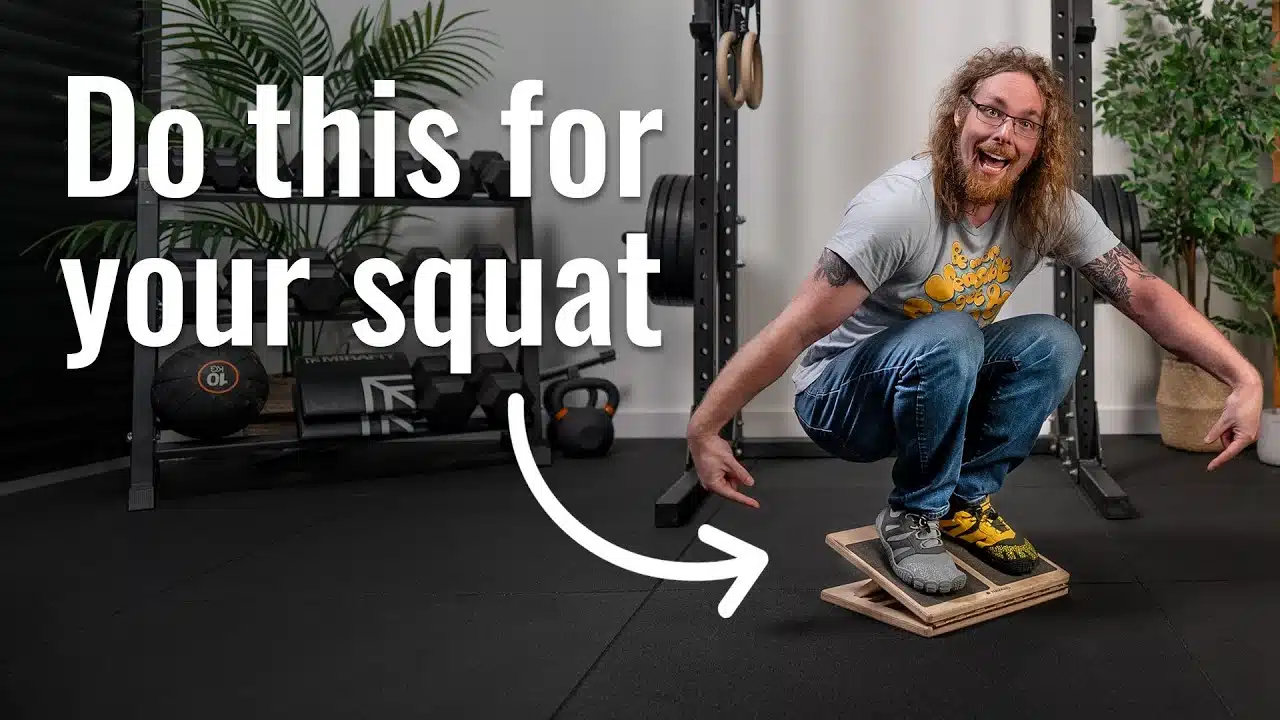
Fitness coach JP recently broke down his three favorite slant board exercises, along with progressions from beginner to advanced that target squat mobility, flexibility, and ankle stability.
Here’s everything you need to know about maximizing this underrated piece of equipment.
Jump to:
Squat Mobility: From Bodyweight to Pistols
Building comfortable, deep squat positions starts with time under tension in the bottom position. JP emphasizes that heel elevation removes ankle flexibility as a limiting factor, making it easier to sit deep without falling backward.
So even if you have really tight hips and you struggle to squat, this is a great way to get time in that bottom position without feeling like you’re going to fall backwards.
The progression begins simply: stand on the board with feet straight forward and lower into a resting squat. Wiggle around, explore the position, but don’t overstay your welcome initially.
Building Strength Through Tempo Work
Once comfortable holding the bottom position, slow controlled reps become the focus. JP recommends incorporating tempo variations and pauses at different depths.
Hovering around halfway is awful to do, which means it’s really good for you.
The key is loading muscles rather than joints. Pull yourself down actively into each position, maintaining tension throughout the entire range of motion.
When 10 controlled reps feel manageable, build up to five sets. Then introduce load with goblet squats, holding a dumbbell in front while maintaining that same quality movement pattern.
Advanced Pistol Squat Progression
Single-leg squats represent the ultimate challenge for balance and stability. JP breaks down the progression methodically, starting with the hardest position first.
- Step 1: Master the bottom position with one leg extended
- Step 2: Practice slow negatives only, lowering for three seconds
- Step 3: Complete full reps once negatives feel controlled
The heel elevation makes pistol squats significantly safer for knee health while reducing spinal stress. JP notes this is now his preferred method for single-leg work.
Taking away the demands of the ankle flexibility in your squat means you won’t need to lean forward as much, which puts less pressure on the spine. So, it’s much safer if you’re someone like me that has disc injuries.
Deep Stretching for Calves and Posterior Chain
Adjusting the slant board to a steeper angle unlocks incredible stretching potential. JP recommends positioning yourself near a wall or stable object for support.
Start by marching feet to warm up, then focus on one leg at a time. Bring hips forward over the elevated foot, going deeper than any stair or door frame stretch could provide.
There is nothing else like it. Like I’ve tried doing this on stairs or against door frames and stuff, but on the slant board it just has that extra bit of traction.
Movement within the stretch is crucial. Twist hips, rock side to side, and explore different angles for 60 seconds per leg. This multi-directional approach addresses how ankles actually function.
Jefferson Curls for Complete Posterior Flexibility
Lower the board slightly for this controversial but effective exercise. With toes pulled upward, the intensity increases dramatically compared to standard floor work.
Begin by walking hands down toward elevated toes. Progress to the full Jefferson curl by tucking chin and rounding through the spine vertebra by vertebra.
Once comfortable, add minimal load—emphasis on minimal. A light dumbbell held in front while slowly peeling down creates controlled spinal flexion under tension.
Critical point: maintain control throughout. Never bounce or force the movement. Five sets of three reps is plenty for loosening the entire posterior chain.
Don’t have an adjustable board? Place a weight plate underneath to create the necessary angle. Just ensure stability before loading it.
Ankle Stability Work Nobody Does (But Should)
Split squats on the slant board allow incredible depth while loading hip and ankle mobility simultaneously. Position front foot on the board and sink down until glutes nearly touch the back ankle.
Push through the rear leg to intensify the hip flexor stretch. Add goblet loading once bodyweight feels controlled.
Eversion and Inversion Training
Here’s where things get interesting. Rotating the board 90 degrees creates lateral instability that challenges ankle stabilizers in ways typical training ignores.
For eversion work, position the board so ankles want to cave inward. Perform split squats while fighting to keep knees aligned with smaller toes. The wobble is the point—it’s building resilience.
Flip the board for inversion training, keeping knees tracking over big toes while ankles try rolling outward. Sets of three slow reps are sufficient.
Ankles are great until they get hurt and then you’re limping around all the time wishing that you didn’t have ankles.
JP doesn’t recommend loading these stability variations. They function as prehab exercises, preparing ankles for unexpected positions during daily life or sport.
Why Ankle Prehab Matters
Controlled exposure to awkward positions creates resilience. When accidental rolls happen, trained ankles might experience minor discomfort rather than complete sprains.
Some ankle sprains require longer recovery than actual fractures. The time invested in prevention dramatically outweighs months of rehabilitation.
Getting Started With Your Slant Board
Before attempting any exercise, verify board stability. A wobbly setup undermines confidence and increases injury risk unnecessarily.
Recommended progression timeline:
- Week 1-2: Bodyweight squats and basic calf stretches
- Week 3-4: Add tempo work and Jefferson curls
- Week 5-6: Introduce goblet squats and pistol negatives
- Week 7+: Incorporate ankle stability work and pistol progressions
Listen to your body throughout. Discomfort during stretching is expected; sharp pain signals backing off.
For those without adjustable boards, weight plates underneath create angle variations. Ensure everything is secure before loading bodyweight onto makeshift setups.
The Overlooked Tool That Delivers
Slant boards address mobility limitations from multiple angles simultaneously. Heel elevation removes ankle restrictions from squat patterns while allowing focused ankle flexibility work separately.
This dual approach builds comprehensive lower body function—deep, strong movement patterns and the mobility supporting them.
The stability training component sets slant boards apart from other mobility tools. Few home gym implements offer such targeted ankle prehab in multiple planes of motion.
Whether working around old injuries, building bulletproof ankles, or simply wanting deeper squats, the progressions JP outlined provide a clear roadmap. Start conservative, progress methodically, and the results will speak for themselves.