In a recent YouTube video, Dr. Mike laid out a 30-day plan for women fed up with stubborn love handles.
His big claim: most standard fat-loss advice was built around men, and hormones in your 30s rewrite the rules.
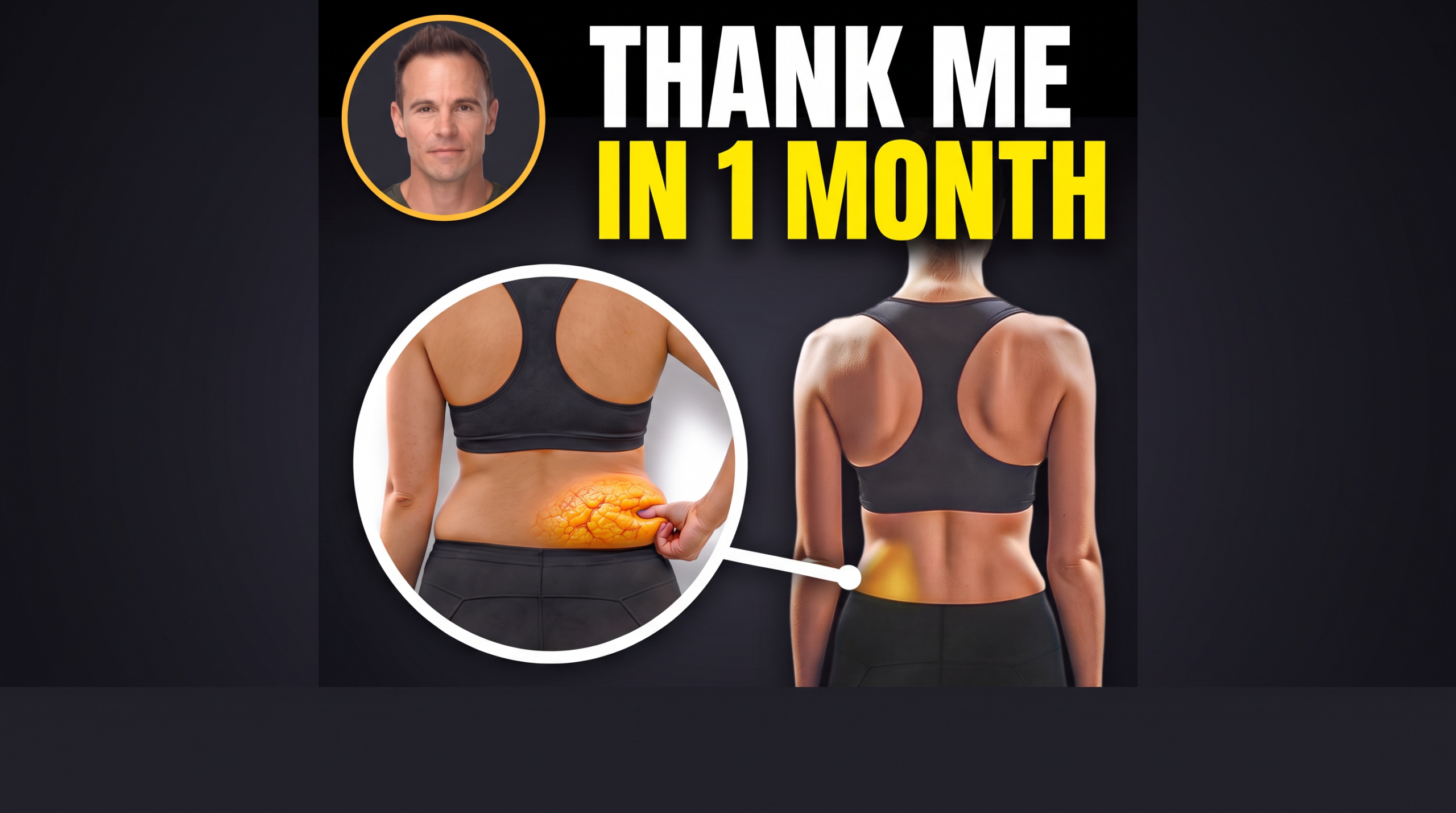
Four hormones. Four steps.
One surprising first move that has nothing to do with food.
Curious what he’d fix before touching a single meal?
Jump to:
Why Hormones Change Where Fat Lands
And in your 20s, your estrogen would cover for all your mistakes. But in your 30s, as estrogen becomes more erratic, those mistakes are now showing up on your love handles.
Dr. Mike’s plan manipulates four hormones, each tied to a specific step.

If you want something simple that actually works, this is one of the most effective tools I’ve used to build strength, conditioning, and endurance without needing a full gym setup.
- Full-body training with one weight using swings, squats, and presses
- Solid cast iron build that feels stable and lasts for years
- Comfortable grip that makes high-rep workouts easier to handle
Estrogen: The Body’s Manager
Estrogen to women is what testosterone is to men.
That comparison is a simplification, since both sexes use both hormones. Still, the pattern he describes is real: higher estrogen favors hips and thighs, while falling estrogen nudges storage toward the belly.
Insulin, Cortisol, and Catecholamines
- Insulin: as estrogen declines, cells grow less responsive, so more food gets stored as fat instead of fueling liver and muscle.
- Cortisol: chronically high levels send a famine signal, which he says helps lock midsection fat in place.
- Catecholamines: these act as the key that releases stored fat.
Step 1: Fix Sleep Before Anything Else
Dr. Mike compares sleep to charging a phone. Stop at 50 percent and nothing works by midday.
With all the ladies I work with, in the first week, I don’t even give them a nutrition plan or a training. I give them nothing. We simply focus on sleep because it controls the four hormones.
His logic: short sleep gives the body too little time to regulate estrogen, reset insulin, and clear cortisol. That, he says, is why the term cortisol belly exists.
Poor sleep does raise appetite and worsen insulin response, so the direction is sound. Exact numbers vary person to person.
Anchor Your Wake-Up Time
Pick one wake-up time and keep it every single day. Then work backward to land 7 to 8 hours.
Wake at 6 a.m.? Asleep by 10 p.m. Set a 9:30 p.m. phone alarm as a get-in-bed cue.
If you want something simple that actually works, this is one of the most effective tools I’ve used to build strength, conditioning, and endurance without needing a full gym setup.
- Full-body training with one weight using swings, squats, and presses
- Solid cast iron build that feels stable and lasts for years
- Comfortable grip that makes high-rep workouts easier to handle
The 14-10-3-2-1 Routine
- 14 hours before bed: get light into your eyes, because clock genes respond to light detected in the retina.
- 10 hours before bed: stop caffeine.
- 3 hours before bed: stop eating.
- 2 hours before bed: stop drinking fluids, avoiding a 2 a.m. bathroom trip.
- 1 hour before bed: cut blue light, or wear blue-light blocking glasses.
You may be asleep, but you’re not spending time in these hormonal resetting windows.
That is his case against late caffeine, even for people who insist they sleep fine. Treat his cutoffs as a strong rule of thumb rather than a universal law.
Step 2: Eat in a Gentle Deficit
Fat loss always runs through nutrition, but aggressive cuts backfire, he says.
If you set a big deficit, 500 calories plus you’re eating 1,200, your body is going to detect that as famine.
His fix: a 10 percent deficit. Maintain at 2,000 calories? Eat 1,800 daily.
The PCF System
- P is for phytoestrogens: ground flax, edamame, tempeh.
- P is also for protein: salmon tops his list, thanks to omega-3s and muscle-protecting amino acids.
- C is for cruciferous vegetables: broccoli and cauliflower contain indole-3-carbinol, which he says helps the liver process estrogen.
- F is for fiber: beans, lentils, and flax feed gut bacteria involved in estrogen handling.
Evidence on plant estrogens is more mixed than his pitch suggests. View them as nutrient-dense, fiber-rich additions rather than hormone replacements.
Protein matters regardless. Eat too little during a deficit, he warns, and muscle becomes fuel.
Step 3: Lift Heavy, Walk Far
Calories out has two levers: EAT (exercise activity thermogenesis) and NEAT (non-exercise activity thermogenesis).
If you want something simple that actually works, this is one of the most effective tools I’ve used to build strength, conditioning, and endurance without needing a full gym setup.
- Full-body training with one weight using swings, squats, and presses
- Solid cast iron build that feels stable and lasts for years
- Comfortable grip that makes high-rep workouts easier to handle
Russian twists and side bends? Skipped. Targeted ab work doesn’t pull fat from one spot.
Resistance Training: Your Insurance Policy
He recommends three full-body sessions weekly, such as Monday, Wednesday, Friday.
The more muscle you have in your system, the bigger your engine size, the more calories you burn.
More muscle also means more storage space for glucose, which supports insulin sensitivity.
Walking Beats Intense Cardio
Dr. Mike argues that hard cardio such as running or high-intensity classes registers as stress, and belly fat is rich in cortisol receptors.
Instead of running your tail off, I just want you to walk your tail off.
Intense cardio isn’t off-limits for everyone, and its burn is real. Walking is simply easier to recover from and easier to sustain.
- Check your average daily steps from the last four weeks.
- Add 2,000 steps to that number.
- Build gradually toward 15,000.
- Walk after meals, so muscles can absorb glucose without needing much insulin.
His estimate: 15,000 daily steps can burn about 1 pound of fat weekly. Actual results hinge on height, weight, and pace.
If you want something simple that actually works, this is one of the most effective tools I’ve used to build strength, conditioning, and endurance without needing a full gym setup.
- Full-body training with one weight using swings, squats, and presses
- Solid cast iron build that feels stable and lasts for years
- Comfortable grip that makes high-rep workouts easier to handle
Step 4: Track Smarter, Not Harder
Dr. Mike calls the body a bank account. Muscle is the active account. Fat is the savings account.
Three factors decide where withdrawals come from:
- Caloric deficit: something must leave the account.
- Blood flow: face and arms lose first, midsection last.
- Fat cell receptors: each cell carries green lights (beta-adrenergic) and red lights (alpha-adrenergic), and love handles tend to hold more red.
Red-heavy cells explain why stubborn fat goes last, especially when cortisol runs high.
Measure Beyond the Scale
His clients get a DEXA scan first, then are told not to expect scale movement for four weeks. Muscle can rise while fat drops, netting zero.
No DEXA access? Use a tape measure weekly. Same weight with a shrinking waist means fat is leaving.
Your goal should be to get your waist to height ratio to less than half.
Standing 5’4″ (64 inches)? Target a waist of 32 inches or less.
If you want something simple that actually works, this is one of the most effective tools I’ve used to build strength, conditioning, and endurance without needing a full gym setup.
- Full-body training with one weight using swings, squats, and presses
- Solid cast iron build that feels stable and lasts for years
- Comfortable grip that makes high-rep workouts easier to handle
Realistic Expectations Matter Most
Dr. Mike is blunt: love handles won’t vanish in a month.
And it’s not going to all disappear in 30 days. Of course not. Not even on a shot.
Month one builds the foundation: better sleep, lower stress, more muscle, steady walking. Consistency afterward gives the body its best shot at lasting change.
One foot in front of the other, especially if you don’t feel like it.