Building impressive legs requires more than showing up to the gym once a week for a half-hearted squat session.
In a recent YouTube video, fitness content creator and coach shared his comprehensive approach to lower body training—covering quads, hamstrings, glutes, and calves in one detailed breakdown.
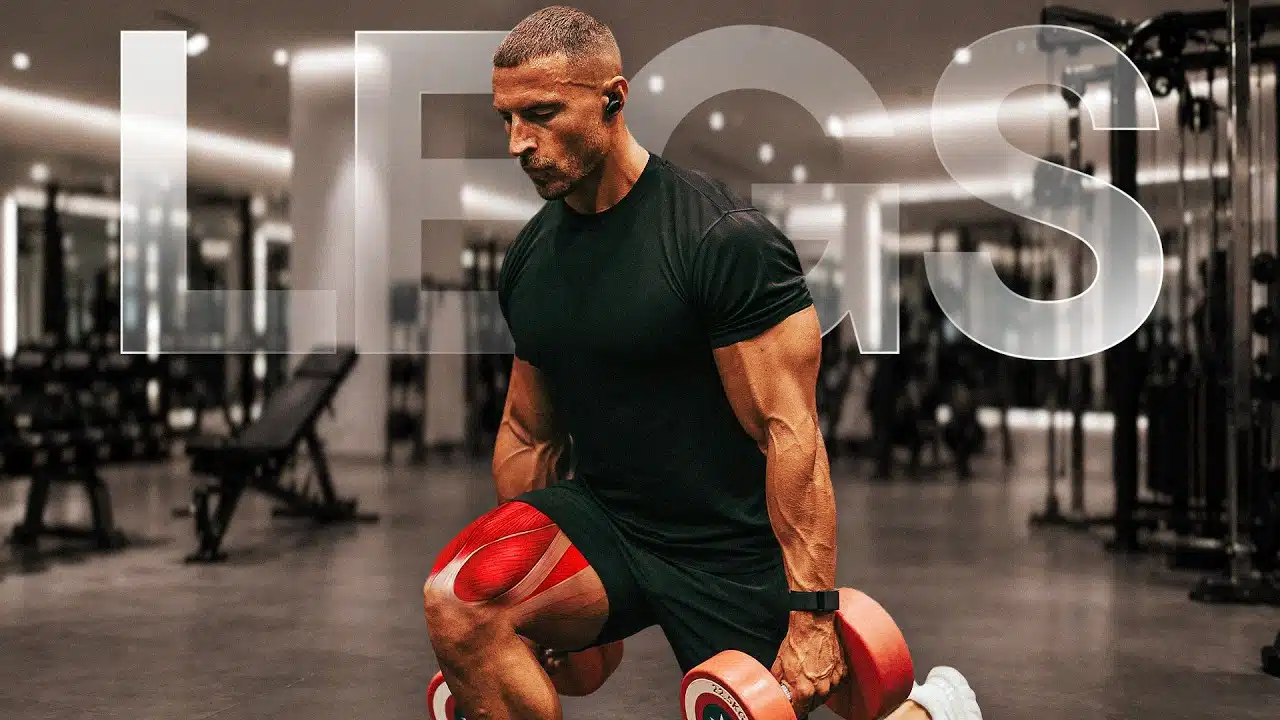
Most men neglect leg training because it’s uncomfortable and challenging, but developing lower body muscle creates a more proportional physique and naturally increases daily calorie burn.
Here’s everything you need to know about building strong, aesthetic legs without spending your entire week hobbling around with debilitating soreness.
Jump to:
Why Men Should Stop Neglecting Hamstrings
Unlike women who often prioritize glute and hamstring development, most men focus heavily on quad-dominant movements. This creates muscular imbalances that affect both aesthetics and performance.
The coach identified three superior hamstring exercises that deliver maximum results.

If you want something simple that actually works, this is one of the most effective tools I’ve used to build strength, conditioning, and endurance without needing a full gym setup.
- Full-body training with one weight using swings, squats, and presses
- Solid cast iron build that feels stable and lasts for years
- Comfortable grip that makes high-rep workouts easier to handle
Seated Leg Curl: The Gold Standard
If I had to do one hamstring exercise for the rest of my life, it would be this one.
The seated leg curl places hamstrings in a stretched position at the starting point, which research suggests is crucial for muscle growth. The machine locks you in place, eliminating cheating and ensuring proper form.
For even better results, lean forward while keeping your back straight to increase the stretch further.
45-Degree Hyperextension: The Stiff-Leg Alternative
Many lifters struggle with stiff-leg deadlifts because their knees naturally want to bend—a habit ingrained from years of Romanian deadlifts.
The 45-degree hyperextension solves this problem by fixing your legs in a straight position. This forces proper hamstring engagement without the coordination challenges of free weights.
It’s like I’m doing a stiff leg deadlift, but I’m doing it on this machine, and I cannot bend my knees. They are fixed in the straight position, which is perfect for me.
Focus on stretching hamstrings at the bottom and consciously shortening them at the top rather than letting your glutes or lower back take over.
Glute Ham Raise: The Ultimate Test
This intimidating exercise separates serious lifters from casual gym-goers. Most people avoid it entirely because of its difficulty.
If you want something simple that actually works, this is one of the most effective tools I’ve used to build strength, conditioning, and endurance without needing a full gym setup.
- Full-body training with one weight using swings, squats, and presses
- Solid cast iron build that feels stable and lasts for years
- Comfortable grip that makes high-rep workouts easier to handle
If you get good at doing this exercise, you’re going to have strong as hell hamstrings.
Start by using a barbell or pole for assistance. Control the descent as much as possible, then use your arms to help pull yourself back up. Build toward performing 6-10 unassisted reps as a long-term goal.
Building Massive Quads Without Destroying Your Lower Back
Quad development doesn’t require punishing your spine with heavy barbell squats—especially if your body proportions make traditional squatting uncomfortable or ineffective.
The Top Machine Movements
Pendulum squats, hack squats, and leg presses provide full back support while allowing maximum quad loading. These machines eliminate balance concerns and reduce injury risk.
Foot positioning matters tremendously. Position feet to allow knees to travel as far forward over toes as ankle mobility permits—without rising onto tiptoes. This maximizes quad engagement.
Placing feet higher and wider shifts emphasis to glutes, which defeats the purpose during quad-focused training.
When Barbell Squats Make Sense
Body proportions determine squat effectiveness. Lifters with shorter femurs relative to torso length can maintain upright posture, creating quad dominance. Those with longer legs typically lean forward, shifting tension to glutes and lower back.
If you want something simple that actually works, this is one of the most effective tools I’ve used to build strength, conditioning, and endurance without needing a full gym setup.
- Full-body training with one weight using swings, squats, and presses
- Solid cast iron build that feels stable and lasts for years
- Comfortable grip that makes high-rep workouts easier to handle
Some people are just natural squatters. They’re able to go down, push the knees forward and keep their spine upright. Other people, more so like me, they do a squat, they tend to lean forward a little bit more.
Front squats with elevated heels offer a better alternative for quad development when barbell back squats feel awkward. Smith machine squats provide stability while maintaining upright positioning.
Leg Extensions: The Misunderstood Essential
Despite outdated claims about knee damage, leg extensions remain perfectly safe when performed correctly.
Keep knees aligned and a fist-width apart throughout the movement. Avoid twisting feet inward or outward, which creates unnecessary joint stress.
Seek machines that pull the pad far back behind your knee for maximum stretch. This extended range of motion significantly enhances muscle stimulation compared to machines that only reach 90 degrees.
Glute Training For Men: The Missing Link
Strong glutes improve performance in all compound movements, reduce lower back injury risk, and create better overall physique proportions.
If you have like flat pancake ass, it just looks weird. You do want to have a little bit of a shelf. Not too much of a shelf, but just a little bit to show that, okay, this guy lifts, this guy doesn’t skip leg day.
Hip Thrust Variations
Rotate between Smith machine, dedicated hip thrust machines, and free weight barbell variations every five weeks. Barbell hip thrusts apply superior loading at the top position but require more setup time and balance.
If you want something simple that actually works, this is one of the most effective tools I’ve used to build strength, conditioning, and endurance without needing a full gym setup.
- Full-body training with one weight using swings, squats, and presses
- Solid cast iron build that feels stable and lasts for years
- Comfortable grip that makes high-rep workouts easier to handle
Split Squats For Targeted Glute Work
Foot positioning determines whether split squats target quads or glutes.
For glutes: Place front foot farther forward, lean into the movement, and keep knees above ankles. This creates maximum glute stretch at the bottom.
For quads: Keep feet closer together and push knees forward over toes.
Smith machine split squats allow heavier loading without balance concerns, though occasional dumbbell variations train stabilizer muscles.
Romanian Deadlifts: The Compound Glute Builder
Weight should stay on heels with knees slightly bent. Push hips back to stretch glutes, then thrust forward powerfully.
This movement becomes taxing on the lower back at heavier weights (140kg+), so avoid combining it with other lower-back-intensive exercises like squats in the same session.
If you want something simple that actually works, this is one of the most effective tools I’ve used to build strength, conditioning, and endurance without needing a full gym setup.
- Full-body training with one weight using swings, squats, and presses
- Solid cast iron build that feels stable and lasts for years
- Comfortable grip that makes high-rep workouts easier to handle
Additional Glute Movements
- Walking lunges: Take longer steps and lean forward to maximize glute stretch with each rep
- Abductor machine: Less intimidating than cable kickbacks and allows better loading
- Kickback machines: Superior to cable versions because body position is locked and balanced
The Optimal Lower Body Training Split
Training legs once weekly produces minimal results. Twice weekly is the minimum for meaningful development, with research showing little additional benefit from three sessions.
The Minimal Effective Approach
For those who dread leg day, split lower body work across two half-sessions combined with upper body training.
Session 1:
- One quad exercise (squat variation)
- One glute exercise (walking lunges)
- One hamstring exercise (45-degree hyperextension)
- Three upper body exercises
Session 2:
- Leg extension
- Hip thrust
- Seated leg curl
- Three upper body exercises
Perform 2-3 working sets per exercise. Compound movements may only require two intense sets, while isolation exercises can handle three.
The Maximum Growth Protocol
Two dedicated lower body sessions with 4-5 exercises each produces exceptional results when volume is managed properly.
If you want something simple that actually works, this is one of the most effective tools I’ve used to build strength, conditioning, and endurance without needing a full gym setup.
- Full-body training with one weight using swings, squats, and presses
- Solid cast iron build that feels stable and lasts for years
- Comfortable grip that makes high-rep workouts easier to handle
Choose two muscle groups to emphasize each session. If focusing on glutes and hamstrings:
- One compound quad exercise
- Two glute exercises
- Two hamstring exercises
Rotate exercise variations every five weeks to prevent adaptation, train different ranges of motion, and maintain stabilizer strength.
A lot of people will ask me, should you do free weights or machines? If you just stick with always doing machines, you then become weaker when it comes to doing a lot of the free weight compound movements.
Programming Calves (If You Care)
Straight-leg calf raises on leg press machines produce superior growth compared to seated variations, according to published research.
Position feet close together on the platform. Achieve full stretch at bottom, then press to approximately halfway before returning to stretched position.
Train calves at session start if you typically skip them, or save them for recovery days when you have more energy than after exhausting lower body work.
Managing Soreness While Making Progress
Severe delayed onset muscle soreness (DOMS) typically results from infrequent training. Bodies adapt when legs are trained consistently twice weekly.
If you want something simple that actually works, this is one of the most effective tools I’ve used to build strength, conditioning, and endurance without needing a full gym setup.
- Full-body training with one weight using swings, squats, and presses
- Solid cast iron build that feels stable and lasts for years
- Comfortable grip that makes high-rep workouts easier to handle
Avoid cramming excessive volume into single sessions. Four quality exercises beat six mediocre ones, especially when compound movements dominate the workout.
Balance lower back stress across the week. Don’t combine squats with Romanian deadlifts in one session—choose spine-supported alternatives for remaining exercises.
Strong legs require discomfort, but strategic programming makes training sustainable rather than dreaded. Split sessions, managed volume, and exercise rotation create results without leaving you unable to walk for days.