Good news for men staring down their 30s and 40s with dread: the physical cliff you’ve been warned about might be more myth than reality.
A growing body of research suggests that age itself isn’t the villain behind mid-life body composition changes.
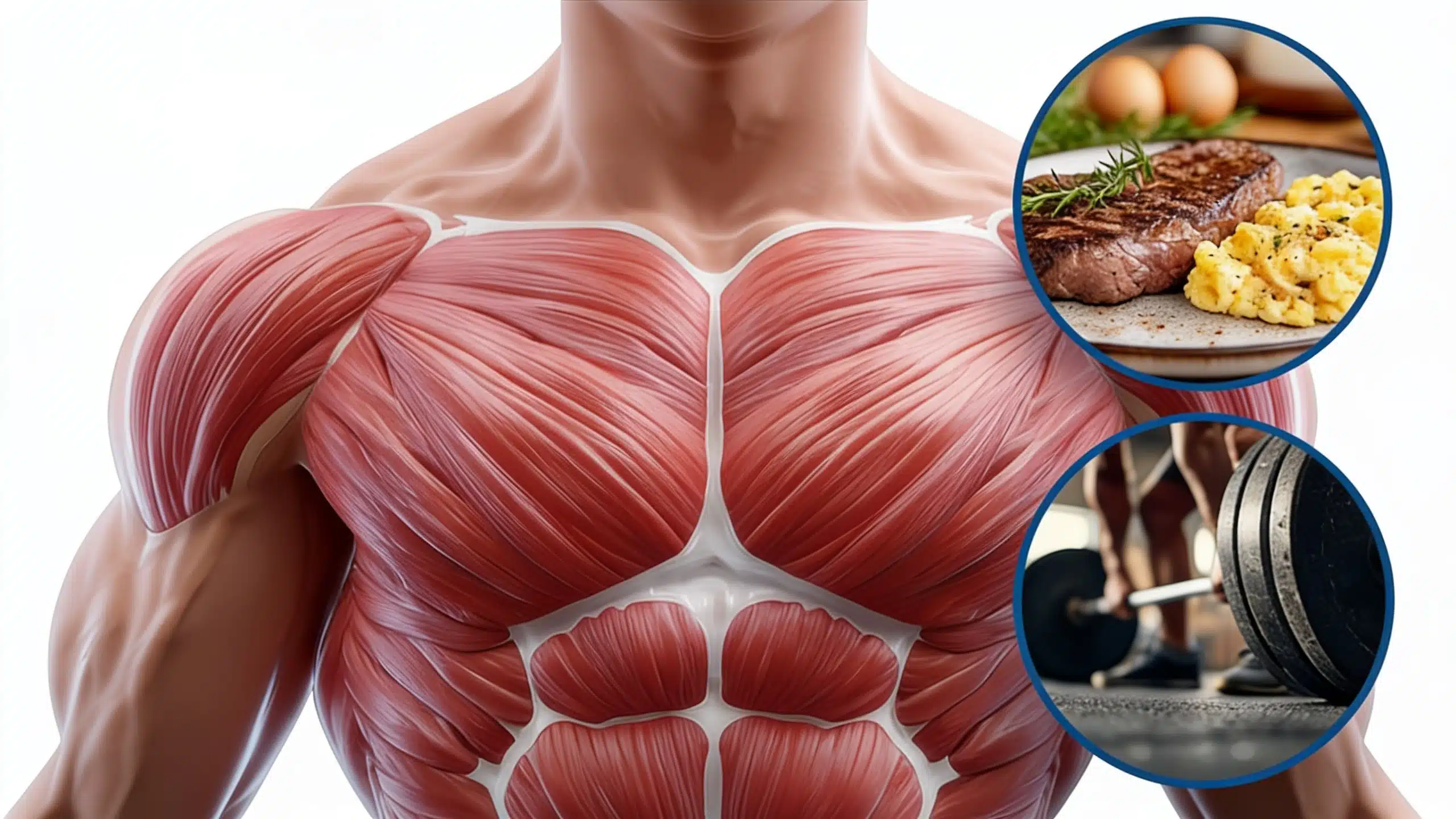
Instead, lifestyle factors—inactivity, poor nutrition, inadequate sleep—are the real culprits behind what most people blame on “getting older.”
The science challenges nearly everything we’ve been told about metabolism, muscle-building capacity, and testosterone after 30.
Jump to:
The Metabolism Myth That Won’t Die
Popular fitness culture has long preached that metabolism crashes somewhere around age 30, making fat loss an uphill battle and weight gain inevitable.
Except that’s not what the data shows.
A landmark 2021 study published in Science analyzed total daily energy expenditure across more than 6,600 people ranging from infancy to old age. The researchers discovered something remarkable: when adjusted for body size and composition, metabolism remains essentially stable from age 20 all the way to age 60.
That means the metabolic “slowdown” blamed for love handles and stubborn belly fat? It doesn’t happen when you hit 30.
What does happen is far more mundane and entirely fixable. Men in their 30s and 40s typically experience major lifestyle shifts: increased work responsibilities, family demands, disrupted sleep patterns, and dramatically reduced daily movement. NEAT—non-exercise activity thermogenesis, or the calories burned through everyday movement—plummets as desk jobs replace active hobbies and commutes get longer.
The body isn’t failing. The lifestyle is.
Muscle Building Doesn’t Have An Expiration Date
Sarcopenia—age-related muscle loss—does begin around age 30. Without intervention, adults can lose 3–8% of muscle mass per decade.
But here’s the critical detail most people miss: that muscle loss happens without resistance training intervention.
Research comparing muscle protein synthesis and hypertrophy outcomes between younger and older men reveals that older men can achieve comparable muscle growth when training consistently with proper programming. The catch? Recovery demands are higher, and protein intake needs to be optimized.
While younger men might thrive on 0.8 grams of protein per pound of bodyweight, men over 40 often need closer to 1.0–1.2 grams to maximize muscle protein synthesis. Sleep becomes non-negotiable. Training volume may need adjustment to account for longer recovery windows.
But the fundamental capacity to build muscle? It remains intact far longer than most people realize.
The Testosterone Truth
Yes, testosterone declines with age—roughly 1–2% per year after 30. But that gradual decline tells only part of the story.
A Ball State University study examining masters-level athletes who trained consistently into their 70s found something fascinating: these men maintained testosterone levels and muscle fiber quality closer to younger trained men than to sedentary peers their own age.
The research suggests that lifestyle factors—body fat percentage, sleep quality, stress management, and physical activity—exert enormous influence over testosterone levels. A sedentary 35-year-old carrying excess body fat and sleeping five hours a night will likely have lower testosterone than an active, lean 50-year-old who prioritizes recovery.
Clinical hypogonadism is real, and men experiencing genuine symptoms should consult an endocrinologist. But for many men, what feels like hormonal collapse is actually accumulated lifestyle neglect manifesting as hormonal disruption.
What Actually Changes (And What Doesn’t)
Understanding what shifts with age—and what remains constant—helps separate legitimate physiological changes from lifestyle-driven decline.
Recovery Capacity
This genuinely declines. Men over 40 typically need longer recovery periods between intense training sessions. The solution isn’t avoiding hard training—it’s programming intelligently with adequate rest days and deload weeks.
Injury Risk
Connective tissue becomes less resilient. Warm-ups become mandatory rather than optional. Movement quality matters more than ever.
Sleep Architecture
Deep sleep phases shorten with age, which cascades into reduced growth hormone production and impaired recovery. This makes sleep hygiene a non-negotiable priority for men over 40.
Protein Requirements
Muscle protein synthesis becomes less efficient, demanding higher protein intake to achieve the same anabolic response younger men get from lower amounts.
What doesn’t change dramatically? The fundamental capacity to build muscle, burn fat, and maintain metabolic health through consistent training and proper nutrition.
The Real Culprit Behind Mid-Life Decline
Behavioral health research points to psychosocial factors as primary drivers of physical decline in middle age. Occupational stress intensifies. Caregiving responsibilities for aging parents or young children compress personal time. Social physical activities—pickup basketball, recreational sports leagues—disappear from schedules.
The gym membership lapses. Home-cooked meals get replaced by takeout. Sleep gets sacrificed to meet deadlines or catch up on household tasks.
Small lifestyle compromises compound over years into dramatic physical changes. Then those changes get attributed to age rather than accumulated neglect.
Practical Application For Men Over 30
The research-backed reality is both liberating and demanding. You’re not fighting inevitable biological decline. But you are fighting against lifestyle entropy that accelerates without conscious intervention.
- Prioritize resistance training with progressive overload, at least three sessions weekly
- Consume 1.0–1.2 grams of protein per pound of target bodyweight daily
- Protect sleep aggressively—aim for 7–9 hours with consistent sleep/wake times
- Program recovery deliberately—deload weeks aren’t optional for men over 40
- Move daily—rebuild NEAT through walking, taking stairs, and reducing sedentary time
- Manage stress through evidence-based practices like meditation, therapy, or time in nature
Each pound of muscle burns approximately 6–7 calories daily at rest compared to just 2 calories for fat tissue. Preserving muscle mass directly supports metabolic health, making resistance training foundational rather than optional.
The Bottom Line
Turning 30 or 40 doesn’t flip a biological switch that makes fitness impossible. The metabolism doesn’t crash. Muscle-building capacity doesn’t vanish. Testosterone doesn’t plummet overnight.
What changes is context. Recovery takes longer. Injuries punish carelessness more severely. Sleep and nutrition become non-negotiable rather than nice-to-have.
The men who thrive physically in their 40s, 50s, and beyond aren’t genetic outliers. They’re simply the ones who refused to accept cultural narratives about inevitable decline and instead maintained the fundamentals that drive body composition regardless of age.
Biology sets some constraints. But for most men, those constraints arrive decades later than commonly believed—and far less dramatically than popular fitness culture suggests.