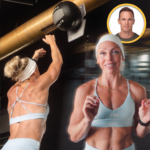
Dr. Rhonda Patrick doesn’t just preach the science of longevity—she lives it with a training routine that would humble most gym-goers.
In a recent conversation, the renowned biochemist revealed her approach to exercise isn’t about vanity or experimentation.
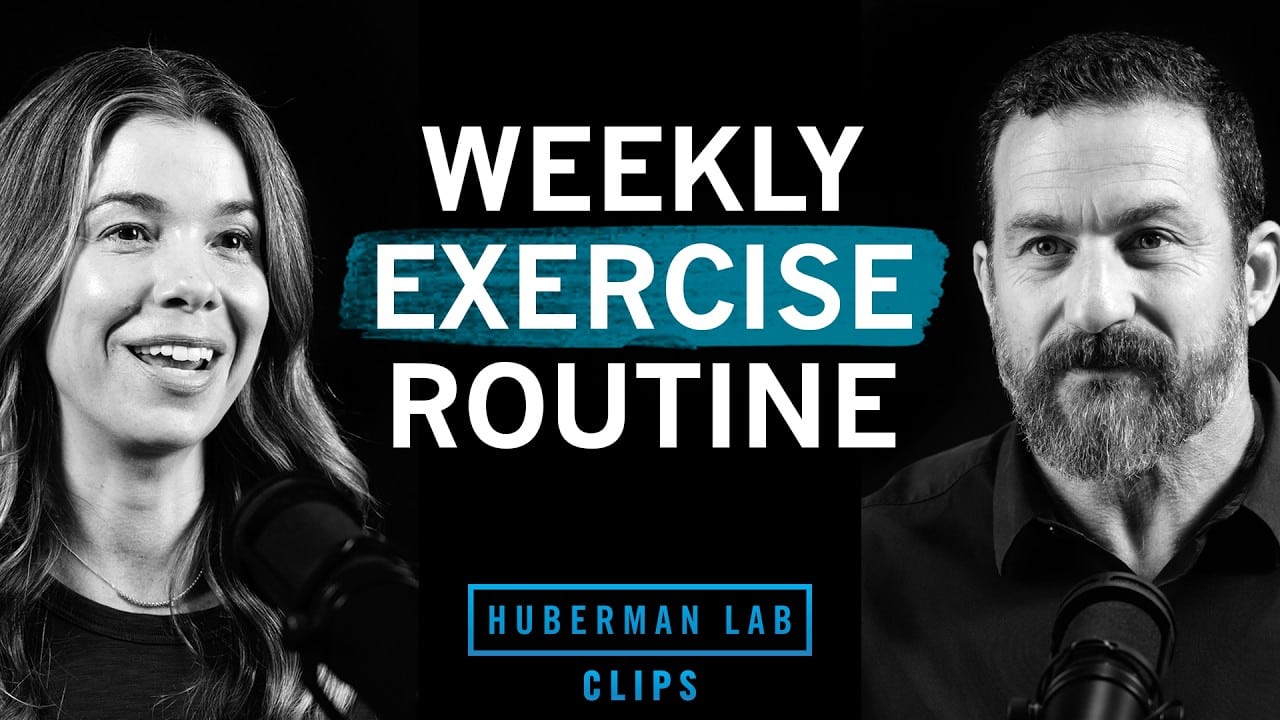
It’s about survival, longevity, and building mental resilience through physical stress.
What’s most striking? She’s working down to single-rep sets on compound lifts—and she absolutely hates it.
Jump to:
- Exercise as Personal Hygiene
- The Weekly Training Split
- Strength Training Deep Dive: Singles, Doubles, and Mental Toughness
- The Surprising Mental Health Benefits
- Cardiorespiratory Fitness: The Longevity Marker
- Listening to Your Body Without Lowering Standards
- Why Heavy Lifting Matters for Women Over 35
- The Bottom Line
Exercise as Personal Hygiene
For Patrick, working out isn’t optional. It’s non-negotiable.
Exercise is part of my personal hygiene. It really is a non-negotiable. I absolutely have to do exercise just like I have to brush my teeth.
She credits Dr. Ben Levine, a leading cardiovascular exercise physiologist at UT Southwestern in Dallas, for instilling this mindset. His research emphasizes that cardiovascular fitness is one of the strongest predictors of longevity—a principle Patrick has woven into every aspect of her training.
No products found.
Her weekly commitment? Between five and six hours of structured training that combines high-intensity interval work with serious strength development.
The Weekly Training Split
Patrick’s routine centers around two primary pillars: cardiovascular conditioning and resistance training. Both are equally important, and neither gets sacrificed.
CrossFit-Style Sessions: Four Hours Weekly
Twice weekly, Patrick tackles hour-long CrossFit-inspired workouts with a coach. These sessions split into two distinct phases.
The first 30 minutes focus exclusively on strength training with multi-joint movements: deadlifts, squats, cleans, front squats, and back squats. She works with heavier loads and fewer repetitions, typically resting around two minutes between sets.
What’s funny is I typically rest about two minutes between my sets. I recover pretty quick. My coach usually tells me that I’m spot on.
The second 30 minutes transition into high-intensity interval training. Heart rate spikes as she rotates through rowing machines, assault bikes, and lighter-weight Olympic lifts performed for higher repetitions.
She also dedicates another two sessions weekly—about 80 minutes each—to similar high-intensity work, though with more recovery time built in since she trains with friends.
No products found.
Running: Four to Six Miles Weekly
Despite her CrossFit foundation, Patrick maintains running as part of her aerobic base. She logs between four and six miles weekly, typically broken into two- or three-mile sessions.
I do enjoy running. Sometimes I’ll run with my husband and we just kind of chill out and talk. It’s a nice time for me as well.
These runs qualify as vigorous intensity but aren’t structured intervals. They’re maintainers—both for cardiovascular fitness and mental clarity.
Weekend Movement: Hiking and Family Time
Weekends involve hiking with her family, occasionally incorporating hill sprints. It’s less structured but still purposeful—movement in nature combined with quality time.
Strength Training Deep Dive: Singles, Doubles, and Mental Toughness
Patrick’s strength sessions aren’t typical “toning” workouts. She’s progressively working toward maximal loads using classic strength progression schemes.
Rep Schemes That Build Real Strength
Her coach structures workouts to gradually increase load while decreasing volume. Common progressions include:
- 5, 4, 3, 1 reps (increasing weight each set)
- 6, 5, 4 (twice), 3 (twice)
- Drop sets at the end with 10 reps at lighter weight
Yes—she’s doing singles. One-rep max attempts on deadlifts, squats, and cleans.
No products found.
My coach is like, it’s just one. It’s just one. But then there’s some days where I’m just like, can we do lower reps and lighter weight? This is the day for me. I’m stressed. I’m not here.
Patrick openly admits this type of training is mentally harder than anything else she does. Unlike endurance work—which comes naturally to her—heavy lifting forces confrontation with discomfort and self-doubt.
Multi-Joint Movements Are the Foundation
Her primary lifts include:
- Deadlifts (conventional, straight bar)
- Front squats
- Back squats
- Cleans with front squats (her most dreaded movement)
She also incorporates accessory work like Bulgarian split squats and dips to target stabilization muscles, though these are secondary to compound lifts.
Why Cleans Are Her Nemesis
Patrick only started performing cleans in February 2024. The movement remains her biggest challenge—not because of physical limitation, but because of the technical demand and mental barrier.
Cleans with front squat—it’s the thing that I hate doing the most. It’s really hard and for me it’s very challenging. I’ve only been doing cleans since February 2024, so I’m pretty new to it.
But she’s discovered something unexpected: the mental toughness built from facing hard lifts transfers to every other area of life.
The Surprising Mental Health Benefits
Patrick didn’t anticipate strength training would become a stress management tool. She’s always been an endurance athlete—long runs and races were her comfort zone.
No products found.
Strength training flipped that dynamic.
The biggest effect was on my brain and the ability to handle stress better. It was unbelievable because it was so hard and I just didn’t want to do these cleans and front squats. And then the rest of my day was not as hard.
Confronting physical discomfort in the gym recalibrates stress perception outside of it. Difficult conversations, work deadlines, and daily pressures pale in comparison to grinding through a heavy single.
She compares it to cold plunging—another deliberately unpleasant practice that builds psychological resilience through voluntary hardship.
Cardiorespiratory Fitness: The Longevity Marker
While strength training dominates headlines, Patrick emphasizes that cardiorespiratory fitness remains critical for longevity.
Her high-intensity interval sessions aren’t random. They’re designed to push heart rate to approximately 80% of max during work intervals—similar to protocols like the Norwegian 4×4 method, which involves four-minute hard efforts followed by three-minute recoveries.
Patrick incorporates:
No products found.
- Rowing machines
- Assault bikes
- Ski ergs
- Light Olympic lifts for reps
These sessions complement strength work by improving mitochondrial function, VO2 max, and cardiovascular resilience—all biomarkers associated with extended healthspan.
Listening to Your Body Without Lowering Standards
Patrick acknowledges that some days require modification. Stress, sleep quality, and recovery all influence performance.
There’s some days where I’m just like, can we do lower reps and lighter weight? This is the day for me. I’m stressed. I’m not here. You kind of have to modify your workout according to how you feel that day.
This isn’t about backing off from challenge—it’s about intelligent programming. Autoregulation allows lifters to push hard when capable and scale appropriately when necessary, reducing injury risk while maintaining consistency.
Why Heavy Lifting Matters for Women Over 35
Patrick’s approach challenges outdated narratives suggesting women—especially those over 35—should avoid heavy compound lifts.
Recent online debates have featured credentialed trainers arguing that older adults should stick to higher-rep, lower-load training to minimize injury risk. While hypertrophy can be achieved with lighter weights taken to failure, maximal strength requires heavy loading.
Patrick isn’t chasing muscle size alone. She’s building:
No products found.
- Bone density (critical for aging women)
- Neuromuscular efficiency
- Functional strength that translates to real-world movement
- Mental resilience through confronting hard things
Heavy lifting also triggers hormonal responses that support metabolic health and longevity—benefits that can’t be replicated with endless sets of light weight.
The Bottom Line
Dr. Rhonda Patrick’s training philosophy is deceptively simple: do hard things consistently.
Her routine combines the cardiovascular benefits of interval training with the strength and resilience built through progressive overload on compound movements. She doesn’t love every moment—especially those dreaded cleans—but she shows up anyway.
The result isn’t just physical adaptation. It’s a complete recalibration of stress tolerance, mental toughness, and long-term health optimization.
For anyone looking to build a training program that supports longevity, Patrick’s approach offers a blueprint: prioritize both strength and cardiovascular fitness, embrace discomfort, and treat exercise like hygiene—non-negotiable and essential.