Five years of research distilled into one comprehensive breakdown.
That’s what health and nutrition researcher Siim Land recently delivered after diving deep into over 100 popular supplements for his upcoming book, The New Science of Supplements.
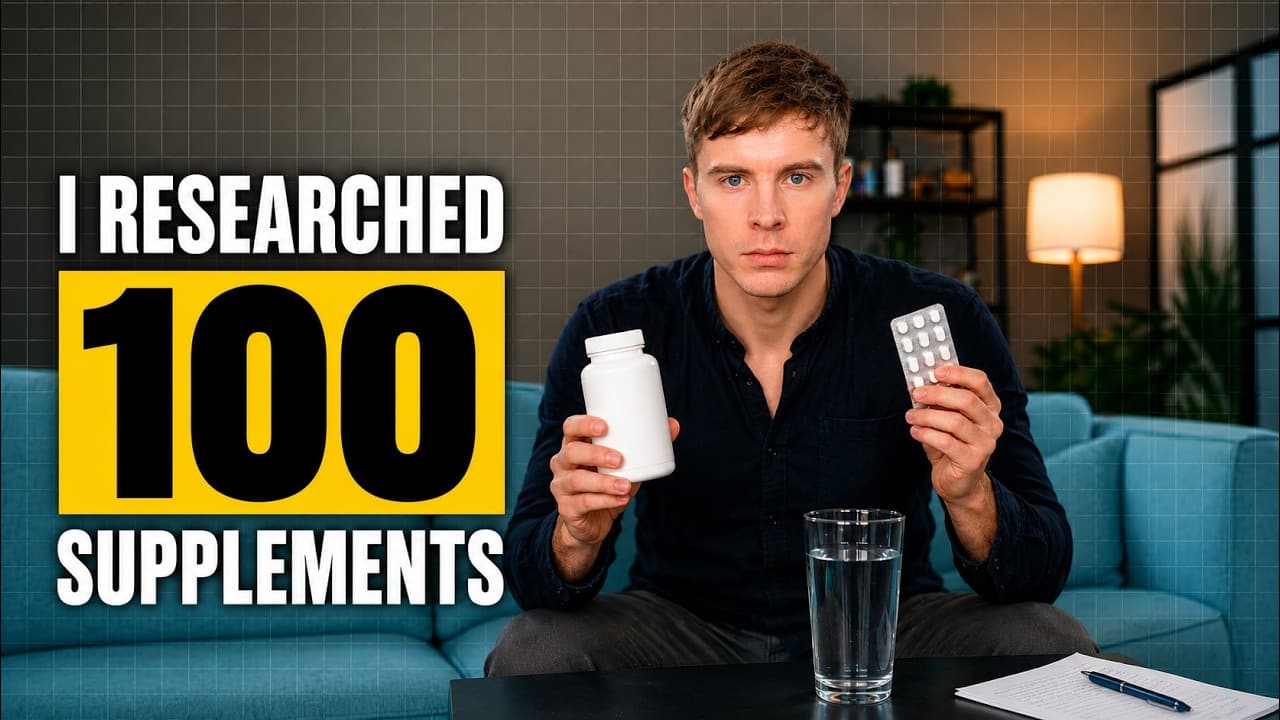
His mission? To separate science-backed truth from supplement industry fiction.
What he discovered might surprise anyone who’s ever walked down a vitamin aisle wondering which bottles deserve shelf space in their medicine cabinet.
Jump to:
The Gold Standard: Supplements With Solid Evidence
According to Land’s extensive analysis, certain supplements rise far above marketing hype with substantial backing from human clinical trials—the gold standard of scientific evidence.
Creatine: The Research Champion
Creatine stands as probably the most researched supplement in the world, with thousands of studies validating its effects.

If you want something simple that actually works, this is one of the most effective tools I’ve used to build strength, conditioning, and endurance without needing a full gym setup.
- Full-body training with one weight using swings, squats, and presses
- Solid cast iron build that feels stable and lasts for years
- Comfortable grip that makes high-rep workouts easier to handle
But here’s where common assumptions miss the mark: creatine’s biggest benefit isn’t muscle mass—it’s power and explosiveness.
The biggest benefit of creatine is that it increases muscle power and speed and explosiveness. So, you have pretty much like an extra gear when it comes to speed and power.
Land emphasizes that creatine works by helping recycle phosphocreatine used in muscle contractions. Beyond athletic performance, creatine demonstrates impressive cognitive benefits.
Sleep-deprived? Creatine might be your secret weapon.
Creatine helps to make up for lost sleep in terms of restoring your cognition to a normal baseline. When you’re sleep deprived, you know, over 20 hours of being awake, then your cognition drops. Attention, memory, focus drops, and creatine helps to bring it back to baseline.
Omega-3s: Wrongly Vilified
Despite recent social media criticism, omega-3 fatty acids remain one of the most well-researched and beneficial supplements available.
Land challenges the growing skepticism head-on.
Contrary to popular belief, omega-3s lower inflammation. It’s been shown by a ton of randomized human clinical trials. They don’t raise inflammation even if they are like sub-optimal category.
The benefits extend beyond inflammation reduction. Omega-3s lower triglycerides—high levels of which represent a primary driver of insulin resistance. They also improve blood omega-3 status, associated with reduced heart disease, Alzheimer’s, and mortality risk.
If you want something simple that actually works, this is one of the most effective tools I’ve used to build strength, conditioning, and endurance without needing a full gym setup.
- Full-body training with one weight using swings, squats, and presses
- Solid cast iron build that feels stable and lasts for years
- Comfortable grip that makes high-rep workouts easier to handle
Mental health receives support too, with studies showing omega-3s lower depressive symptoms primarily through reducing neuroinflammation.
Astaxanthin: Skin Protection From Within
This powerful carotenoid antioxidant offers compelling evidence for UV protection—the number one cause of skin photoaging.
Over decades, UV exposure creates wrinkles, hyperpigmentation, and sunspots. Astaxanthin helps build internal defenses against this damage.
Land clarifies an important distinction: This doesn’t mean sun exposure is harmful.
Healthy sun exposure remains essential, but increasing skin resilience provides additional protection. Beyond skin benefits, astaxanthin accumulates in organs rich in mitochondria—particularly eyes and brain—supporting eye health while lowering inflammation and cholesterol levels.
Ashwagandha: Stress Relief Despite Controversy
Another supplement facing social media backlash, ashwagandha maintains solid clinical evidence despite claims it causes emotional numbness.
If you want something simple that actually works, this is one of the most effective tools I’ve used to build strength, conditioning, and endurance without needing a full gym setup.
- Full-body training with one weight using swings, squats, and presses
- Solid cast iron build that feels stable and lasts for years
- Comfortable grip that makes high-rep workouts easier to handle
Ashwagandha does consistently reduce stress and anxiety in randomized controlled trials. It increases sex hormones, mostly by lowering cortisol and stress.
The mechanism matters. By reducing cortisol and stress, ashwagandha indirectly improves sleep quality and has even demonstrated increases in VO2 max—a measure of cardiovascular fitness.
Glycine and NAC: The Glutathione Connection
These amino acids work synergistically to boost glutathione—the body’s master antioxidant.
Land makes an important point about supplementation strategy: boosting glutathione through precursors like glycine and N-acetylcysteine (NAC) proves superior to taking glutathione directly.
Why? The body can regulate production based on actual needs, maintaining healthy redox balance rather than overwhelming systems with excessive antioxidants.
Glycine specifically demonstrates multiple benefits:
- Reduces inflammation
- Supports liver health
- Lowers blood sugar and glycation
- Improves sleep quality when taken before bed
NAC carries unique therapeutic applications beyond typical supplements, showing specific effectiveness for lung conditions including COPD and chronic bronchitis. Medical settings use NAC for acetaminophen overdose and improving fertility in women with PCOS.
If you want something simple that actually works, this is one of the most effective tools I’ve used to build strength, conditioning, and endurance without needing a full gym setup.
- Full-body training with one weight using swings, squats, and presses
- Solid cast iron build that feels stable and lasts for years
- Comfortable grip that makes high-rep workouts easier to handle
Supplements With Weak or Missing Evidence
Not everything marketed as beneficial lives up to claims.
The Longevity Hype Train
Resveratrol and pterostilbene frequently appear in anti-aging discussions, but Land’s research reveals disappointing reality: no evidence supports lifespan extension, even in animal studies.
Similarly, alpha-ketoglutarate (AKG) lacks proof for extending lifespan despite marketing around biological age scores from DNA methylation tests—which don’t necessarily translate to actual longevity.
Muscle-Building Myths
BCAAs (branched-chain amino acids) and EAAs (essential amino acids) dominate gym culture, yet evidence for muscle growth remains absent—unless protein intake is severely deficient.
Sipping on your EAAs, especially BCAAs, in between your meals is not going to make you build more muscle.
The only consistent benefit? Reduced muscle soreness. For most people eating adequate protein across regular meals, these supplements offer minimal value.
HMB (beta-hydroxy beta-methylbutyrate) falls into similar territory—effective for muscle preservation in elderly adults or those in catabolic states, but offering little advantage to regular exercisers consuming sufficient protein.
If you want something simple that actually works, this is one of the most effective tools I’ve used to build strength, conditioning, and endurance without needing a full gym setup.
- Full-body training with one weight using swings, squats, and presses
- Solid cast iron build that feels stable and lasts for years
- Comfortable grip that makes high-rep workouts easier to handle
Testosterone Boosters That Don’t Boost
Classic supplements marketed for testosterone remain disappointing upon scrutiny.
Tribulus terrestris, perhaps the most famous old-school testosterone booster? Meta-analyses show no effect on testosterone levels.
Horny goat weed, despite its suggestive name? No testosterone increase documented in human trials.
Context Matters: Conditional Benefits
Several supplements demonstrate benefits only under specific circumstances—a nuance often lost in marketing.
Vitamin D: Deficiency Correction, Not Optimization
Vitamin D supplementation proves valuable for raising levels and preventing conditions like rickets and osteoporosis.
Testosterone benefits appear only when deficiency exists. Same with immune function—supplementation helps when levels are low, but additional vitamin D beyond sufficiency doesn’t create superhuman immunity.
If you want something simple that actually works, this is one of the most effective tools I’ve used to build strength, conditioning, and endurance without needing a full gym setup.
- Full-body training with one weight using swings, squats, and presses
- Solid cast iron build that feels stable and lasts for years
- Comfortable grip that makes high-rep workouts easier to handle
Land notes an important caveat: Vitamin D supplements don’t replicate all sunlight benefits, though they’re certainly better than deficiency, especially in northern latitudes with limited sun exposure.
Magnesium: Sleep Aid With Prerequisites
Magnesium demonstrates clear benefits for lowering blood pressure, reducing inflammation, and supporting sleep—but primarily when deficiency exists.
Adequate magnesium status means supplementation likely won’t improve sleep quality further. The stress-magnesium relationship works bidirectionally: stress depletes magnesium, while magnesium supplementation helps manage stress responses.
Multivitamins: Insurance for Elderly
The strongest evidence for multivitamins appears in elderly populations who typically consume narrower food variety and lower-quality diets.
Studies show improved cognition and enhanced episodic memory in older individuals—likely because this demographic experiences higher rates of micronutrient deficiency.
For younger adults eating varied, nutrient-dense diets? Multivitamins function more as insurance than necessity.
If you want something simple that actually works, this is one of the most effective tools I’ve used to build strength, conditioning, and endurance without needing a full gym setup.
- Full-body training with one weight using swings, squats, and presses
- Solid cast iron build that feels stable and lasts for years
- Comfortable grip that makes high-rep workouts easier to handle
Promising But Unproven: Research Needed
Certain supplements show intriguing preliminary results requiring further investigation before definitive recommendations.
Urolithin A: Mitochondrial Question Mark
This popular longevity supplement demonstrates increased mitophagy (mitochondrial autophagy) markers in humans—but with significant caveats.
Initial studies tested 29 people, yet only six showed increased autophagy markers. Such dramatic sample reduction raises questions about universal effectiveness.
Endurance improvements came from six-minute walking tests in elderly populations—hardly definitive proof for athletes. Land suggests exercise itself likely provides autophagy benefits that supplementation can’t enhance further.
Spermidine: Autophagy in Theory
While animal studies show spermidine increases autophagy, human evidence remains limited to potential cognitive improvements in elderly individuals and raised DHEA levels—both requiring larger, well-controlled trials.
Senolytics: Cellular Cleanup Crew
Fisetin, quercetin, and apigenin do decrease senescent cells in humans, but current evidence stops there.
If you want something simple that actually works, this is one of the most effective tools I’ve used to build strength, conditioning, and endurance without needing a full gym setup.
- Full-body training with one weight using swings, squats, and presses
- Solid cast iron build that feels stable and lasts for years
- Comfortable grip that makes high-rep workouts easier to handle
Theoretical benefits for Alzheimer’s, cancer, and age-related diseases exist, though clinical proof remains absent. Present data shows primarily anti-inflammatory effects.
Debunking Common Misconceptions
Several widespread supplement beliefs don’t hold up under scrutiny.
Creatine and Hair Loss: Myth Persists
Despite anecdotal claims, clinical studies find no connection between creatine supplementation and hair loss.
In an actual clinical study where they gave people creatine, there was no effect on hair loss. And there was also no effect on DHT, dihydrotestosterone, that is thought to be the causal agent for hair loss.
Original studies perpetuating this myth examined football players without even measuring hair loss—only DHT levels—then presumed causation.
Omega-3s and Skin Damage: Backwards Thinking
Contrary to emerging claims, omega-3s don’t harm skin—they protect it.
Randomized controlled trials giving participants omega-3 supplements for three months found lower skin inflammation and greater UV radiation protection.
If you want something simple that actually works, this is one of the most effective tools I’ve used to build strength, conditioning, and endurance without needing a full gym setup.
- Full-body training with one weight using swings, squats, and presses
- Solid cast iron build that feels stable and lasts for years
- Comfortable grip that makes high-rep workouts easier to handle
Like carotenoids, omega-3s build internal defenses against photoaging while treating inflammatory skin conditions.
Melatonin and Testosterone: No Connection
Fears about melatonin lowering testosterone lack supporting evidence in adult males.
While melatonin levels drop when puberty begins (and supplementation might delay puberty onset in children), no research demonstrates testosterone suppression in adults.
Practical Application: Using Evidence Wisely
Land’s comprehensive analysis reveals critical patterns for supplement selection.
Human clinical trials trump everything. Animal studies and observational research generate hypotheses, but randomized controlled trials in humans provide actionable evidence.
Individual context determines effectiveness. Supplements addressing deficiencies work; those added atop sufficiency rarely do.
If you want something simple that actually works, this is one of the most effective tools I’ve used to build strength, conditioning, and endurance without needing a full gym setup.
- Full-body training with one weight using swings, squats, and presses
- Solid cast iron build that feels stable and lasts for years
- Comfortable grip that makes high-rep workouts easier to handle
Modest effects represent reality. No supplement replaces foundational health practices—sleep, nutrition, exercise, stress management.
Supplements showing the strongest evidence share common characteristics: extensive research backing, clear mechanisms of action, and consistent results across multiple studies.
Conversely, heavily marketed supplements often lack this foundation, relying instead on preliminary research, animal studies, or theoretical mechanisms.
The supplement industry thrives on complexity and confusion. Land’s five years investigating over 100 supplements distills essential truth: most benefits come from correcting deficiencies or addressing specific conditions, not from stacking dozens of bottles seeking optimization beyond normal physiology.
Before adding any supplement, ask three questions: Does solid human evidence support this use? Do I have a deficiency or condition this addresses? Are foundational health practices already optimized?
The answers separate science-backed supplementation from expensive placebo collections.
If you want something simple that actually works, this is one of the most effective tools I’ve used to build strength, conditioning, and endurance without needing a full gym setup.
- Full-body training with one weight using swings, squats, and presses
- Solid cast iron build that feels stable and lasts for years
- Comfortable grip that makes high-rep workouts easier to handle