Mitochondrial health doesn’t get nearly enough attention in mainstream wellness conversations.
But according to Dr. Rhonda Patrick, it might be one of the most critical factors in preventing neurodegenerative disease and maintaining peak physical performance as we age.
In a recent podcast conversation, the biomedical scientist opened up about the supplements she takes beyond her “core five” — revealing some fascinating choices rooted in cutting-edge longevity research.
From detoxification pathways to cellular cleanup mechanisms, her expanded supplement regimen offers a glimpse into what evidence-based biohacking actually looks like.
Jump to:
The Mitochondrial Health Foundation: Ubiquinol
After covering her foundational five supplements (magnesium, multivitamin, vitamin D, omega-3, and creatine), Patrick dove into her more specialized choices. First up: ubiquinol, the reduced form of CoQ10.
I take that for mitochondrial health. And anyone that’s on a statin should absolutely be taking ubiquinol because statins inhibit the mevalonate pathway.
Here’s what makes ubiquinol different from standard CoQ10: it’s significantly more bioavailable. Many people purchase CoQ10 supplements thinking they’re getting ubiquinol, but unless explicitly stated, they’re likely not.
Patrick emphasized that statin users have particular reason to supplement. Statins don’t just block cholesterol production—they also inhibit the body’s natural CoQ10 synthesis through the same pathway.
Why Mitochondria Matter for Brain Health
While Patrick admitted she doesn’t take statins herself, her interest in ubiquinol extends beyond cholesterol management. Research suggests potential benefits for Parkinson’s disease prevention, and there’s evidence of age-related decline in the body’s ability to convert CoQ10 to ubiquinol naturally.
Declining mitochondria play a big role in increasing neurodegenerative disease risk.
This connection between mitochondrial function and brain health threads through several of Patrick’s supplement choices. Healthy mitochondria equal healthy neurons.
The Detoxification Powerhouse: Sulforaphane
Patrick’s next choice might surprise those unfamiliar with cruciferous vegetable research: a sulforaphane supplement called Avmacol.
But there’s a catch. She doesn’t actually take sulforaphane directly—she takes its precursor, glucoraphanin, along with the enzyme that converts it to sulforaphane. Why the complexity?
Sulforaphane is so unstable. It’s one of the most potent dietary activators of what’s called the NRF2 pathway.
What Makes NRF2 Activation So Important?
The NRF2 pathway acts as a master regulator controlling hundreds of genes involved in inflammation, oxidative stress, and detoxification. When activated, it triggers production of phase two detoxification enzymes—your body’s cleanup crew for environmental toxins.
Patrick highlighted some impressive human research findings:
- Excretion of benzene (from air pollution, wildfires, or smoking) increased by 60% within 24 hours of glucoraphanin supplementation
- BPA and other plastic-associated chemicals are more efficiently detoxified
- Both plasma and brain glutathione levels increase—critical since glutathione is the brain’s primary antioxidant
Patrick warned that many sulforaphane supplements on the market are essentially scams. She specifically mentioned Avmacol because it has at least 12 published studies validating its formulation. She emphasized having no financial affiliation with the company.
The Experimental Edge: Urolithin A
Perhaps most intriguing was Patrick’s discussion of urolithin A—a compound she previously dismissed but has recently reconsidered.
Previously, I kind of like hung my hat up on it. I was like, “Ah, this is BS.” I supplemented with it years ago, didn’t notice anything, but I wasn’t really measuring anything at the time.
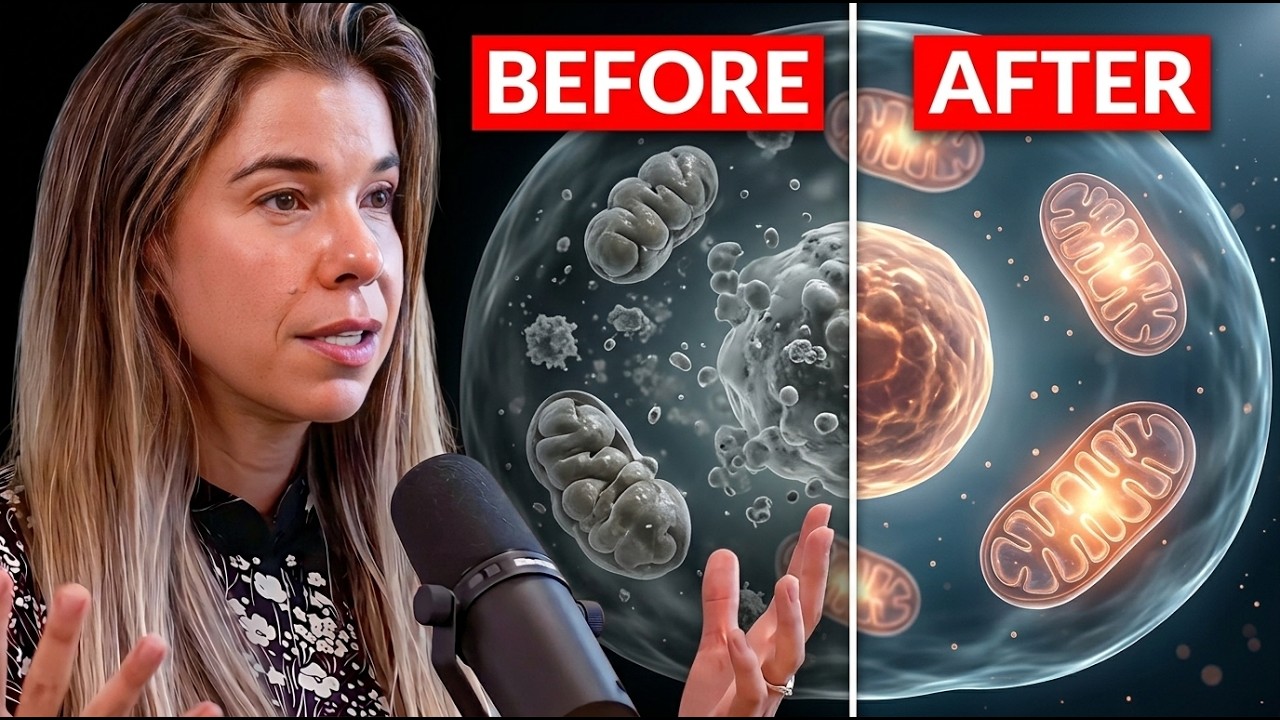
Urolithin A forms when gut bacteria break down polyphenols from pomegranate. Once created, it activates mitophagy—a specialized form of cellular cleanup focused specifically on mitochondria.
Mitophagy: Your Mitochondria’s Quality Control
While autophagy clears general cellular debris (activated by fasting or intense exercise), mitophagy specifically targets damaged mitochondrial components. Since mitochondria lack robust DNA repair mechanisms like nuclear DNA has, this cleanup process becomes crucial.
Damaged parts of mitochondria are cleared out, kind of like fissioned off, gone. And then you have like a healthier mitochondria left.
What changed Patrick’s mind? New human studies showing urolithin A supplementation improved multiple parameters of endurance performance. One particularly striking study found participants drinking 8 ounces of pomegranate juice daily while exercising improved their VO2 max by 17% more than exercise alone.
The Pomegranate Problem
Getting urolithin A from pomegranate juice presents challenges. Not only is the juice high in sugar, but urolithin A production varies significantly based on individual gut microbiome composition. Direct supplementation bypasses these variables.
Patrick started supplementing with urolithin A just three weeks before this conversation—making it her most recent experimental addition.
The Science Behind the Stack
What sets Patrick’s approach apart isn’t just what she takes, but why. Each supplement targets specific biological pathways with documented mechanisms:
- Ubiquinol: Electron transport chain support for cellular energy production
- Glucoraphanin/Sulforaphane: NRF2 pathway activation for detoxification and antioxidant defense
- Urolithin A: Mitophagy induction for mitochondrial quality control
These choices reflect a longevity-focused strategy centered on protecting and optimizing mitochondrial function—which Patrick repeatedly emphasized as fundamental to preventing age-related cognitive decline.
Should You Follow This Protocol?
Patrick’s supplement regimen clearly exceeds basic nutritional insurance. These are targeted interventions based on specific health concerns and research interests.
Her willingness to experiment (and re-experiment) with compounds like urolithin A demonstrates an important principle: evidence evolves. What seemed unsupported years ago may gain credibility as research progresses.
For those interested in mitochondrial health optimization, Patrick’s choices offer a research-backed starting point. But her emphasis on measuring outcomes—something she acknowledged not doing during her first urolithin A trial—highlights a crucial consideration.
Supplementation without assessment is just expensive guesswork. Whether tracking VO2 max, inflammatory markers, or subjective energy levels, some form of measurement helps determine if these interventions actually move the needle for your biology.