In May 2026, Las Vegas will host what is arguably the most divisive event in modern sports history: the inaugural Enhanced Games.
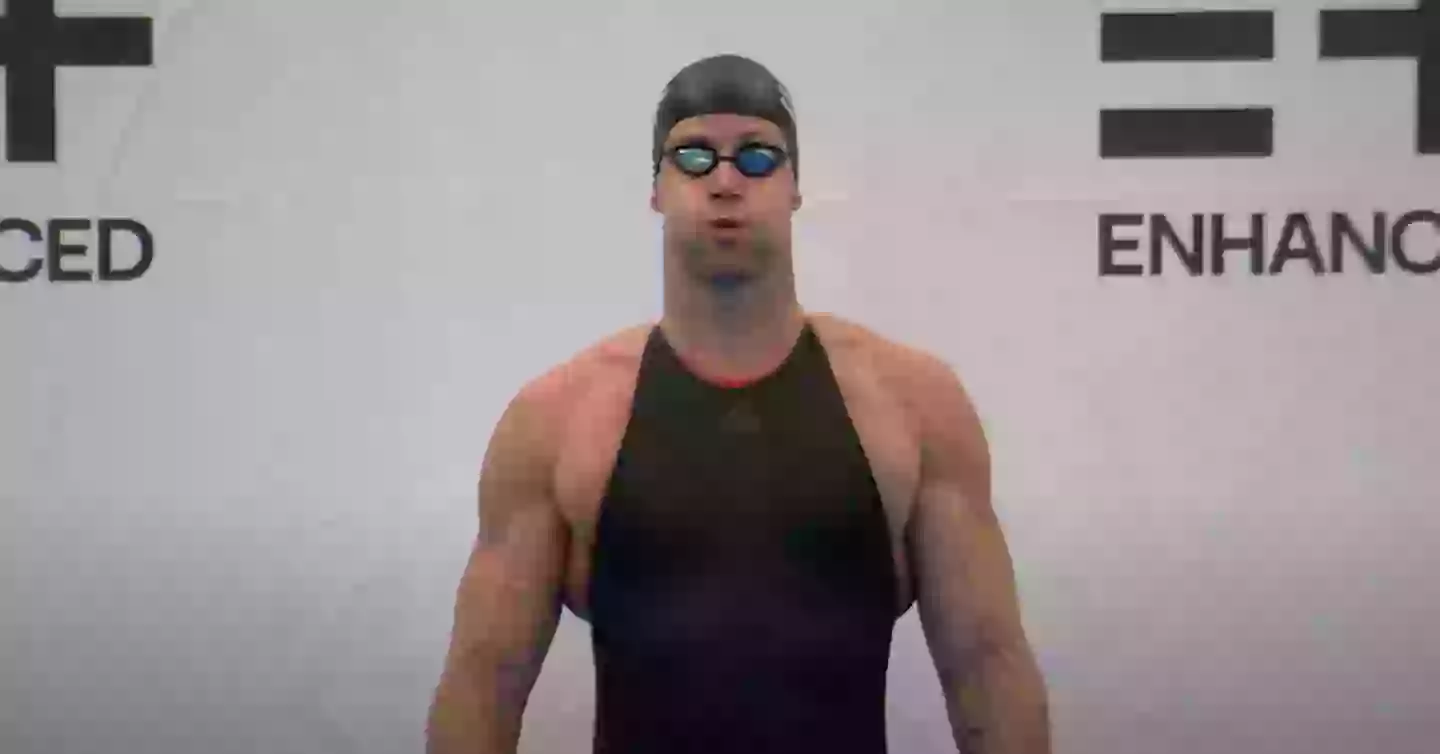
Billed as the “Olympics of the enhanced,” this four-day competition allows — and encourages — the use of performance-enhancing drugs under medical supervision.
With a prize pool that includes million-dollar bonuses and a promotional campaign led by controversial backers like Donald Trump Jr. and Peter Thiel, the Enhanced Games is challenging everything we think we know about human performance, fairness, and the future of elite sport.
But are we witnessing a scientific breakthrough or the reckless glorification of doping?
Jump to:
- A Reimagined Olympic Model — or a Dangerous Precedent?
- Global Condemnation from Sporting Authorities
- Athletes and Enhancements: A “Superhuman” Selling Point
- The Financial Lure: Prize Money Over Prestige
- But What About the Fans, Sponsors, and Broadcasters?
- The Ethical Dilemma: What Message Are We Sending?
- A Parallel Reality or a Slippery Slope?
A Reimagined Olympic Model — or a Dangerous Precedent?
Founded by Australian entrepreneur Aron D’Souza, the Enhanced Games is marketed as a revolutionary alternative to the Olympic Games. “We are creating a new category of human excellence,” D’Souza claims, framing the event as an intersection of elite sport and cutting-edge science.
Athletes will not be drug-tested. Instead, they must disclose their pharmaceutical regimens, which must be comprised of legally approved, medically prescribed substances. According to organizers, this creates a safer, more transparent environment than the current “cat-and-mouse” system between athletes and anti-doping agencies.
Critics see it differently.
Global Condemnation from Sporting Authorities
The response from the traditional sporting world has been swift and scathing.
World Aquatics dismissed the Enhanced Games as a “circus,” with a spokesperson declaring:
“Like clowns juggling knives, sadly, these athletes will get hurt performing in this circus.”
World Athletics president Sebastian Coe warned that participants could face lengthy bans, effectively locking them out of mainstream competition, including the Olympics and World Championships. The World Anti-Doping Agency (WADA) went even further, stating:
“This event jeopardizes athletes’ health and well-being by promoting the abuse of powerful substances and methods.”
Travis Tygart, CEO of the U.S. Anti-Doping Agency, called it bluntly:
“A dangerous clown show, not real sport.”
Their primary concern? That normalizing enhancement removes a fundamental layer of fairness and may fuel a rise in unsafe, unregulated doping—especially among younger, impressionable athletes.
Athletes and Enhancements: A “Superhuman” Selling Point
Despite the criticism, the Enhanced Games has already recruited a handful of athletes, notably in swimming. These include Kristian Gkolomeev, Andrii Govorov, and James Magnussen, with each undergoing highly publicized body transformations.
Gkolomeev made headlines earlier this year by swimming the 50m freestyle in 20.89 seconds — 0.02 seconds faster than the official world record — while on a performance-enhancing protocol. Although the record is not recognized by swimming’s governing bodies due to his use of a banned suit and enhancements, the Enhanced Games awarded him $1 million for the feat.
Magnussen, a former world champion, is featured in the documentary 50 Meters to History: The First Superhuman, where his transformation — in both physique and speed — has become symbolic of what the event promotes.
The enhanced aesthetic is unmistakable: larger muscles, faster times, and more hype.
The Financial Lure: Prize Money Over Prestige
One of the driving forces behind athlete participation is money.
According to internal Enhanced Games figures, athletes can earn lucrative appearance fees and performance bonuses. World records come with a $250,000 payday, rising to $1 million for signature events like the 100m sprint and 50m freestyle.
This is particularly compelling for non-celebrity athletes who typically earn little from their sports. A striking statistic underscores the issue: 59% of U.S. Olympians earn less than $25,000 during Olympic years.
For many, the Enhanced Games represents a rare chance to turn elite performance into financial freedom.
But What About the Fans, Sponsors, and Broadcasters?
Here lies one of the Enhanced Games’ biggest challenges — public perception and legitimacy.
As of now, no mainstream sponsors or broadcast partners have committed to the event. Brands typically align with events that offer positive associations, broad viewership, and long-term reputational gain. That’s why Olympic sponsorship deals can reach hundreds of millions of dollars.
But with the Enhanced Games, there’s a reputational risk tied to its embrace of drug use. While curiosity is undoubtedly high, many see the event as too toxic for traditional corporate investment.
Broadcast reach is another question mark. Without established networks airing the event, visibility will rely on streaming platforms and social media buzz. Organizers are reportedly in talks with potential distributors, but no deals have been finalized.
The Ethical Dilemma: What Message Are We Sending?
Beyond the sponsorship concerns lies a deeper issue — ethics.
The Enhanced Games challenges the long-standing narrative that perseverance, sacrifice, and clean effort lead to greatness. If drugs become a requirement for success, what does that teach the next generation of athletes?
Critics argue that such an event rewards and normalizes drug use, potentially influencing youth to prioritize pharmacological shortcuts over discipline and effort. Cam McEvoy, Australian Olympic gold medalist, voiced his dismay:
“It doesn’t count in any way, shape or form when you take drugs or wear one of the banned suits — or both.”
The Enhanced Games’ claim to offer a “safe” environment may ring hollow when history has shown the long-term dangers of even medically supervised doping. From liver failure to hormonal damage and psychological side effects, the risks are well documented.
A Parallel Reality or a Slippery Slope?
Aron D’Souza insists the Enhanced Games isn’t trying to replace the Olympics, but rather create a parallel competition. He likens it to the evolution of sport itself — just as the Olympics once resisted professionalism, he believes the future will accommodate scientifically enhanced performance.
But the philosophical tension remains. Can the human body truly be pushed to new heights without compromising integrity, health, and trust?
The Enhanced Games may only attract a niche segment of athletes and fans, but its mere existence forces a reckoning within sport. Is the pursuit of speed, strength, and spectacle worth dismantling decades of hard-fought ethical standards?
One thing is certain: when the Enhanced Games kicks off in May 2026, the world will be watching — not just the results, but the consequences.