Mobility training doesn’t have to be complicated—in fact, it shouldn’t be.
According to yoga instructor and mobility expert in a recent video, the secret to becoming more flexible and mobile isn’t doing more stretches or spending hours on elaborate routines.
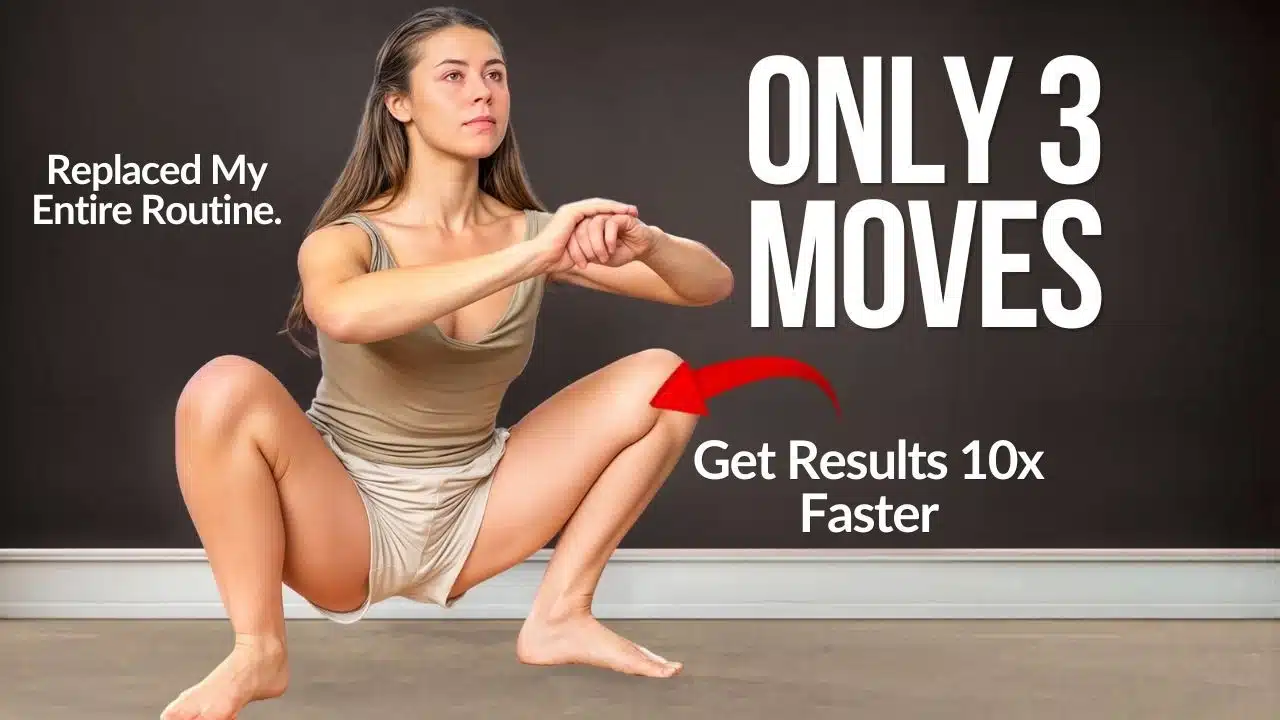
It’s about mastering three fundamental movement patterns that address strength, joint lubrication, and balance—the real pillars of mobility.
What makes this approach different is how it addresses why bodies become tight in the first place: nervous system trust and joint health working together.
Jump to:
Why Most Mobility Routines Actually Backfire
After earning her yoga certification, the instructor fell into a common trap. She believed more stretching would equal better results.
I am going to overly work my body until I am the most mobile flexible person on the planet. If you can believe me, that backfired.
Overloading creates two problems. First, excessive stretching stresses the body so much that muscles actually tighten up as a protective response. Second, overwhelming routines lead to paralysis by analysis—people become so confused they do nothing at all.
No products found.
The solution? Simplicity backed by science.
The Three Pillars of Real Mobility
Effective mobility training rests on three interconnected foundations that work synergistically.
Strength Creates Nervous System Trust
When muscles are strong enough to support positions, the nervous system relaxes. It stops sending protective tightening signals.
If you have strength, your nervous system is calm. It trusts you. It says, you can hold that. I know you’re strong enough.
Joint Lubrication Enables Smooth Movement
Moving joints through their full range of motion encourages synovial fluid production—the substance that keeps joints gliding smoothly. Without regular movement, joints become sticky as buildup forms around joint capsules.
Balance Builds Confidence
Balance is another nervous system issue. When the body trusts its ability to maintain equilibrium, it permits greater freedom of movement.
I know that she can balance in this position. She will not fall. So, I’m going to be comfortable moving through space because I know she’s got this.
Movement #1: The Three Essential Squat Variations
Squats target multiple areas simultaneously—ankles, knees, quads, glutes, and back. Different variations hit different muscle groups, creating well-rounded development.
No products found.
Parallel Squats
Start with feet hip-width apart. Depth doesn’t matter initially—even a slight knee bend counts as a squat and builds surrounding muscle strength.
Begin with 10 repetitions, as deep or shallow as feels manageable. Holding onto furniture for support is perfectly acceptable while building foundation.
Malasana (Wide) Squats
Position feet slightly wider than hips at a 45-degree angle. The key technical cue makes all the difference.
When you come down, I want you to send your weight back slightly. When you’re sending your weight back and then your chest forward, this is going to help you with that equilibrium.
Most people lean their chest backward, which causes balance issues. Creating equilibrium through opposing forces—hips back, chest forward—solves this problem. Perform 10 repetitions.
Goddess (Wide-Legged) Squats
Take an even wider stance than malasana. Focus on sending knees outward, training external rotation while protecting knee joints.
Complete 10 repetitions. That totals 30 squats daily, which can be spread throughout the day or rotated—parallel Mondays, malasana Wednesdays, goddess Fridays.
No products found.
Movement #2: Joint Circles for Lubrication
Moving joints through complete ranges of motion encourages synovial fluid production. Think of it as oiling a door hinge—movement itself is the lubricant.
Knee Circles
These circles incorporate internal rotation, external rotation, flexion, and extension all in one movement. Hips move in countless directions, making this exceptionally efficient.
Progression options include:
- Beginner: On all fours, circling one knee
- Intermediate: Standing while holding furniture for support
- Advanced: Standing balance with full leg circles
- Challenge: Downward dog position with knee circles
Arm Circles
Shoulders possess similar multi-directional capability. Simple arm circles cover internal rotation, external rotation, and full range patterns.
Adding resistance amplifies benefits. Holding light weights or bearing weight on wrists during circles increases effectiveness significantly.
Don’t forget smaller joints—ankle circles and wrist circles matter too, especially when performed under load.
No products found.
Movement #3: Balance Training Through Space
True balance isn’t just standing on one leg. It’s about moving confidently through space and returning to equilibrium safely.
Romanian Deadlifts (Single-Leg)
Standing on one leg, hinge forward while extending the opposite leg behind. Reach toward the ground with the same-side arm as the extended leg.
Modifications include tapping a table instead of the floor, or simply holding the hinged position without reaching. The supporting foot often cramps initially because it’s unaccustomed to bearing full body weight.
High Lunge to Knee Lift
Start in a high lunge position. Step forward onto the front leg while driving the back knee up toward chest. Step back to high lunge. Repeat.
Doing 10 of those on both sides will strengthen. It will lubricate. And it will train your balance.
This movement is particularly beneficial for hip flexors while simultaneously addressing all three mobility pillars. Beginners can shorten the lunge stance for more stability or hold onto support.
Making It Sustainable: The Integration Strategy
The biggest obstacle isn’t the movements themselves—it’s consistency. The solution lies in integration rather than isolation.
No products found.
I make movement fun. I do it in conjunction with other things. I do it while I watch TV. I do it in bed. Make it fun.
Practice squats while making coffee. Do knee circles during commercial breaks. Perform balance work while brushing teeth.
Starting small beats not starting at all. Even one variation per day creates momentum. Progress follows consistency, not perfection.
Why This Minimalist Approach Works
These three movement categories aren’t arbitrary. They address the actual mechanisms behind mobility limitations:
- Squats build strength that convinces the nervous system to permit deeper ranges
- Joint circles produce synovial fluid that enables smooth, pain-free movement
- Balance training develops proprioception that allows confident movement through space
Together, these elements create a feedback loop. Strength enables balance. Balance builds confidence. Confidence reduces protective tension. Reduced tension permits greater range. Greater range requires more strength—and the cycle continues upward.
Advanced practitioners can certainly explore further. But struggling beginners need exactly this foundation—nothing more, nothing less. Mastering these fundamentals creates mobility that’s functional, sustainable, and built on physiological principles rather than stretching dogma.
The irony is clear: doing less, done consistently, produces more than doing everything sporadically.
No products found.