Feeling burned out from trying to balance fitness goals with real-life responsibilities? You’re not alone—and there’s a better way.
Marcus, a former professional athlete and fitness coach with 12 years of experience, has developed a remarkably simple framework that cuts through the noise.
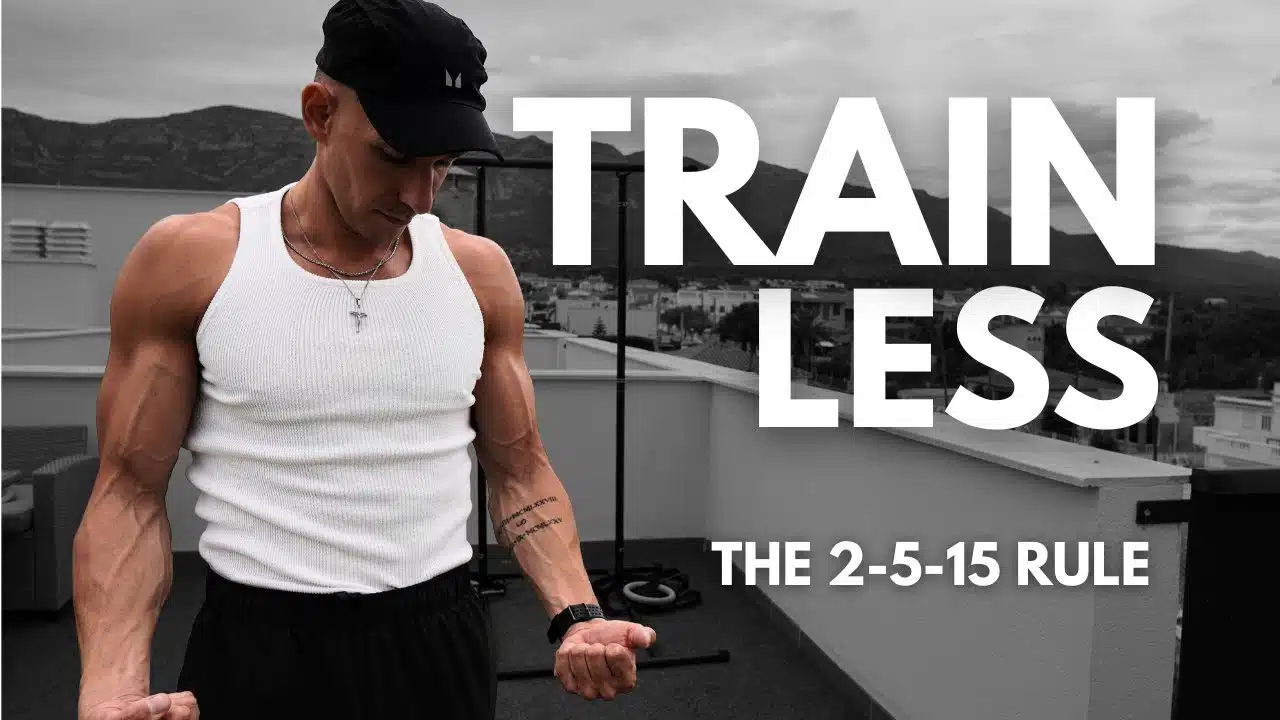
His approach, called the 2515 rule, promises muscle growth without the overwhelm—and it’s backed by science.
If you’re tired of complicated programs that demand more time than you have, this might just be the solution you’ve been searching for.
Jump to:
The Burnout Cycle Trapping Busy Men
After coaching for over a decade, Marcus has identified two distinct groups of men who struggle with fitness consistency.
The first group simply doesn’t have time to work out six days per week, yet they feel obligated to maintain that frequency. Due to work and family commitments, guilt creeps in, motivation tanks, and they eventually stop training altogether.

If you want something simple that actually works, this is one of the most effective tools I’ve used to build strength, conditioning, and endurance without needing a full gym setup.
- Full-body training with one weight using swings, squats, and presses
- Solid cast iron build that feels stable and lasts for years
- Comfortable grip that makes high-rep workouts easier to handle
The second group actually puts in sufficient effort—but without any systematic approach. They end up crushing their bodies with unstructured training and see minimal results despite their dedication.
Both groups are actually high achievers. They want to do everything perfectly, but there are commitments in life that are more important and they are aware of it.
Marcus doesn’t blame these men for their struggles. Instead, he points to an industry that overcomplicated what should be straightforward.
The fitness world has created unnecessary stress around training, making men feel like they’re failing when they’re simply trying to live balanced lives.
Why More Training Isn’t Always Better
As someone who once trained over 20 hours weekly with double sessions six days per week, Marcus understands the “more is better” mentality intimately.
His professional athletic career demanded extraordinary volume—one cardio session and one gym session daily, plus strength training workouts. But that extreme approach isn’t necessary for most men, nor is it sustainable alongside career and family obligations.
Research from Brett Schoenfeld and other scientists reveals a critical insight: muscle growth doesn’t come from training duration. It comes from applying appropriate training stress followed by proper recovery.
If you want something simple that actually works, this is one of the most effective tools I’ve used to build strength, conditioning, and endurance without needing a full gym setup.
- Full-body training with one weight using swings, squats, and presses
- Solid cast iron build that feels stable and lasts for years
- Comfortable grip that makes high-rep workouts easier to handle
Studies show that once you exceed approximately 15 challenging sets per muscle group weekly, returns diminish sharply. Push beyond that threshold, and your body shifts from growth mode to survival mode.
If you’re blasting your chest with 30 plus sets per training week, your body is not growing. It’s just surviving.
Three chest days weekly with three to five different exercises per session? That’s excessive and counterproductive.
Breaking Down The 2515 Rule
Marcus’s framework condenses effective muscle-building into three memorable numbers: 2-5-15.
Each digit represents a specific training principle designed to maximize efficiency while minimizing wasted effort.
The “2” – Train Each Muscle Twice Weekly
Frequency matters significantly for muscle development. Muscles grow optimally when stimulated every three to four days.
Training a muscle group only once weekly creates a problematic pattern: muscle protein synthesis spikes after training, then drops back to baseline. You essentially spend half your week not growing.
If you want something simple that actually works, this is one of the most effective tools I’ve used to build strength, conditioning, and endurance without needing a full gym setup.
- Full-body training with one weight using swings, squats, and presses
- Solid cast iron build that feels stable and lasts for years
- Comfortable grip that makes high-rep workouts easier to handle
Better approaches include:
- Push day Monday, pull day Wednesday, push day Friday, pull day Saturday
- Three full-body sessions spread throughout the week
- Any split providing two to three high-quality sessions per muscle group with adequate recovery between
The “5” – Five Hard Sets Per Muscle Per Session
Volume per session should remain conservative. Each muscle group requires roughly five challenging sets per training session to stimulate growth.
On push day, for example, you might perform push-ups, dips, and squats. This combination already targets chest, triceps, shoulders, and legs within three to five focused sets per group.
Exceeding this volume doesn’t necessarily increase muscle growth—it primarily increases fatigue. The goal is muscular adaptation, not nervous system collapse.
The “15” – Fifteen Total Sets Per Training Session
Total session volume caps at 15 sets. This typically translates to four to five movements with three to five sets each, completed within 45 to 60 minutes.
This range represents the sweet spot for busy men—enough stimulus to drive adaptation, short enough for quick recovery, sustainable enough for long-term consistency.
If you want something simple that actually works, this is one of the most effective tools I’ve used to build strength, conditioning, and endurance without needing a full gym setup.
- Full-body training with one weight using swings, squats, and presses
- Solid cast iron build that feels stable and lasts for years
- Comfortable grip that makes high-rep workouts easier to handle
The framework offers built-in flexibility. Miss a training day? Simply resume where you left off, whether that’s push, pull, or full-body work.
Creating Your Personal Training Program
Implementation begins with honest self-assessment rather than ambitious planning.
Step One: Choose Realistic Training Frequency
Don’t schedule six weekly sessions if you can realistically complete three. Examine your actual commitments—work demands, family time, social obligations—and select a number you can maintain with 100% certainty.
Here’s the liberating truth: training frequency matters far less than hitting each muscle twice weekly.
Two full-body sessions can produce identical results to four or even six weekly workouts, provided total volume, intensity, and consistency remain constant.
It really doesn’t matter if you train two times, four times, or six times per week. If you want to train six times and you have the time for it and it’s not stressing you out, great. Definitely go for it.
Marcus himself sometimes trains just twice weekly with excellent results—building muscle, improving fitness, and maintaining energy for everything else life demands.
If you want something simple that actually works, this is one of the most effective tools I’ve used to build strength, conditioning, and endurance without needing a full gym setup.
- Full-body training with one weight using swings, squats, and presses
- Solid cast iron build that feels stable and lasts for years
- Comfortable grip that makes high-rep workouts easier to handle
Step Two: Apply The Framework
Structure each session around four to six movements with two to four sets each, totaling approximately 15 working sets.
Select exercises that allow progressive loading:
- Push-ups for chest, shoulders, and triceps
- Dips for similar pressing muscles
- Squats for lower body development
- Pull-ups for back and biceps
- Bodyweight rows for additional pulling strength
Track repetitions for every workout in a simple notebook. If this week you completed 14, 11, 10, and seven reps across four push-up sets, next week’s goal becomes adding one or two reps per set.
This represents progressive overload in its purest form. Most people can continue adding reps until reaching 30 per set—a process requiring weeks or months of consistent effort.
This steady progression drives results far more effectively than constantly changing exercises. Sticking with movements long enough to improve performance matters infinitely more than variety for variety’s sake.
Step Three: Execute Without Overthinking
Simplicity paired with hard work produces superior outcomes compared to complex programming executed inconsistently.
If you want something simple that actually works, this is one of the most effective tools I’ve used to build strength, conditioning, and endurance without needing a full gym setup.
- Full-body training with one weight using swings, squats, and presses
- Solid cast iron build that feels stable and lasts for years
- Comfortable grip that makes high-rep workouts easier to handle
Your body responds to training stimulus regardless of when that stimulus occurs. Train whenever your schedule permits—early morning, midday, late evening. Just ensure sessions happen.
Marcus believes most men don’t need another training plan. They need consistency and a system that integrates seamlessly into their existing lives.
Results Beyond Muscle Growth
Following the 2515 rule consistently delivers benefits extending beyond physical changes.
Yes, you’ll build muscle and develop genuine strength. But you’ll also cultivate something equally valuable: confidence born from sustainable progress.
Unlike programs demanding unsustainable commitment levels, this approach acknowledges real-world constraints while still producing measurable improvements.
Training becomes something you accomplish despite busy schedules, not something creating additional stress. Sessions can happen at home with minimal equipment, eliminating commute time and gym membership expenses.
If you want something simple that actually works, this is one of the most effective tools I’ve used to build strength, conditioning, and endurance without needing a full gym setup.
- Full-body training with one weight using swings, squats, and presses
- Solid cast iron build that feels stable and lasts for years
- Comfortable grip that makes high-rep workouts easier to handle
The framework’s true power lies in its sustainability. Men maintain this approach for months and years because it fits their lives rather than demanding their lives revolve around training.
For the 30-plus man juggling career advancement, family responsibilities, and personal health, the 2515 rule offers something rare: a scientifically-sound path requiring minimal time while delivering maximum results.
No complicated periodization schemes. No six-day-per-week commitments. Just intelligent application of proven principles that respect both your body’s adaptation mechanisms and your schedule’s limitations.