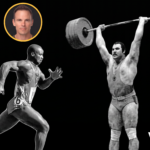
Men who lifted weights during a five-month calorie-restricted diet gained lean muscle mass while simultaneously losing fat, according to a 2026 study tracking 304 adults—even though those who did cardio lost slightly more total weight on the bathroom scale.
The findings expose a critical flaw in how most dieters measure progress: total weight loss is a misleading metric when your goal is actually fat loss.

Published in Frontiers in Endocrinology by researchers from Tel Aviv University, the retrospective cohort study followed adults ages 20 to 74 who self-selected into resistance training, aerobic exercise, or no structured exercise groups while eating approximately 500 calories below their daily energy needs.
What they discovered should fundamentally change how you approach fat loss—and why stepping on the scale might be sabotaging your results.
Jump to:
- The Resistance Training Group Rewrote the Rules
- Why the Scale Lies About Fat Loss
- What Happens When You Diet Without Lifting
- The Meta-Analysis That Settled the Debate
- The 500-Calorie Threshold
- What About Combining Cardio and Weights?
- Study Limitations Worth Noting
- Practical Takeaways for Your Fat Loss Journey
- Why This Matters More as You Age
- Rethinking Success
The Resistance Training Group Rewrote the Rules
While all three groups lost weight, the resistance training group was the only one to increase fat-free mass on average. Men who lifted weights actually gained lean tissue while simultaneously shedding fat.
The aerobic exercise group, meanwhile, lost some fat-free mass despite logging more total weight loss. The no-exercise group fared worst: more than 30% of their total weight loss came from muscle tissue, not body fat.
This distinction matters far more than most people realize. Muscle tissue drives metabolic rate, supports functional strength as you age, and determines whether your body looks lean or simply “smaller” after dieting.
Why the Scale Lies About Fat Loss
Imagine two dieters: one loses 15 pounds of pure fat while gaining 3 pounds of muscle. Another loses 18 pounds—but 6 of those pounds are muscle.
The scale says the second person “won.” Body composition tells a completely different story.
Waist circumference measurements in the Tel Aviv study revealed this gap clearly. Strength trainers reduced waist size by approximately 9 centimeters, compared to 8 cm for aerobic exercisers and just 6 cm for those who didn’t exercise.
Less total weight lost. More inches gone from the midsection. That’s the power of preserving—and building—lean tissue during a deficit.
What Happens When You Diet Without Lifting
Research consistently shows that approximately 25% of diet-induced weight loss comes from fat-free mass when resistance training isn’t part of the equation. That’s roughly one pound of muscle for every three pounds lost.
Over months, this cannibalization of lean tissue compounds into metabolic slowdown, decreased strength, and what researchers call “skinny fat”—lower bodyweight but higher body fat percentage relative to total mass.
Adding resistance training shifts those ratios dramatically. Some controlled trials have documented fat loss composition improving from roughly 69% fat to 97% fat when lifting is introduced during caloric restriction.
The Meta-Analysis That Settled the Debate
A separate 2025 meta-analysis published in Frontiers in Nutrition examined 62 randomized controlled trials involving 4,429 participants. The conclusion was unambiguous:
Every single resistance training modality outranked every cardio modality for lean mass preservation during a calorie deficit.
Surprisingly, moderate-intensity resistance training ranked highest—outperforming even heavy lifting during a cut. Researchers suggest aggressive loads may exceed recovery capacity when fuel is restricted, making moderate weights with proper volume the sweet spot.
The 500-Calorie Threshold
Participants in the Tel Aviv study followed individualized diets providing approximately 500 calories below their measured resting metabolic rate and estimated daily energy expenditure. That number isn’t arbitrary.
Meta-analytic data suggests that at deficits of roughly 500 kcal/day or more, the muscle-protective effect of resistance training begins to erode on a linear dose-response curve.
Push the deficit too hard, and even lifting weights can’t fully protect lean tissue. The body prioritizes survival over aesthetics, catabolizing muscle to fuel essential functions when energy restriction becomes extreme.
What About Combining Cardio and Weights?
A landmark 2017 trial published in the New England Journal of Medicine tracked older adults with obesity through different exercise protocols. Combined resistance and aerobic training led to 3% lean mass loss versus 5% in the aerobic-only group and 2% in the resistance-only group.
Analysis of 36 randomized trials found the total fat mass difference between cardio and resistance training averages only about 1 kilogram across full programs. That gap largely disappears when total work effort—rather than session length—is equalized.
Cardio involves continuous movement. Weight sessions include rest periods between sets. When you match actual energy expenditure, outcomes converge more than most fitness influencers would have you believe.
Concurrent training may represent the optimal strategy: matching resistance training for muscle preservation while adding cardiovascular and potential fat-loss benefits of aerobic exercise.
Study Limitations Worth Noting
The Tel Aviv research was a retrospective cohort study, not a randomized controlled trial. Participants self-selected into exercise groups, which introduces potential bias.
Those who chose weight training may have differed in baseline characteristics, training history, or dietary compliance compared to cardio enthusiasts or non-exercisers. These unmeasured variables could influence results.
Protein intake—an independent and powerful variable for preserving lean mass—wasn’t controlled. Research across 24 RCTs shows approximately 1.2 grams per kilogram of bodyweight daily preserves significantly more muscle than standard intake, even without exercise.
Practical Takeaways for Your Fat Loss Journey
The evidence converges on several actionable strategies:
- Prioritize resistance training at least 2-3 times weekly during calorie restriction
- Moderate intensity with adequate volume appears more effective than maximum loads during a deficit
- Keep deficits reasonable—around 500 kcal/day protects muscle better than aggressive cuts
- Track body composition, not just scale weight—waist measurements, progress photos, and how clothes fit matter more
- Ensure adequate protein intake of roughly 1.2 g/kg bodyweight or higher
- Consider concurrent training—combining weights and cardio offers cardiovascular benefits without sacrificing muscle
Why This Matters More as You Age
Age-related muscle loss accelerates after 35-40 for most adults. Preserving lean tissue during fat loss becomes increasingly critical for maintaining metabolic health, functional independence, and injury resistance.
Every pound of muscle lost during dieting is harder to rebuild later. The metabolic cost of prioritizing the scale over body composition compounds over years into decreased strength, reduced bone density, and diminished quality of life.
Rethinking Success
The bathroom scale measures gravitational pull on total body mass. It cannot distinguish between fat, muscle, water, bone, or organ tissue.
True fat loss success looks like maintaining or building strength while reducing waist circumference and improving how your body moves and feels. Sometimes that means the scale barely budges—or even increases—while body composition transforms.
The 304 adults in the Tel Aviv study proved what exercise scientists have documented for decades: resistance training during calorie restriction isn’t just about building muscle. It’s about ensuring the weight you lose comes from the right places.
Your goal isn’t to weigh less. It’s to carry less fat and more muscle at whatever weight you end up. Those two objectives require completely different strategies—and the scale can’t tell them apart.