Most people don’t think twice about the way they walk — until something starts to hurt.
But walking backwards? That’s something few people try, let alone incorporate into their routine.
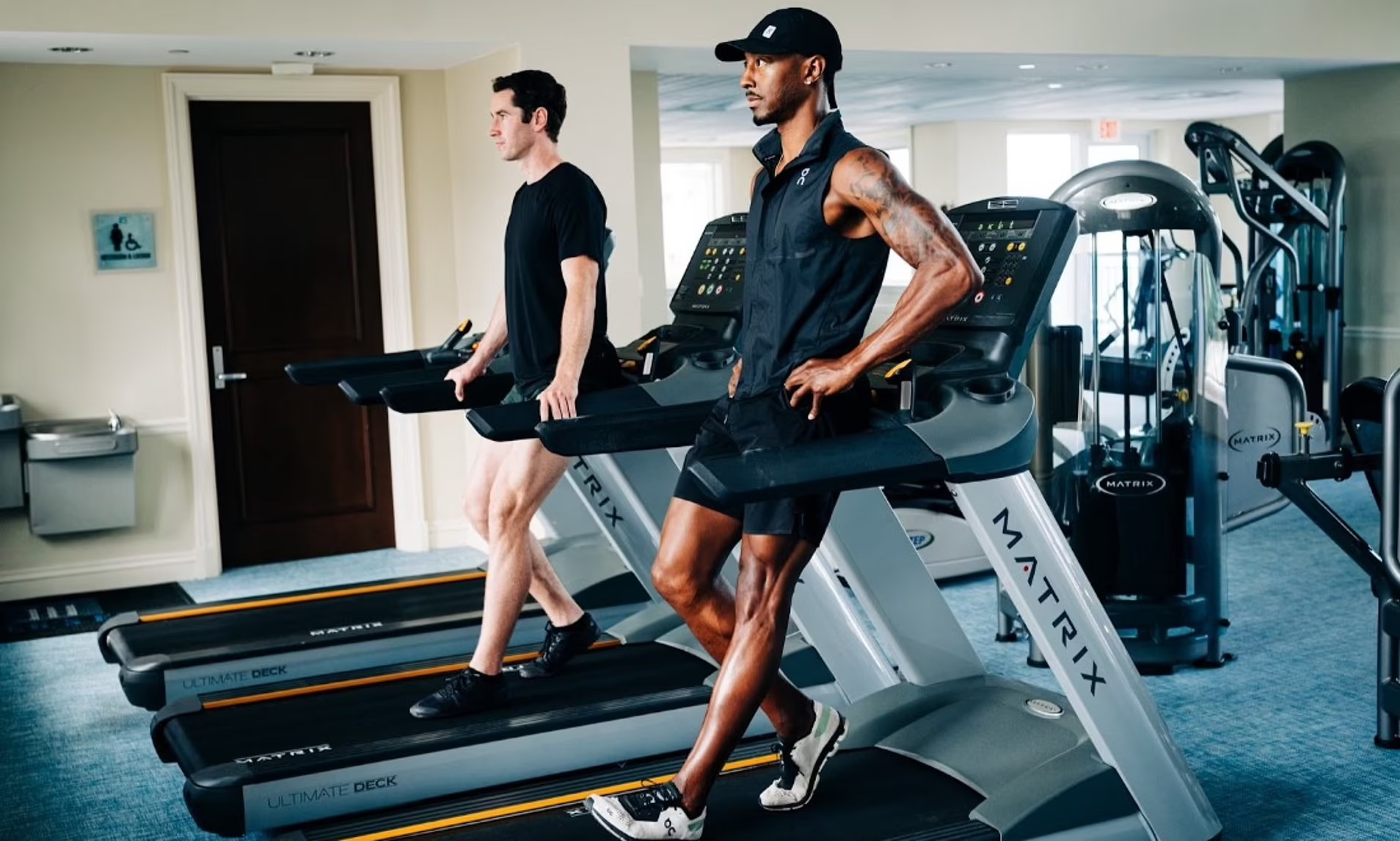
Surprisingly, research now suggests that this peculiar practice has powerful benefits — from easing chronic pain to sharpening your brain.
Popular among athletes and even studied for therapeutic use in older adults, backwards walking (also called retro walking) is slowly going mainstream.
Here’s what researchers have discovered about the physical and mental benefits — and why you might want to start taking a few steps in reverse.
Jump to:
- The key takeaway: Walking backwards is more than a quirky fitness trend
- It helps alleviate back pain and supports spinal health
- It reduces knee pressure while still strengthening leg muscles
- Retro walking can enhance athletic performance and injury prevention
- Walking backwards burns more calories than walking forwards
- It’s also effective for older adults and those in physical therapy
- It may boost memory, reaction time, and problem-solving skills
- It’s a fun way to break your routine
- Tips to get started with walking backwards safely
- Bottom line
The key takeaway: Walking backwards is more than a quirky fitness trend
Although it might feel silly at first, intentionally walking backwards taps into different muscle groups, improves balance, and even enhances cognitive function.
A growing body of evidence suggests that just 10 to 15 minutes per day may reduce knee pain, ease tight hamstrings, support spinal stability, and burn more calories than conventional walking.
Originally used as a training method among elite athletes, it’s now being explored as a helpful tool for managing chronic pain and boosting brain performance.
It helps alleviate back pain and supports spinal health
If you struggle with back tightness, you’re not alone. Up to 80% of adults will experience back pain at some point, according to the American Chiropractic Association.
One potential contributor? Tight hamstrings.
When these muscles — located at the back of your thighs — become too firm, they can tug on the pelvis and strain the lower back.
Researchers observed that retro walking helps stretch and strengthen the hamstrings, reducing that tension. In one study, participants who walked backwards for just 10 to 15 minutes a day over four weeks experienced increased hamstring flexibility and stronger back muscles.
This combination supports spinal alignment and may prevent further injury.
It reduces knee pressure while still strengthening leg muscles
Forward walking and running tend to load the knee joints — especially the front part of the knee called the patellofemoral joint, which is a common source of pain for many adults.
In contrast, walking backwards has been shown to reduce that load.
That makes it particularly helpful for people recovering from knee injuries, dealing with arthritis, or carrying extra weight.
Despite the reduced pressure on joints, retro walking still strengthens key muscles like the quadriceps, glutes, and calves by recruiting them in new ways.
That’s one reason many athletes — particularly those in team sports involving quick directional changes — incorporate backwards walking and running drills into their training.
Retro walking can enhance athletic performance and injury prevention
Agility, balance, and coordination all get a boost when you move in reverse.
Athletes in sports like soccer, basketball, and football often need to shift directions quickly — and backwards agility plays a key role.
Incorporating retro running can help improve proprioception (your body’s awareness of position) and fast footwork, both of which are critical for performance and injury prevention.
Regular practice can also help strengthen the stabilizing muscles around the knees and ankles, which may protect against future sprains, strains, and overuse injuries.
Walking backwards burns more calories than walking forwards
Because it’s biomechanically more complex, retro walking typically engages more muscle groups and requires more energy.
Several studies have shown that walking or running backwards burns more calories than its forward counterpart — making it a time-efficient addition to a fat-loss routine.
That can be especially helpful for people with obesity who may struggle with high-impact movements.
It’s also effective for older adults and those in physical therapy
Balance and coordination naturally decline with age.
Retro walking exercises can improve both by engaging the core and recruiting muscles responsible for upright posture and stability.
One of the benefits is that walking backwards forces people to slow down and pay closer attention to their movements, which may reduce falls.
Physical therapists sometimes use mild retro walking as part of rehabilitation programs for individuals recovering from stroke, surgery, or degenerative joint problems.
It may boost memory, reaction time, and problem-solving skills
While the physical benefits are important, retro walking may have brain benefits, too.
A 2020 study published in the journal Cognition showed that participants who walked backwards while completing a cognitive challenge had faster reaction times compared to those walking forward or standing still.
Researchers noted a spike in activity in the prefrontal cortex — the part of the brain involved in decision-making and executive function.
This suggests that moving backwards might stimulate neural pathways linked to cognitive control, memory retrieval, and creativity.
“There’s something about the novelty and complexity of retro walking,” said researchers, “that appears to give your brain a slight workout along with your body.”
It’s a fun way to break your routine
Let’s face it, cardio can get monotonous. But walking backwards adds an element of novelty that keeps things interesting.
Changing direction forces you to pay attention, use different muscles, and challenge your coordination.
Plus, if you’re walking outside, you’ll likely enjoy a few laughs — and curious looks — which can make the activity even more engaging.
Tips to get started with walking backwards safely
If you’re ready to try retro walking, start slow and follow these safety tips:
- Choose a flat, obstacle-free surface. Try a walking track, a park walkway, or a gym floor.
- Begin with short distances. Walk backwards for 2–3 minutes, then gradually increase to 10–15 minutes as you gain confidence.
- Engage your core and take shorter strides. This helps maintain balance and reduce tripping risk.
- Have a spotter or use a mirror indoors. This is especially helpful when first starting out.
- Consider adding music or a timer. Use it to track intervals or distract yourself with a fun playlist.
Bottom line
Walking backwards might look untraditional, but the science behind it is compelling.
From reducing joint pain and improving flexibility to enhancing brain function and agility, this simple yet underrated movement has a lot to offer.
Just a few minutes a day could lead to big payoffs — for your body and your mind.