Popular fitness coach Stephen Olson recently put science to the test with a real-world experiment that’s turning conventional cardio wisdom on its head.
Using a VO2 analyzer to track his exact calorie burn, he walked one mile at a 17-minute pace, then ran another mile at a 9:15 pace.
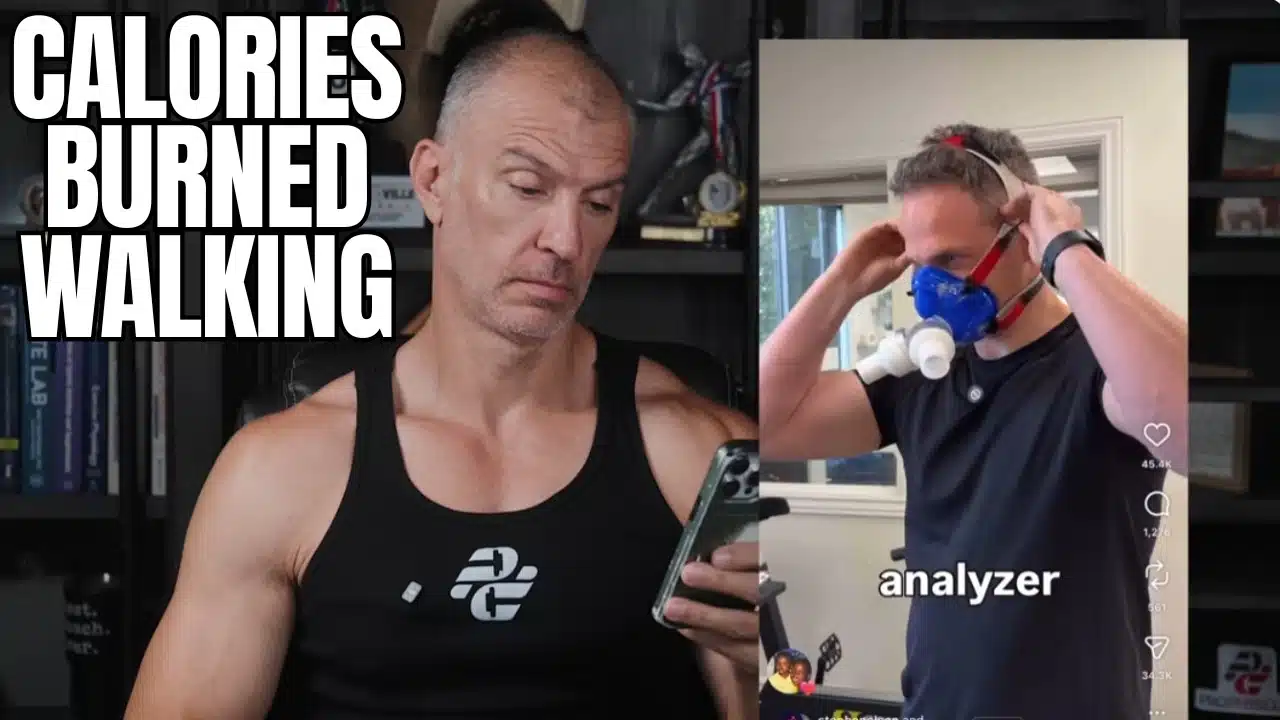
The results? Walking burned 106 calories while running torched 119—surprisingly close numbers that reveal an important truth about exercise and fat loss.
But according to Olson, there’s more to this story than simple calorie math, and understanding the difference could completely transform your approach to getting lean.
Jump to:
The Mile-for-Mile Calorie Myth
Science has long suggested that walking and running a mile burn roughly the same calories. Olson’s test confirmed this with nearly identical numbers—just 13 calories separating the two activities.
I’m actually surprised. I felt like I was working a lot harder on the run.
The explanation lies in basic physics. You’re covering identical distance, performing essentially the same work. Running completes that work faster, while walking spreads it over more time.

If you want something simple that actually works, this is one of the most effective tools I’ve used to build strength, conditioning, and endurance without needing a full gym setup.
- Full-body training with one weight using swings, squats, and presses
- Solid cast iron build that feels stable and lasts for years
- Comfortable grip that makes high-rep workouts easier to handle
However, this comparison misses a critical factor that changes everything for fat loss goals.
Why Time Changes Everything
Olson walked for 17 minutes versus running for just 9 minutes to cover the same distance. That time differential reveals walking’s hidden advantage.
Most people don’t walk or run for exactly one mile then stop. They exercise for set time periods—30 minutes, 45 minutes, an hour.
When comparing equal time periods, running obviously burns more calories because you cover greater distance. But Olson argues this misses the bigger picture for sustainable fat loss.
The Incline Walking Revolution
After years promoting walking benefits, Olson invested in an incline treadmill—a decision that transformed his physique.
I have purchased an incline treadmill for my house, and the results have been amazing. I’m able to stay extremely lean with very little effort compared to running, and also maintain much more muscle.
Incline walking burns approximately twice the calories of flat-ground walking while remaining low-impact and sustainable.
If you want something simple that actually works, this is one of the most effective tools I’ve used to build strength, conditioning, and endurance without needing a full gym setup.
- Full-body training with one weight using swings, squats, and presses
- Solid cast iron build that feels stable and lasts for years
- Comfortable grip that makes high-rep workouts easier to handle
During 60 to 90-minute incline sessions, Olson burns between 400-500 calories—substantial energy expenditure without the downsides of high-intensity running.
The Muscle Preservation Factor
For anyone pursuing both fat loss and muscle development, walking offers unique advantages over running.
Running creates systemic stress that can interfere with muscle recovery and growth. Extended running programs often lead to muscle loss, particularly when combined with resistance training.
Walking generates minimal muscular interference, allowing lifters to recover properly between strength sessions while still burning significant calories.
The Hunger Problem Nobody Talks About
Perhaps walking’s most underrated benefit involves appetite regulation—something Olson discovered through personal experience.
Man, my hunger would go through the roof. One thing I’ve learned with walking, it does not negatively impact my hunger.
High-intensity running triggers dramatic hunger increases that can easily negate calorie deficits. Many runners find themselves consuming more calories than they burned, sabotaging fat loss efforts.
If you want something simple that actually works, this is one of the most effective tools I’ve used to build strength, conditioning, and endurance without needing a full gym setup.
- Full-body training with one weight using swings, squats, and presses
- Solid cast iron build that feels stable and lasts for years
- Comfortable grip that makes high-rep workouts easier to handle
Walking produces the opposite effect. Olson reports that extended walks actually decrease his appetite while elevating mood—a powerful combination for adherence.
Heavy lower body training sessions trigger similar hunger spikes as running, making walking particularly valuable on non-leg days for creating calorie deficits without appetite battles.
Running Versus Walking: Choosing Your Path
Olson emphasizes that exercise selection should align with specific goals rather than generic calorie-burning potential.
Listen, if your goal is to be a better runner, run. But, if your goal is weight loss, weight maintenance, walking is simply unbelievable.
When Running Makes Sense
- Training for racing events (5Ks, marathons)
- Improving cardiovascular performance specifically
- Time-constrained workouts requiring maximum calorie burn
- Genuine enjoyment of running activities
When Walking Wins
- Primary goal is fat loss with muscle preservation
- Managing hunger and appetite control
- Sustainable, low-impact daily movement
- Recovery between intense strength training sessions
- Long-term weight maintenance strategies
The Complete Benefits of Walking
Olson didn’t fully appreciate walking until reaching his 40s, now considering it one of his most valuable fitness discoveries.
Cardio is not exercise. It is absolutely exercise by every single definition of exercise. It’s just a low form of exercise, but it still has so many benefits to us mentally, physically, biologically, hormonally, digestively.
Beyond calorie expenditure, consistent walking provides:
- Mental clarity and mood elevation without exhaustion
- Improved digestion through gentle movement
- Hormonal optimization without excessive stress
- Joint-friendly exercise for longevity
- Enhanced recovery between training sessions
Olson reports feeling invigorated rather than depleted after walks—creating positive reinforcement that builds adherence over time.
If you want something simple that actually works, this is one of the most effective tools I’ve used to build strength, conditioning, and endurance without needing a full gym setup.
- Full-body training with one weight using swings, squats, and presses
- Solid cast iron build that feels stable and lasts for years
- Comfortable grip that makes high-rep workouts easier to handle
Practical Implementation Strategy
For those looking to leverage walking for body composition, Olson recommends longer duration sessions rather than short bursts.
Sessions of 30 to 90 minutes on an incline treadmill create substantial calorie deficits without triggering compensatory hunger or interfering with muscle-building efforts.
Consistency matters more than intensity. Daily moderate walks outperform sporadic intense running for sustainable fat loss and long-term weight maintenance.
The fitness industry often overlooks walking as “too easy” or “not real exercise.” Yet Olson’s experience demonstrates that strategic walking implementation produces remarkable results for staying lean while building muscle—outcomes many runners struggle to achieve simultaneously.