Whey protein powder, once relegated to the dusty shelves of bodybuilding supplement stores, has exploded into mainstream consciousness.
In a recent Guardian article, journalist John Semley explored how this dairy byproduct—formerly considered waste—has become so popular that US producers are struggling to keep up with demand.
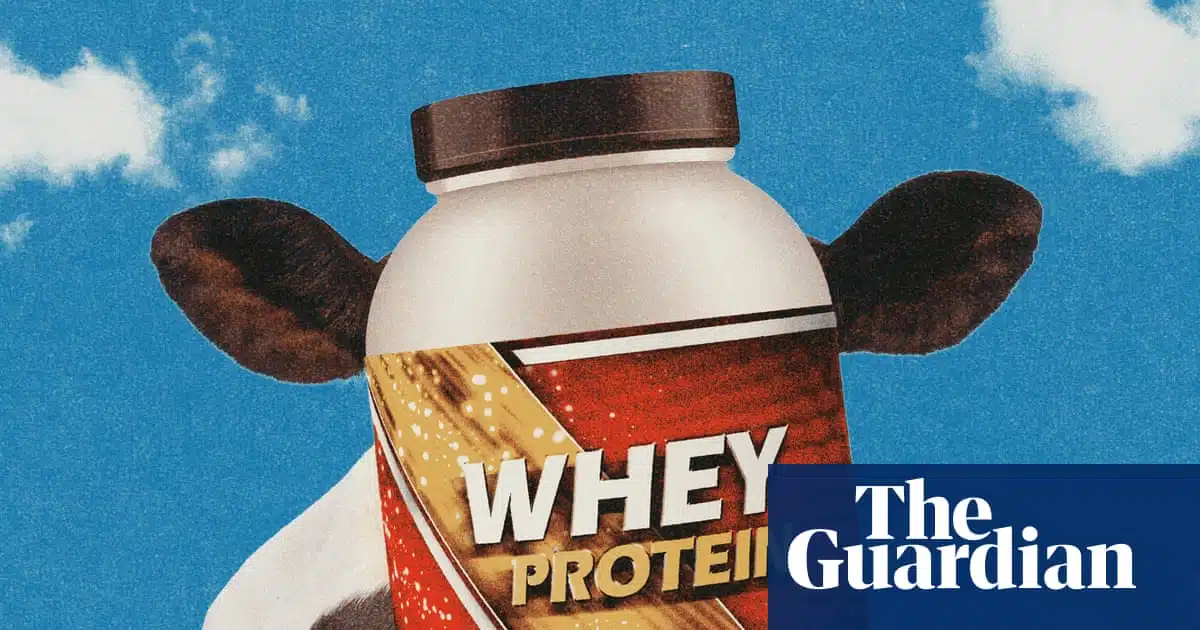
The culprit behind this unprecedented surge? The rise of GLP-1 weight loss medications like Ozempic and Wegovy, combined with a cultural obsession dubbed “proteinmaxxing.”
What follows reveals how a Swiss cheesemaker’s grandson ditched family tradition for protein powder profits—and why the entire dairy industry is scrambling to adapt.
Jump to:
From Waste Product to Liquid Gold
Tony Meives, a 39-year-old bodybuilder and gym owner, represents the face of whey’s remarkable transformation.
I worked in the cheese factory my whole life. I have four world-class cheesemakers in my family.
But when starting his own venture, Meives abandoned traditional cheesemaking for something his grandfather might have discarded: whey protein powder.
His pivot reflects broader industry shifts. What was once an afterthought in dairy production has become a premium product commanding sky-high prices.
Twenty years ago, the only people who took whey were bodybuilders. Over the past five years, the market has really opened up to each and every type of person you can probably think of.
The Protein Craze Reaches Fever Pitch
Walk through any American supermarket today and protein fortification appears everywhere—breakfast cereals, frozen meals, even iced lattes.
Traditional junk foods haven’t escaped either. Nacho chips, microwave ramen, and pretzels now boast added protein on their packaging.
According to a 2025 survey of 3,000 US adults, 71% reported actively trying to eat more protein, up dramatically from 59% in 2022.
A lot of different brands are on the protein bandwagon. They’re putting it in everything.
When Robert F. Kennedy Jr. declared that “the war on protein is over” as US health secretary, he was merely acknowledging reality.
Protein had already won.
Supply Can’t Keep Pace with Skyrocketing Demand
Joshua White, vice-president of dairy ingredients at TC Jacoby & Co, emphasized whey’s evolution in market status.
It’s a byproduct no longer. Whey is a co-product now.
This shift carries serious economic consequences. Dean Sommers, a cheese and food technologist at the University of Wisconsin’s Center for Dairy Research, reported unprecedented shortages.
We’ve reached the point where there are shortages. There are a lot of unfilled orders, and demand for orders. There simply isn’t enough product around to fill those orders.
Manufacturers are responding by adding equipment and building entirely new facilities.
But construction can’t happen fast enough to satisfy current appetite.
Prices Surge to Record Levels
The financial impact tells the story clearly:
- Whey protein concentrate prices have increased up to fivefold in recent years
- In just two years, prices jumped 83%
- Whey now represents a larger percentage of dairy farmer income than ever before
White from TC Jacoby & Co highlighted an emerging problem.
Whey protein is currently driving more a percentage of the farmer’s check than it ever has before. That results in the potential of excess cheese production, in order to get to that whey. The cart is driving the horse.
When Byproducts Become Main Attractions
Historical parallels exist for agricultural products flipping their value hierarchy.
Chicken wings were once considered undesirable scraps until a Buffalo, New York chef thought to fry them and coat them in hot sauce. Now wings drive poultry prices, with demand surpassing other chicken parts.
Americans consume approximately 1.5 billion wings on Super Bowl Sunday alone.
Whey appears headed toward similar territory, creating potential market imbalances. Dairy producers might soon find themselves with excess cheese they can’t sell profitably.
Industry boards are increasingly exploring export markets in Latin America, China, and Pacific Island nations to offload surplus cheese production.
How GLP-1 Drugs Fueled Whey’s Explosive Growth
The whey boom connects directly to GLP-1 weight loss medications like Ozempic, Wegovy, and Zepbound.
One in eight Americans now admits to taking these drugs. As caloric intake decreases, protein consumption becomes critically important.
Research estimates that 25-40% of weight lost during GLP-1 therapy is lean muscle, not fat. These medications don’t distinguish between muscle tissue and adipose tissue.
Their effects on hunger signaling and gastric motility drastically impact protein synthesis. Many users simply aren’t hungry enough to consume recommended daily protein allowances.
Alex Sullivan, a 41-year-old Tirzepatide user, explained his protein strategy.
I was definitely concerned about losing muscle alongside the other weight. Doctors talk about how you lose muscle mass as you get older, and you should try to keep as much muscle mass as you can. I wanted to make sure I retained as much as possible, as I lost weight.
The Protein Ceiling That Proteinmaxxers Ignore
While increased protein helps GLP-1 users preserve muscle, there’s a limit to benefits.
General recommendations suggest adults aim for 0.8 grams of protein per kilogram of body weight (approximately 0.36 grams per pound).
Ian Neeland, a Cleveland-based cardiologist specializing in obesity and cardiovascular health, researched protein intake scaling.
The muscle building didn’t really improve after 1.6 [grams per kg of bodyweight]. You really just need to eat enough protein to preserve muscle mass. It’s more about preservation.
Translation: GLP-1 users benefit from adequate protein intake, but excessive “proteinmaxxing” provides diminishing returns beyond muscle preservation.
It primarily drives up whey prices.
Industry Scrambles to Adapt
Whey demand is creating unexpected ripple effects throughout dairy and cheesemaking sectors.
While US cheese consumption remains steady—averaging over 40 pounds annually per American—dairy farmers are pivoting to alternative protein-rich products.
Yogurt production is expanding. Even cottage cheese, those once-maligned wiggly curds that President Richard Nixon famously seasoned with ketchup, is experiencing renewed interest.
Sommers noted dramatic operational shifts.
There’s cheddar cheese manufacturers that are switching over to cottage cheese.
Recent USDA reporting confirms whey prices continue climbing while supply shrinks.
Retailers Fear Pricing Themselves Out
Tony Meives, who purchases whey from wholesalers, worries escalating costs could threaten his Wisconsin-based business.
Rising whey prices might push price-conscious consumers toward cottage cheese aisles instead of protein powder.
I hope less people take whey protein! That way the price does come down, and the cost to make it drops.
What Comes Next for Whey
Whey protein’s journey from worthless waste to premium product reflects broader shifts in American health culture.
GLP-1 medications positioned as “wonder drugs” created corresponding demand for whey as a complementary preservation strategy.
But sustainability questions loom. Can dairy producers scale whey production without creating cheese surpluses? Will prices stabilize or continue climbing?
Perhaps most importantly: Will proteinmaxxing fade as users discover optimal intake levels?
Ancient Greek physician Hippocrates prescribed whey serum around 460 BC to fortify immune systems. Over two millennia later, we’re still solving the puzzle of what to do with this dairy byproduct.
Only now, instead of disposal problems, producers face unprecedented demand they struggle to satisfy.
The “war on protein” might be over, but battles over whey supply, pricing, and market equilibrium are just beginning.