Shoulder pain creeping into your daily life? That nagging stiffness might not be coming from where you think.
Physical therapist and movement specialist Dr. Zach Long believes most people completely overlook one tiny but critical muscle: the lower trapezius.
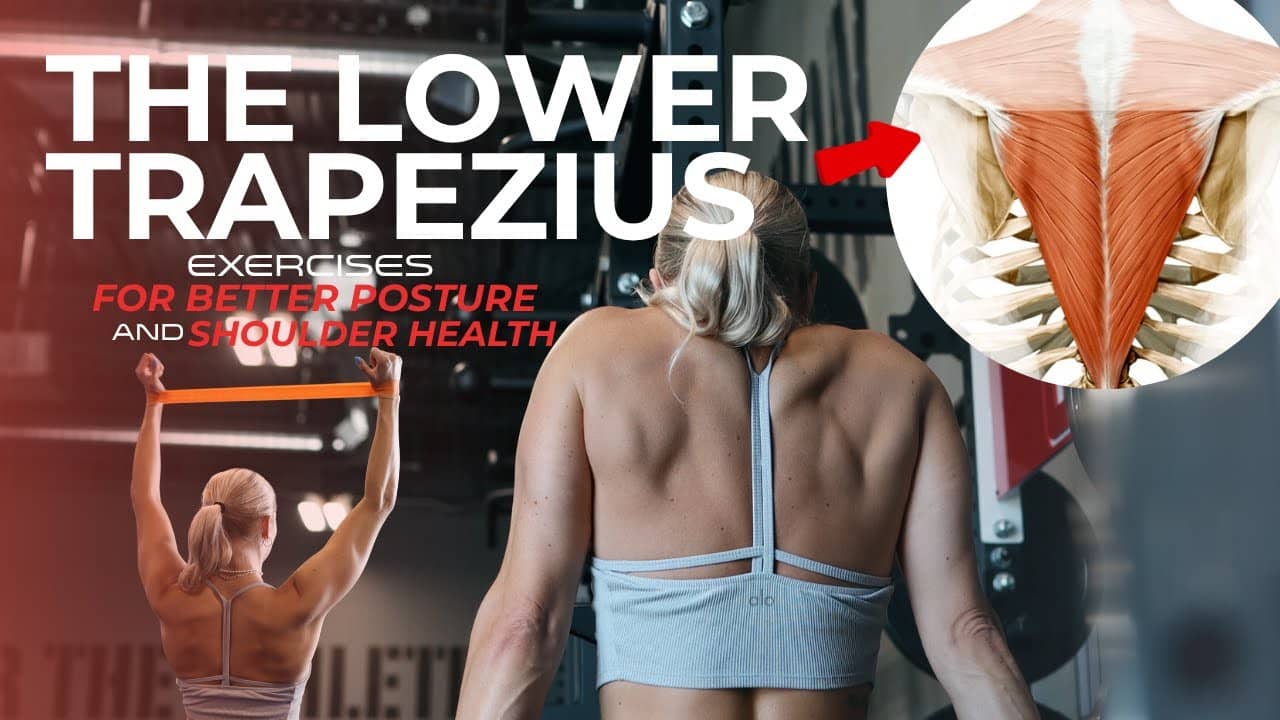
This small muscle controls entire shoulder blade stability and movement—and when weak, it triggers shoulder impingement, neck pain, and even contributes to serious diagnoses like rotator cuff or labral tears.
In a recent video breaking down shoulder mechanics, Dr. Long reveals exactly how to test, activate, and strengthen this overlooked muscle to finally eliminate shoulder pain for good.
Jump to:
- Why Your Lower Trap Matters More Than You Think
- Test Your Lower Trap Strength Right Now
- The Gold Standard Exercise: Y Raises Done Right
- Band Overhead Raises for Rotator Cuff and Lower Trap
- Scapular Pull-Ups: Pure Depression Training
- Depression Dips: Advanced Lower Trap Challenge
- Posture: Where Lower Traps Make or Break You
- The Bottom Line on Lower Trap Training
Why Your Lower Trap Matters More Than You Think
Understanding trapezius anatomy explains why shoulder problems develop. Upper trap sits at the top of the back, middle trap spans horizontally, and lower trap angles downward from mid-spine.
Most people overuse their upper trap, which elevates shoulders upward. Lower trap does the opposite—it depresses the shoulder blade downward while also retracting it backward and creating upward rotation through something called the scapular force couple.
When shoulders constantly ride up toward ears from excessive upper trap usage, lower trap becomes inactive, inhibited, and inefficient. This imbalance creates a cascade of shoulder dysfunction.
Test Your Lower Trap Strength Right Now
Dr. Long uses specific muscle testing on patients to assess lower trap function. His findings? About 99% of people experiencing pain cannot hold against even gravity’s resistance.
Testing reveals the stark difference between middle and lower trap strength. For middle trap, lie face down with arm extended at shoulder level, thumb pointing down, and hold position while someone pushes downward.
Lower trap testing changes the game. Arm extends at 135 degrees in a “Y” position with thumb pointing up—the angle of maximum lower trap activation.
So, you can already see she’s shaking in that position, but when I push her down, so that’s the strength of that low trap. So, definitely we have some little bit of weakness back here into those low traps.
That shaking and immediate weakness indicates lower trap dysfunction requiring targeted strengthening.
The Gold Standard Exercise: Y Raises Done Right
Y raises represent the most researched activation exercise for lower traps. But most people perform them incorrectly, defeating the entire purpose.
Start lying flat on floor with arms extended overhead in “Y” position, thumbs pointing toward ceiling. The common mistake? Simply lifting arms straight up, which recruits posterior deltoids and upper traps instead of lower traps.
The proper technique requires two distinct phases:
- Phase one: Depress shoulder blades downward before lifting arms off ground
- Phase two: Maintain that depression while lifting arms, holding position for 5 seconds
Before you even lift those elbows and those hands off the ground, I want you to pull your shoulders back first. Fully depress them. And then now you’re going to lift up.
Reset between every single repetition. This deliberate approach builds proper mind-muscle connection rather than reinforcing compensatory patterns.
Progressive Y Raise Variations
Once floor Y raises feel controlled, progress to incline variations that challenge lower traps through greater range of motion.
Bench Y raises involve lying face-down on incline bench with head hanging off edge. Same rules apply—depress shoulder blades first, maintain that depression throughout entire movement, and focus on scooping downward through lower traps rather than simply lifting through shoulders.
Advanced options include Y presses on hyperextension equipment and crossover band Y raises. Dr. Long emphasizes getting creative with variations while maintaining strict form on depression mechanics.
Band Overhead Raises for Rotator Cuff and Lower Trap
This compound exercise strengthens rotator cuff while reinforcing lower trap engagement throughout shoulder elevation.
Place light to medium resistance band around wrists. Retract shoulder blades down and back to establish starting position. Pull outward against band to create tension, then lift thumbs toward ceiling while maintaining outward pressure.
The critical moment occurs between one-third and two-thirds of upward movement. Actively drop shoulders and pull from lower traps even harder as arms rise overhead.
Common mistake? Starting with proper form then gradually losing shoulder depression as arms elevate, allowing upper traps to dominate. Keep elbows straight, maintain outward band tension, and prevent shoulders from rounding forward throughout entire range.
Scapular Pull-Ups: Pure Depression Training
This deceptively simple movement isolates depression without elbow movement. Hang from pull-up bar with arms completely straight and simply pull body upward by retracting shoulder blades—elbows never bend.
A lot of times when people are doing pull-ups, they won’t get this initial depression. You’ll see them just muscle and pull up like this, but you need to start with that depression and then pull up with that pull-up.
Maintain neutral head position with chest pointing forward—don’t allow shoulders to round or head to jut forward. This initial depression should precede every actual pull-up performed.
Cable Variation for Beginners
Set cable attachment at highest point and sit directly underneath on floor. Pull handles straight down using only shoulder blade depression—this isn’t a lat pulldown, so elbows stay locked.
Weighted cables allow precise progression tracking and strength building within this specific movement pattern.
Depression Dips: Advanced Lower Trap Challenge
Depression dips flip the script by starting from elevated position rather than hanging position, creating different neuromuscular demands.
Support body weight on parallel bars or dip station with arms locked straight. Sink shoulder blades downward while pushing body upward—torso shouldn’t move, only shoulder girdle depresses and elevates.
Avoid rounding shoulders forward. Keep chest at highest, tallest position throughout movement with head following shoulder position backward rather than dropping forward.
For easier alternative, perform same movement with hands on bench behind body, legs extended forward. Mechanics remain identical—locked elbows, depression through shoulder blades only, chest up and proud.
Posture: Where Lower Traps Make or Break You
Lower trapezius functions as both postural stabilizer and endurance muscle. Weakness here directly contributes to chronic poor posture.
The childhood cue “pull your shoulders back” actually reinforces problematic patterns. This instruction recruits middle traps and rhomboids without engaging lower traps, missing the depression component entirely.
So, what I want you to actually think about doing is not just pull your shoulder blades back. Pull your shoulder blades back and down. So, you’re trying to think about back and down. You’re pulling from these low traps.
That subtle shift—thinking back and down instead of just back—completely changes which muscles engage.
Building Postural Awareness Throughout Your Day
Exercises alone won’t fix posture without conscious daily practice. Dr. Long recommends selecting specific activities performed every day—driving, brushing teeth, sitting at desk—and setting timers for posture checks every five minutes.
During each check, actively pull shoulder blades back and down, engaging lower traps to maintain proper position. This frequent reinforcement builds unconscious postural habits over time.
Posture isn’t something to occasionally remember. It requires consistent awareness and practice across hundreds of micro-moments throughout each day.
The Bottom Line on Lower Trap Training
Lower trapezius weakness underlies countless shoulder problems that people attribute to other causes. This small muscle controls shoulder blade depression, retraction, and upward rotation—functions essential for pain-free shoulder movement.
Testing reveals widespread weakness that most people never address. Proper strengthening starts with mind-muscle connection through floor Y raises, progresses through various angles and loading patterns, and culminates in advanced depression exercises.
But exercise represents only half the equation. Daily postural awareness drilling the back-and-down cue cements lower trap engagement into unconscious habit. Without this component, even the best exercise program falls short.
Shoulder pain doesn’t require complex solutions—often it just requires finally paying attention to the small muscle everyone overlooks.