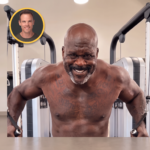
What if everything we’ve been told about aging is wrong?
A groundbreaking Yale University study tracked more than 11,000 older adults for over a decade and discovered something remarkable: nearly half of people over 65 actually got better with age, not worse.

Even more surprising? Your beliefs about aging might determine whether you’re among those who improve.
The findings, published in the journal Geriatrics and supported by the National Institute on Aging, challenge decades of assumptions about what happens when we grow older.
Jump to:
The Decline Myth Gets Debunked
Lead researcher Becca R. Levy, professor of social and behavioral sciences at Yale School of Public Health, analyzed data from the Health and Retirement Study—a federally funded survey following older Americans long-term.
The results were striking: 45% of participants improved in cognitive function, physical function, or both. Approximately 32% showed mental gains, while 28% improved physically.
Many people equate aging with an inevitable and continuous loss of physical and cognitive abilities. What we found is that improvement in later life is not rare, it’s common, and it should be included in our understanding of the aging process.
Researchers measured cognitive abilities through comprehensive assessments and evaluated physical function using walking speed—considered by geriatricians to be a crucial health indicator linked to disability, hospitalization, and mortality risk.
Many participants experienced improvements large enough to be clinically meaningful. When including those whose abilities remained stable rather than declining, more than half avoided the expected cognitive deterioration.
Why Averages Hide The Truth
Levy, author of Breaking the Age Code: How Your Beliefs About Aging Determine How Long & How Well You Live, explained why this discovery has remained hidden for so long.
What’s striking is that these gains disappear when you only look at averages. If you average everyone together, you see decline. But when you look at individual trajectories, you uncover a very different story. A meaningful percentage of the older participants that we studied got better.
This statistical quirk explains why conventional wisdom about aging has been so pessimistic—researchers were looking at the wrong data patterns.
Your Mindset Matters More Than You Think
Perhaps most fascinating was what separated those who improved from those who didn’t: their beliefs about aging itself.
Older adults who held more positive views about aging at the study’s beginning were significantly more likely to improve in both cognitive performance and walking speed. This relationship remained robust even after adjusting for age, sex, education, chronic disease, depression, and follow-up duration.
The findings support Levy’s stereotype embodiment theory, which proposes that age-related stereotypes absorbed from social media, advertising, and cultural messaging eventually become internalized and produce measurable biological effects.
Previous research by Levy’s team linked negative aging beliefs to:
- Poorer memory performance
- Slower walking speeds
- Increased cardiovascular risk
- Biomarkers associated with Alzheimer’s disease
The current study shows that those who have assimilated more positive age beliefs often show improvement.
It’s Not Just Recovery From Illness
Researchers discovered improvements weren’t limited to people who started the study with impairments.
Even participants beginning with normal cognitive and physical function frequently improved over time. This finding eliminates the explanation that late-life gains simply reflect bouncing back from illness or returning to baseline after setbacks.
The improvements were genuine enhancements, not recoveries.
Hidden Reserves Waiting To Be Unlocked
Our findings suggest there is often a reserve capacity for improvement in later life. And because age beliefs are modifiable, this opens the door to interventions at both the individual and societal level.
Levy emphasizes the practical implications: if negative beliefs about aging can be shifted, older adults may be able to tap into previously unrecognized potential for growth.
Martin Slade, lecturer in occupational medicine at Yale School of Medicine and co-author of the study, helped demonstrate that mindset isn’t just psychological—it has tangible physical consequences.
What This Means For Healthcare
The researchers hope their findings will transform public perceptions about aging and reduce assumptions that continuous decline is inevitable.
They argue the results support increased investment in:
- Preventive care programs designed for older populations
- Rehabilitation services that build on capacity for improvement
- Health-promoting interventions targeting resilience enhancement
- Public messaging campaigns countering negative aging stereotypes
Rather than accepting decline as unavoidable, healthcare systems should actively support older adults’ potential for continued growth.
Changing The Narrative Around Aging
This research arrives at a critical time as populations worldwide continue aging rapidly.
The study challenges deeply entrenched cultural narratives portraying later life as a period of inevitable loss. Instead, it presents aging as a more dynamic process where improvement remains not only possible but common.
By demonstrating that beliefs shape outcomes, the research suggests interventions targeting ageism—both internalized and societal—could yield substantial health benefits for millions of older adults.
The implications extend beyond individual health to economic considerations around retirement, workforce participation, and healthcare resource allocation. If nearly half of older adults are improving rather than declining, policies and programs should reflect that reality.
Most importantly, the findings offer hope: getting older doesn’t have to mean getting worse. For many people, the later decades bring genuine gains in mental sharpness, physical capability, or both—especially when they expect those improvements are possible.