At just 13 years old, Russian powerlifting prodigy Maryana Naumova sent shockwaves through the strength sports world when she bench-pressed 240 pounds at the 2013 Arnold Classic in Columbus, Ohio.
The lift—performed at the high-energy MHP Power Pit during the Arnold Sports Festival—left spectators speechless and earned admiration from fans and elite lifters alike. Even Arnold Schwarzenegger, the event’s namesake and longtime supporter of strength sports, acknowledged the teen’s extraordinary display.
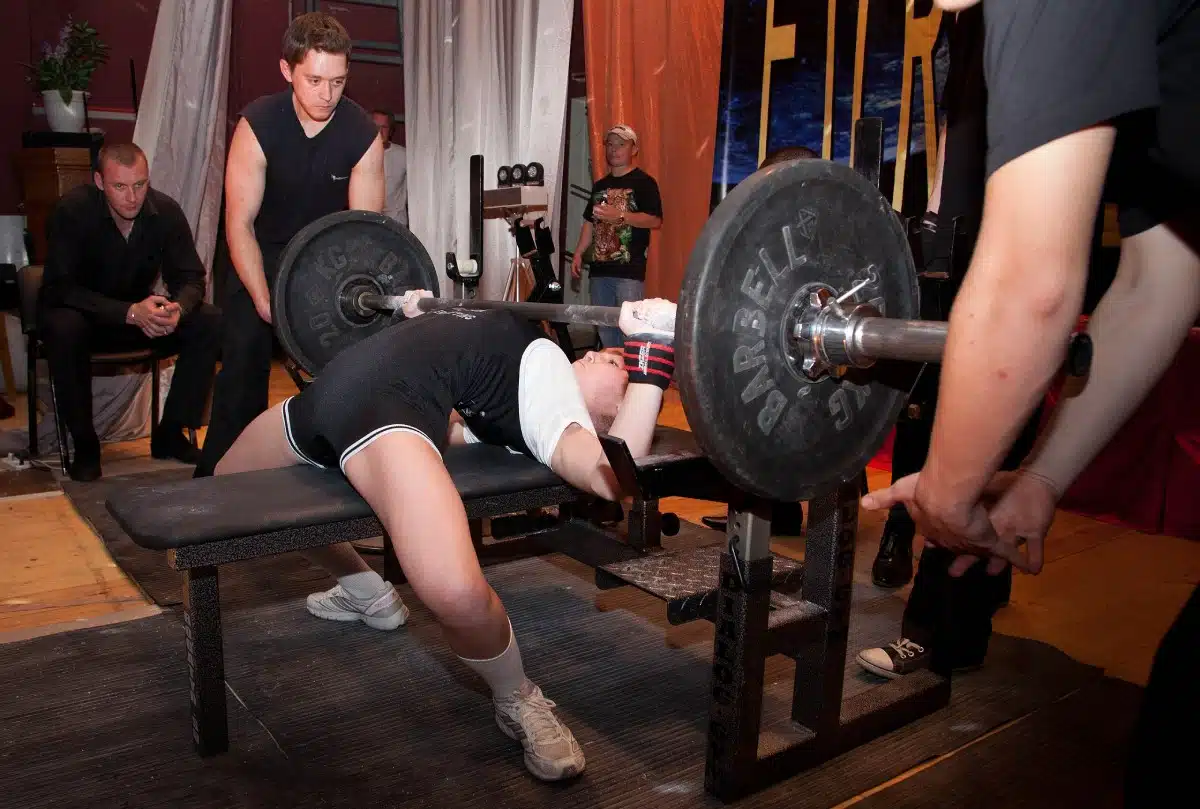
Naumova’s performance didn’t just set a personal best—it pushed the boundaries of what many believed possible for an adolescent female athlete.
Jump to:
- A Teenage Powerlifting Phenomenon Emerges
- Why This Lift Was So Exceptional
- Media Attention and Global Recognition
- A Controversial Turn in Her Athletic Career
- Strength Plateau and Disappearing from the Spotlight
- What Went Wrong? A Closer Look at the Pressure of Early Fame
- A Legacy of Strength—and Controversy
A Teenage Powerlifting Phenomenon Emerges
Maryana Naumova wasn’t new to the spotlight.
A year earlier, at just 12, she had already made headlines for being the youngest girl ever to bench 154 pounds in official competition. Her blend of strength, composure, and discipline made her an instant icon in the world of youth athletics.
At the 2013 Arnold Classic, she began her set with a 220-pound lift, a feat that would already outclass many adult competitors. She then followed it up with a clean 230-pound press, before successfully locking out a 240-pound lift that brought the crowd to its feet.
The record-setting performance placed her in a category far beyond most teenage lifters—and well above many adults.
Why This Lift Was So Exceptional
To put her 240-pound bench press into perspective, many adult men struggle to hit 225 pounds, a standard benchmark in strength training circles. Her lift wasn’t just extraordinary for a 13-year-old girl—it would be considered elite in almost any amateur lifting circle.
Experts and fans alike quickly labeled her as a once-in-a-generation talent.
While young athletes often shine in niche sports, Naumova’s lift placed her in a category few women—let alone teenagers—ever reach. Strength-focused forums and fitness publications lauded her as a rising star.
Media Attention and Global Recognition
Following her lift, Naumova became a global sensation. Videos of her performance racked up views across platforms, and fitness outlets called her the “future of women’s powerlifting.”
She was celebrated not only for her physical strength but for challenging stereotypes around what young girls could accomplish in a traditionally male-dominated sport. Many saw her as a trailblazer and role model.
The Russian teenager was even invited to participate in exhibitions and global meets, further cementing her place as a standout figure in youth sports.
A Controversial Turn in Her Athletic Career
Despite her early promise, Naumova’s story took an unexpected turn just a few years later.
In 2016, she returned to the Arnold Sports Festival to compete again. This time, she bench-pressed 110 kilograms (approximately 242 pounds) raw—nearly matching her earlier record. But shortly after, she was disqualified for testing positive for diuretics and masking agents, substances commonly used to hide performance-enhancing drugs.
The disqualification immediately cast a shadow over her previous accomplishments.
In response, Naumova made a controversial public statement suggesting that “Russian blood” was treated as doping—a pointed reference to broader international scrutiny of Russian athletes during that era. Her remarks echoed the sentiment held by some in Russia who believed their athletes were unfairly targeted by anti-doping agencies.
Strength Plateau and Disappearing from the Spotlight
Although she continued to compete into her late teens, Naumova never managed to surpass the strength she exhibited at 13.
By the time she was 20 years old, her lifts remained below her early teen records. Her last recorded competition appearance was approximately two years ago, and since then, she’s stayed largely out of the public eye in the lifting community.
The athlete who once seemed destined for global dominance slowly faded from the competitive scene, her career trajectory disrupted by doping allegations and diminishing performance.
What Went Wrong? A Closer Look at the Pressure of Early Fame
Naumova’s story underscores the challenges that come with early athletic fame—especially in physically demanding sports like powerlifting.
While her teenage strength was undeniably real, the intense pressure to maintain elite performance, combined with the complex landscape of international doping regulations, created a scenario many young athletes struggle to navigate.
Sports physiologists have often warned that adolescent athletes face unique risks—from overtraining injuries to psychological burnout. In some cases, rapid gains made during puberty can plateau or reverse as the body adjusts to long-term demands.
In Naumova’s case, the decline in performance after age 14, followed by a failed drug test, suggests that the burden of living up to global expectations may have played a role in her career’s downturn.
A Legacy of Strength—and Controversy
Maryana Naumova’s name still holds weight in powerlifting circles.
Her record-setting 240-pound bench press at age 13 remains one of the most jaw-dropping moments in youth strength sports history. Regardless of how her career unfolded afterward, her performance opened doors for other young girls to dream bigger in strength training.
Yet her story also serves as a cautionary tale.
It raises questions about how young athletes are managed, how federations handle early success, and how nations confront the challenges of doping culture.
Whether she returns to the sport or not, Naumova’s legacy is already sealed—as both an inspiration and a warning.
ChatGPT can make mistakes. Check important info.