In an unassuming local powerlifting meet in South Africa, Colton Engelbrecht achieved what no human being has ever done before. At just 120 kilograms of body weight—roughly 265 pounds—he totaled a staggering 1,200 kilograms (2,645 pounds) across the squat, bench press, and deadlift.
This isn’t just the highest powerlifting total ever recorded. It’s also the most pound-for-pound dominant performance in the history of strength sports.
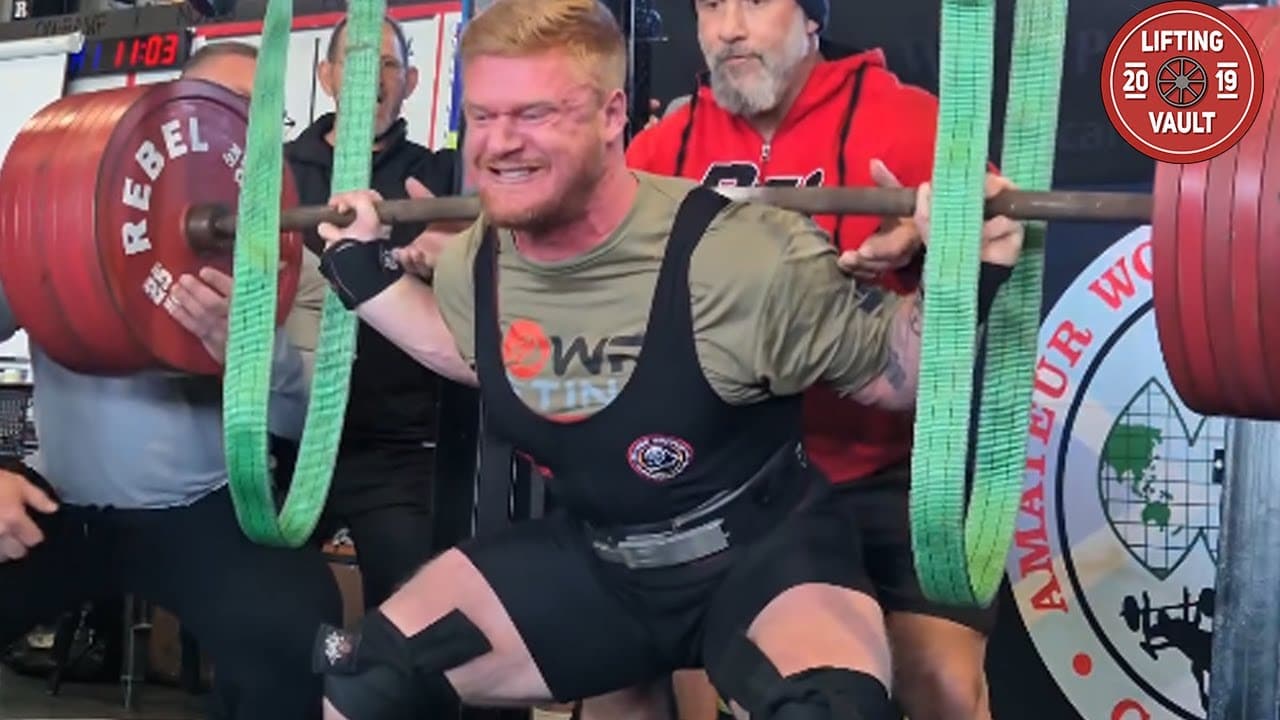
“Objectively, he is the strongest person to ever exist. I don’t see an argument otherwise,” said Mitchell Hooper, 2023’s World’s Strongest Man and author of the viral YouTube breakdown of Engelbrecht’s performance.
Engelbrecht has now overtaken elite lifters like Dan Bell and John Haack, shattering long-standing records and rewriting what’s possible in human strength. What makes the feat more shocking? He wasn’t even planning to compete.
Jump to:
- A last-minute decision leads to a lifetime record
- Redefining the strongest—what Colton Engelbrecht actually accomplished
- Colton Engelbrecht did 1,200 kg at just 120 kg
- Power-to-weight dominance: Engelbrecht vs. Haack
- The science behind superhuman strength
- What this means for the future of powerlifting
- A call for recognition and support
- The bottom line
A last-minute decision leads to a lifetime record
According to Hooper, Colton entered the meet only after struggling to secure a visa for an upcoming international competition. Instead of waiting, he decided—on short notice—to lift in a local gym meet. This wasn’t a peak performance he’d been building toward for months.
“I don’t believe he had a full, proper prep into this. That tells you two things: one, he’s an absolute freak of nature, and two, maybe peaking for a show isn’t as important as people think,” Hooper explained.
Despite the lack of structured preparation, Engelbrecht squatted 470 kg, benched 260 kg, and deadlifted 470 kg—numbers that not only eclipsed the best ever, but did so with apparent room to spare.
After his final deadlift of 470 kg, Engelbrecht even attempted a 500 kg pull, one of the holy grails of powerlifting. He brought the bar to lockout before dropping it—meaning a 500 kg deadlift could be well within reach in the near future.
Redefining the strongest—what Colton Engelbrecht actually accomplished
To fully appreciate what Engelbrecht did, it’s important to understand the difference between powerlifting and strongman competitions.
Powerlifting is based on three defined lifts—squat, bench press, and deadlift—each judged by strict standards. In contrast, strongman incorporates more variables: technical lifts, muscular endurance, and aerobic capacity.
“Powerlifting is straight and simple: are you strong enough to do these three movements with these parameters?” Hooper said. “Strongman is more technical.”
In pure, objective strength—by any meaningful standard—Engelbrecht has now surpassed all challengers. The previous all-time total record of 1,182 kg, held by Dan Bell since 2021, stood unchallenged for nearly four years. Engelbrecht crushed it.
For further context:
- Dan Bell totaled 1,182 kg at 180 kg body weight
- Petr Petras posted 1,179 kg at 170 kg
- Jesus Olivares put up 1,152.5 kg at 178 kg
Colton Engelbrecht did 1,200 kg at just 120 kg
He is not only stronger than them—he’s doing it while carrying 60 to 100 fewer pounds of body mass.
“He’s beating these guys while giving them 100 to 130 pounds of bodyweight,” Hooper emphasized. “That’s why this is so outrageous.”
A squat that defies logic
While Engelbrecht’s overall performance is historic, it’s his squat that stands out as arguably the most impressive.
Weighing just 265 pounds, he squatted over 1,000 pounds without the typical biomechanical aids seen in superheavyweight lifters. He doesn’t have the enormous belly that supports and rebounds off the thighs. His proportions don’t offer the same leverages that larger lifters rely on.
“It just fails to reason how a guy can be so strong when he’s not that big,” said Hooper.
This performance challenges many assumptions about what it takes to move such extreme loads. Traditionally, the strongest lifters were always the largest humans, often tipping the scales at 350–400 pounds.
Colton is proving that you don’t need to be massive to be the strongest.
Power-to-weight dominance: Engelbrecht vs. Haack
Until now, John Haack was widely considered the best pound-for-pound lifter on Earth. He’s known for squeezing every ounce of strength from a compact frame and holding records in lighter weight classes.
That changed this weekend.
“Colton is joining me in showing people that you don’t have to be the biggest person to be the strongest—or one of the strongest—on the planet,” Hooper said.
Engelbrecht’s lifts weren’t just bigger than anyone else’s. They were bigger relative to his size, and that’s the real story. He is now set to face Haack head-to-head in an upcoming meet—an event already being anticipated as a showdown for the pound-for-pound throne.
The science behind superhuman strength
How is it physically possible for someone of Engelbrecht’s size to perform like this? Beyond muscle mass, genetics and biomechanics play an enormous role in elite strength.
Hooper points to a few potential factors:
- Neuromuscular efficiency: The nervous system plays a massive role in maximal strength. Engelbrecht likely has an elite level of neural drive and motor unit recruitment.
- Tendon and muscle insertions: The further a muscle inserts from a joint, the more leverage it can exert. Engelbrecht may have extremely favorable insertion points.
- Kneecap size: A larger kneecap increases the moment arm of the quadriceps, enhancing squat performance.
- Femur length: Short femurs can significantly improve squat mechanics by reducing range of motion and improving leverage.
“Maybe he has freaky insertions. Maybe he has very large kneecaps. Maybe his short femurs are particularly advantageous,” Hooper speculated. “All you can do is thank your mom and dad—or curse them—for what they gave you.”
These intangibles likely combine with years of dedicated training and freakish natural ability to create a once-in-a-generation lifter.
What this means for the future of powerlifting
Colton Engelbrecht’s performance doesn’t just set a new bar—it may shift the sport’s entire perspective.
For decades, bigger has meant better in powerlifting. Weight moves weight. But Engelbrecht’s 120 kg body weight challenges that idea. His dominance suggests that efficiency, leverage, and neural capacity may matter just as much—if not more—than sheer mass.
This could also change how athletes approach peaking and meet prep. Hooper emphasized that Engelbrecht’s success—despite no formal peaking cycle—might point to an overemphasis on short-term periodization.
“The best strength athletes I know are strong for the majority of the year,” he said. “People might lose more than they gain when they peak improperly, assuming it’s going to do something magical.”
A call for recognition and support
Colton Engelbrecht is now, by every meaningful metric, the strongest human to ever live.
But powerlifting remains a small, under-supported sport. Performances like this—world-shattering, record-breaking, paradigm-shifting—often go unnoticed by the broader sports world.
“Please go give him a follow. Check out his profile. Give him some support,” Hooper urged. “Someone doing something this special obviously dedicates huge amounts of time to it.”
While Engelbrecht isn’t on Team Moose—Hooper’s branded training community—his achievement is universal in its impact. It marks a new chapter in the history of strength sports and a new standard for lifters everywhere.
The bottom line
Colton Engelbrecht didn’t just break records. He redefined them.
With a total of 1,200 kg at 120 kg bodyweight, he stands alone as the strongest person ever—absolutely and pound-for-pound. The strength community, and the world, is now watching what he’ll do next.