
Sarcopenia—the age-related loss of muscle strength and mass—is a major public health concern, especially as global populations grow older. It’s not just about getting weaker with age. Sarcopenia is linked to falls, fractures, disability, and even premature death.
And while lifestyle factors like physical activity and nutrition clearly play a role, genetics might be doing more of the heavy lifting than previously believed.
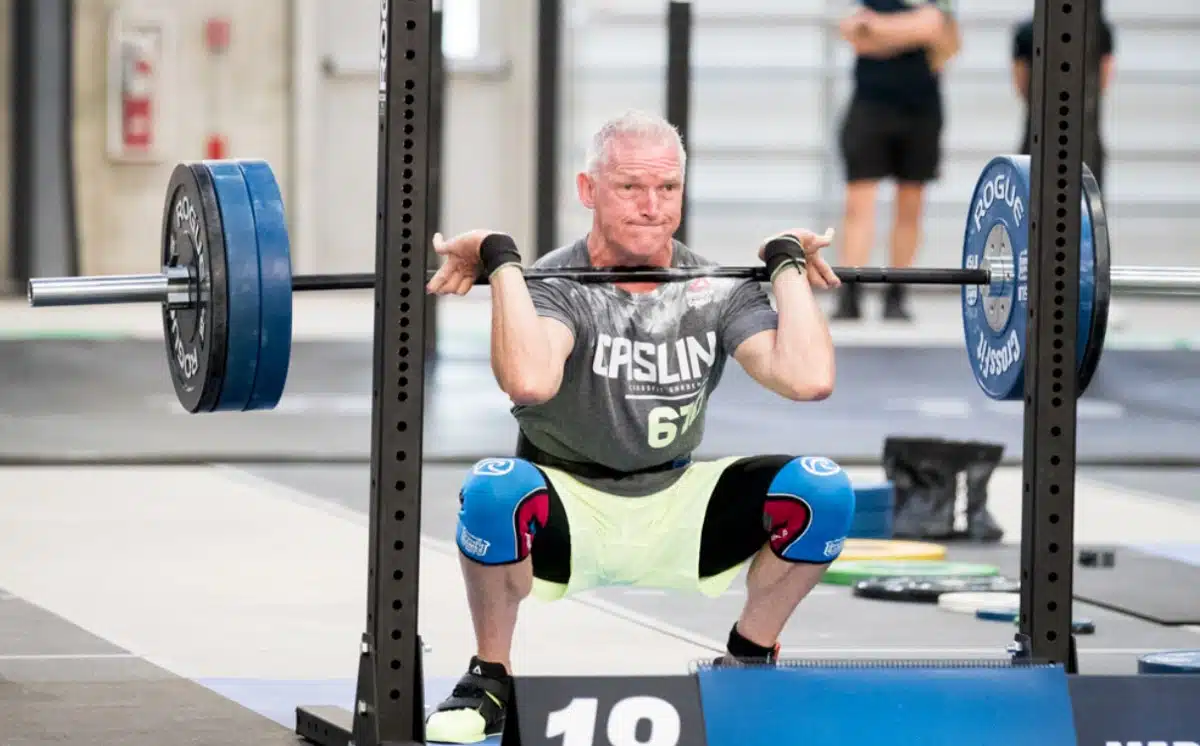
Research shows that muscle strength is up to 85% heritable, and lean muscle mass can be up to 80% genetic. Yet, despite this strong genetic influence, scientists are still trying to identify which genes actually shape an individual’s muscle traits—and more importantly, which ones might predispose someone to sarcopenia.
“Despite considerable work in the area, the genetic underpinnings of skeletal muscle traits remain largely unknown and the genetic aspects of sarcopenia are even less clear,” writes Dr. Stephen Roth in his review of skeletal muscle genetics.
Jump to:
Muscle Strength and Mass Are Strongly Inherited
Studies in twins, families, and older adults consistently point to high heritability in muscle-related traits.
- Grip strength has been shown to be 30–50% heritable in general populations.
- In older twins, 65% of the variance in grip strength was explained by genetic factors.
- Muscle mass—measured using techniques like hydrodensitometry or DXA—often shows heritability values over 50%, with some studies reporting numbers as high as 80%.
These genetic influences persist even into later life. One study found that grip strength heritability remained at 50% in people aged 46 to 96. Another noted that even the rate of decline in muscle strength with age has a heritable component.
Still, genes don’t act alone. As people get older, environmental factors like exercise, nutrition, and lifestyle begin to have a larger impact on muscle health.
Genetic Research Tools: Linkage Studies and GWAS
To pinpoint the genes involved, researchers have used several genetic mapping tools over the years.
Linkage Studies
Linkage studies track how traits and genetic markers are inherited together in families. Early efforts revealed several chromosomal regions tied to muscle strength and mass. For example:
- A Finnish twin study found strong links between leg strength and regions on chromosome 12.
- Targeted studies in young men also highlighted genes in the myostatin signaling pathway, including MSTN, CDKN1A, and MYOD1—all involved in muscle growth and repair.
Genome-Wide Association Studies (GWAS)
More recently, GWAS have allowed scientists to scan the entire genome in large, unrelated populations. These studies have revealed promising new leads:
- A study by Liu et al. found two polymorphisms in the TRHR gene—involved in thyroid hormone regulation—strongly associated with lean body mass.
- Follow-up analysis across over 6,000 people of white and Chinese ancestry confirmed this finding.
- Another study in Chinese adults identified Gremlin1, a gene involved in muscle development, as significantly associated with lean mass.
Though encouraging, these results need further replication to establish their relevance in clinical settings.
Spotlight on Specific Genes
ACTN3: The Power Gene
One of the most studied genes in muscle genetics is ACTN3, which encodes a protein found in fast-twitch muscle fibers. A common variant, called R577X, results in a nonfunctional version of the gene.
- People with two copies of the X allele (X/X) tend to have slightly lower muscle strength and power.
- In older adults, X/X men showed greater performance decline in walking speed over 5 years, and X/X women had a 35% greater risk of lower body physical limitations.
- A 2023 study also linked this variant to a greater risk of falls in older women.
Still, the differences are modest. “The general consensus among these studies is that ACTN3 X/X carriers have modestly lower skeletal muscle strength and power,” notes Roth.
ACE: Inconsistent Findings
The angiotensin-converting enzyme (ACE) gene has also received attention, especially for its I/D polymorphism. Some studies found links between ACE genotypes and baseline strength, while others found no significant associations.
Given the mixed results, most experts agree that ACE plays a minimal role in muscle trait variability.
CNTF and CNTFR: Rare but Potent
Variation in the CNTF (ciliary neurotrophic factor) gene has been tied to muscle strength in certain studies, especially a rare null A/A genotype. However, because this genotype is uncommon, it’s unlikely to have widespread public health impact.
Polymorphisms in the CNTFR receptor gene have also been studied, but so far there’s no consistent evidence tying them to strength outcomes.
Myostatin Pathway Genes
Myostatin (MSTN), a protein that limits muscle growth, is a natural suspect in sarcopenia research. Rare mutations in this gene can lead to extreme muscle hypertrophy, but common polymorphisms are rare and have not been linked to major differences in strength or mass.
Other genes in this pathway, like ACVR1B and follistatin, show some promise—but small sample sizes and rare alleles limit conclusions.
Vitamin D Receptor (VDR): A Key Player
Vitamin D is essential for muscle function, and the VDR gene may influence how individuals respond to it.
- The FokI polymorphism is particularly noteworthy.
- In one study of older Caucasian men, those with the F/F genotype had significantly lower muscle mass and double the risk of sarcopenia compared to f-allele carriers.
- Strength differences were also observed but disappeared after adjusting for lean mass.
“VDR FokI genotype was significantly associated with lean mass and sarcopenia in this cohort,” the authors concluded.
This makes VDR one of the only genes directly tied to sarcopenia risk—not just strength or mass individually.
Genes Related to Muscle Mass
In addition to strength, several genes have been investigated for their role in muscle size.
- ACTN3: Limited association with muscle mass. Only two studies found links with muscle size.
- TRHR: Strong candidate based on replicated GWAS findings.
- Androgen Receptor (AR): Results are mixed. Some studies found shorter or longer CAG-repeat sequences linked to greater lean mass, but the findings vary by age and cohort.
- VDR: Associations found in older men between TaqI/ApaI haplotypes and lean mass, especially in the legs.
So, What About Sarcopenia Itself?
Despite dozens of studies on muscle strength and mass, almost none have looked directly at sarcopenia as a clinical diagnosis.
Only one study, by Roth et al., examined this explicitly. They found:
- Older men with F/F VDR genotypes had lower lean mass, and
- Were twice as likely to be classified as sarcopenic.
This highlights a critical research gap. Sarcopenia is still under-investigated as a standalone genetic trait, despite its importance in aging and disability.
Where Do We Go From Here?
Even the most promising genes explain only 1–3% of the variation in muscle traits. That means no single gene will unlock the mystery of sarcopenia. Instead, the field is moving toward polygenic risk scores, which combine dozens or hundreds of small-effect genes to assess risk.
Future research also needs to address:
- Gene-gene interactions
- Gene-environment interactions
- Copy number variations
- Epigenetic changes over time
Another key idea is the concept of a functional threshold. Everyone has a personal limit of muscle mass or strength needed to function independently. Genetic variation may push some people closer to—or further from—that threshold, making them more or less vulnerable to functional decline.
The Bottom Line
Genes do matter in sarcopenia—but not in isolation.
Physical activity, diet, and lifestyle remain the most powerful tools to preserve muscle function. But understanding genetic risk could help identify vulnerable individuals decades before symptoms appear, opening the door to personalized prevention.
Even small genetic discoveries matter. As Roth notes:
“Those genes will point to the potential physiological pathways that can be manipulated through more typical means and thereby add to our understanding of the underlying etiology of sarcopenia.”
Unlocking the genetics of muscle loss won’t be quick or easy—but the payoff could redefine how we age, and how we stay strong through it.