Runners obsess over mileage, pace, and leg strength.
But there’s a critical weak link most completely ignore: foot strength.
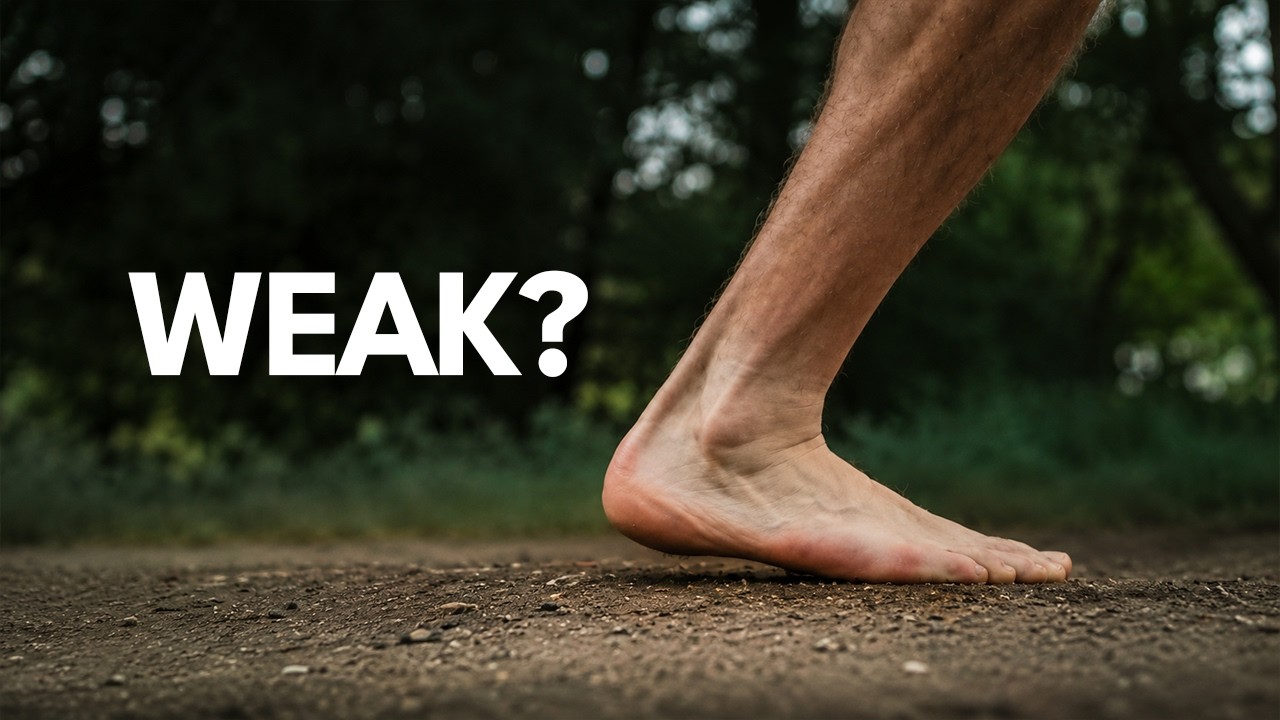
In a recent video, endurance athlete and content creator breaks down why neglecting this complex structure keeps runners trapped in a frustrating cycle of injury and recovery.
And he shares the exact system that finally broke him free after years of chronic problems.
Jump to:
The Hidden Weakness Sabotaging Your Running
Most runners don’t realize their feet contain over 100 muscles, tendons, and ligaments working together to stabilize and propel them forward with every stride.
Yet virtually no one trains them systematically.

If you want something simple that actually works, this is one of the most effective tools I’ve used to build strength, conditioning, and endurance without needing a full gym setup.
- Full-body training with one weight using swings, squats, and presses
- Solid cast iron build that feels stable and lasts for years
- Comfortable grip that makes high-rep workouts easier to handle
I trained for ultras for years, got stronger, more enduring, but always one injury away from having to stop completely.
The pattern he describes will sound familiar to many runners: sign up for a race, increase mileage, feel great for a while, then an injury forces either running through pain or stopping completely.
Shin splints. Runner’s knee. The same injuries cycling endlessly.
What Professional Biomechanics Analysis Revealed
After years of self-analysis, he finally invested in professional biomechanics testing.
The results were eye-opening.
From the side, his running form looked nearly perfect. But the front view told a different story: his foot landed slightly supinated, then as weight traveled over his center of gravity, it pronated with a subtle inward knee collapse.
Your knee is only supposed to travel in a straight line when you run. But what influences that line is not the knee itself. It’s the top and bottom of the axis—the ankle and the hip.
This is crucial: knee pain rarely originates from the knee.
If you want something simple that actually works, this is one of the most effective tools I’ve used to build strength, conditioning, and endurance without needing a full gym setup.
- Full-body training with one weight using swings, squats, and presses
- Solid cast iron build that feels stable and lasts for years
- Comfortable grip that makes high-rep workouts easier to handle
Running injuries accumulate through small misalignments repeated over millions of steps. Hip drops force knees to overcompensate. Weak feet create instability that radiates upward.
The Two-Part System for Building Bulletproof Feet
To simplify training these complex structures, he breaks foot strength into two components: toes and ankles.
Each component gets trained through three phases: mobility, stability, and strength.
Toe Training: The Foundation of Your Arch
Strong toes directly support arch strength. When pressing toes into the ground, you can feel arch activation immediately.
Toe Mobility:
- Kneel with toes tucked under, sitting back on heels to stretch the entire underside
- Loop a resistance band around the big toe, moving it up and down slowly
The big toe joint is especially critical for forward propulsion during running.
If you want something simple that actually works, this is one of the most effective tools I’ve used to build strength, conditioning, and endurance without needing a full gym setup.
- Full-body training with one weight using swings, squats, and presses
- Solid cast iron build that feels stable and lasts for years
- Comfortable grip that makes high-rep workouts easier to handle
Toe Stability:
- Stand on one foot while the other leg moves, shifting weight left and right
- Add hip CARs (controlled articular rotations) for additional challenge
- Progress by adding resistance bands around the foot
Toe Strength:
- Towel curls: Use toes to pull a towel toward you
- Banded toe curls: Loop band around big toe and perform vertical curls
The first time I did them, the next day I felt some soreness in my foot that I had never felt before and I just realized how many muscles there are inside these complex structures.
Ankle Training: Multi-Directional Strength
Ankles don’t just move in one plane. Training must address movement in all directions.
Ankle Mobility:
- Dorsiflexion drills: Step onto a box, drive knee forward over toes
- Move in multiple directions—forward, left, right
- Use a band in the ankle crease if experiencing bone pinching
- Progress to loaded variations with a barbell on your back
Progressive overload applies to mobility work just like muscle building. Start with bodyweight, gradually add resistance.
Ankle Stability:
If you want something simple that actually works, this is one of the most effective tools I’ve used to build strength, conditioning, and endurance without needing a full gym setup.
- Full-body training with one weight using swings, squats, and presses
- Solid cast iron build that feels stable and lasts for years
- Comfortable grip that makes high-rep workouts easier to handle
- Loop band around ankle (not foot)
- Press toes down, activate arch, keep hips square
- Move the opposite leg front-to-back, then side-to-side
- Increase difficulty with unstable surfaces like cushions or towels
This exercise directly addresses the biomechanical issue identified in his gait analysis.
Ankle Strength:
- Heel walks: Walk on heels with toes pulled upward
- Targets the often-neglected tibialis muscles in the front of the shin
- Perform multiple 20-meter walks before runs
Breaking the Injury Cycle
Understanding your specific biomechanical issues makes exercise selection more effective.
That’s why it’s interesting for you to analyze your own running form, so you understand where your problems are and what exercises will best correct those problems. We want to treat the cause, not run behind the symptoms.
Video analysis—whether professional or self-recorded—reveals compensation patterns invisible during running.
Many runners chase symptoms with rest and ice. But without addressing root causes in foot and ankle strength, injuries return as soon as training volume increases.
Building a Foundation That Lasts
These aren’t glamorous exercises. Walking on heels looks ridiculous. Toe curls feel awkward at first.
If you want something simple that actually works, this is one of the most effective tools I’ve used to build strength, conditioning, and endurance without needing a full gym setup.
- Full-body training with one weight using swings, squats, and presses
- Solid cast iron build that feels stable and lasts for years
- Comfortable grip that makes high-rep workouts easier to handle
But activating dormant muscles creates awareness runners never knew was possible.
The investment pays dividends: consistent training without the constant threat of injury.
Start conservatively with bodyweight movements. Master stability before adding resistance. Progress gradually just like any other strength training program.
For runners stuck in the motivation-injury-recovery cycle, taking time to rebuild foot strength isn’t a step backward. It’s the foundation that makes everything else sustainable.
Strong feet don’t just prevent injuries. They improve efficiency, enhance proprioception, and create resilience that supports running goals for years to come.