Fitness coach Kelly Matthews recently shared her five favorite advanced core exercises in a YouTube video, promising movements that challenge even the strongest athletes.
These aren’t beginner-friendly planks or basic crunches.
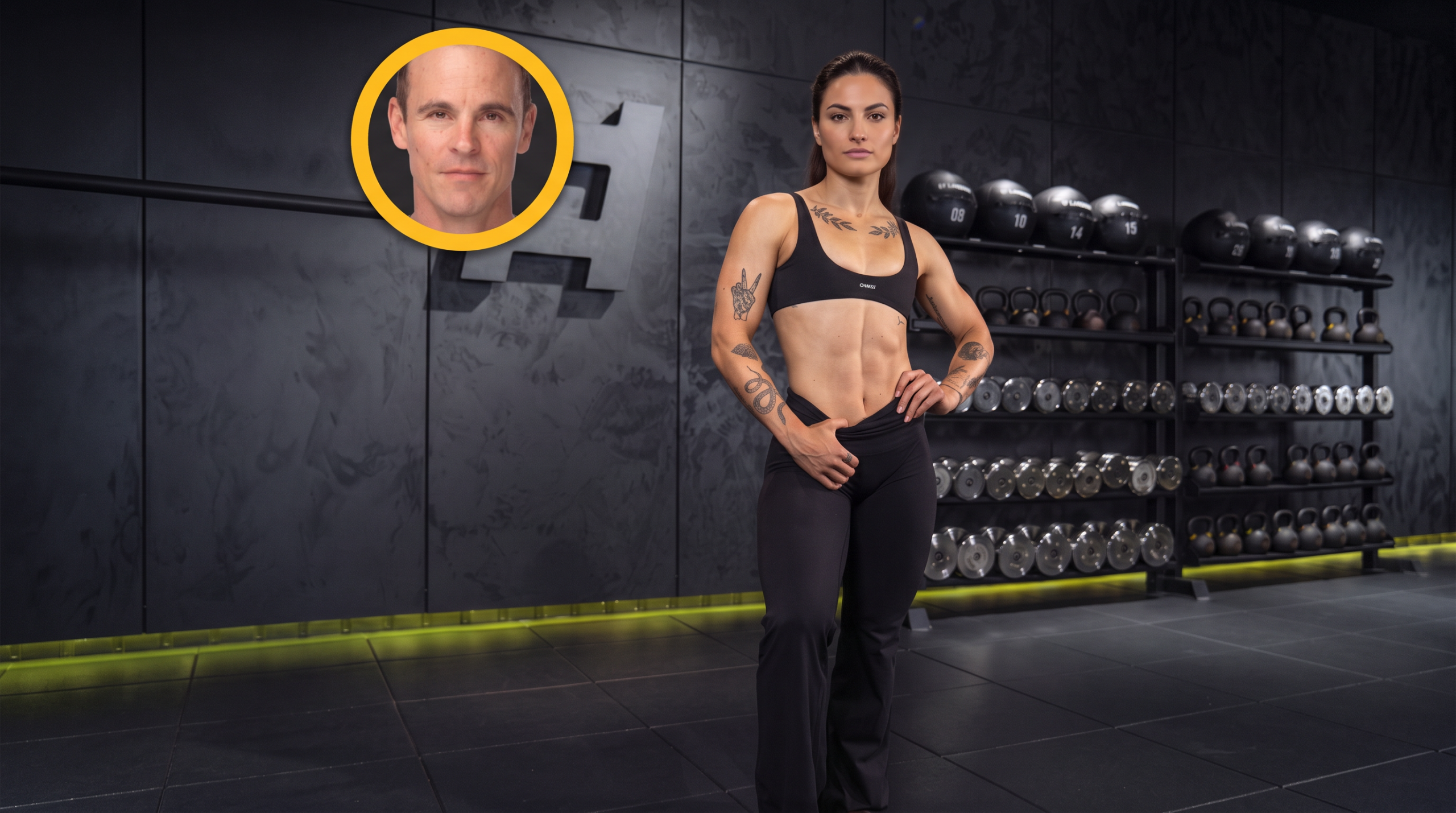
Matthews targets every section of the core with strategic loading patterns designed to maximize muscle growth and strength gains.
Her approach treats abs like any other muscle group: progressive overload, deliberate stretching under load, and training close to failure.
Jump to:
- Supported Leg Raises: The Ultimate Lower Ab Challenge
- Loaded Leg Lifts and Crunches: Targeting Upper and Lower Abs
- Progressive Overload: Treating Abs Like Real Muscles
- Stabilized Russian Twists: Oblique Rotation Done Right
- Cable Lateral Flexion: Side-to-Side Oblique Work
- Training Philosophy: Low Reps, High Intensity
- Implementation Strategy
Supported Leg Raises: The Ultimate Lower Ab Challenge
Matthews begins with supported leg raises performed on a pull-up bar inside a squat rack. Setup matters tremendously here.
She recommends padding a barbell positioned at mid-back height with a hip thrust pad, barbell pad, or rolled yoga mat. The padding prevents uncomfortable contact while the bar provides crucial back support that reduces swinging.
You don’t want it too low down by your butt or your hips, or you’re going to swing, and you’re going to end up like hitting your back against the barbell.
Grip the pull-up bar with feet together and lift legs as high as possible. The goal isn’t necessarily toes-to-bar unless you can achieve it.
The key principle Matthews emphasizes throughout her routine: loading the muscle in a stretched position.
In my starting position, my abs are kind of stretched, and that’s going to be a big key for training your rectus abdominis, your six-pack muscles, is that you do want to put yourself in a position where you’re loading under stretched position.
Start with abs elongated, then crunch into a shortened position as legs rise. Fatigue is expected—Matthews notes her own legs didn’t rise as high toward the end of her set.
Modification option: perform knee raises with bent knees until strength improves.
Loaded Leg Lifts and Crunches: Targeting Upper and Lower Abs
Matthews dedicates two exercises to the rectus abdominis—the six-pack muscle—using variations that emphasize different regions through strategic positioning.
The Reverse Crunch for Lower Abs
Performed on a bench with hands gripping behind the head for stability, this movement focuses on lifting the hips rather than curling the entire torso.
Matthews uses an ab mat under her lower back to create an arch. A half foam roller or rolled yoga mat works equally well.
The goal is to lift my hips here. We’re not going to curl up into like a fully crunched position cuz that really doesn’t take very much ab work.
The movement involves tucking the tailbone and lifting upward slowly without momentum. Lower leg position increases difficulty dramatically.
Weighted Crunches for Upper Abs
Using the same bench setup, Matthews loads a dumbbell, plate, or medicine ball overhead. Bodyweight alone may suffice for beginners.
Critical distinction: don’t come all the way up to a seated position. Once upright, abs disengage significantly.
Rise only high enough to maintain constant tension. Keep the weight from migrating forward—it should challenge, not assist the movement.
On decline benches, the angle allows slightly higher positioning while maintaining engagement.
Progressive Overload: Treating Abs Like Real Muscles
Matthews challenges the prevailing culture of high-rep ab circuits and six-minute burnout sessions.
Your abs are not a different type of muscle. They don’t respond to a stimulus any differently than your hamstrings or your glutes or your biceps.
Her philosophy: load progressively heavier on core exercises just as you would for any other muscle group. Endless bodyweight reps won’t build visible six-pack development nearly as effectively as strategic loading patterns.
Time spent adding weight to ab exercises delivers superior results compared to burning out on volume alone.
Stabilized Russian Twists: Oblique Rotation Done Right
Traditional Russian twists often devolve into hip wiggling rather than true trunk rotation. Matthews fixes this with a clever anchoring technique.
She slides her feet under a bench elevated slightly with a pad or mat. This locks the hips and pelvis in place, forcing genuine rotational work through the obliques.
It’s important here that my hips and my pelvis are locked in place because when we do a regular Russian twist, you’re here and it’s really easy when you start rotating to just be wiggling and your knees be going side to side.
Lean back until abs engage fully and hold that position throughout. Rotate fully to one side while hips and knees point straight ahead—this ensures true trunk rotation.
Loading variations:
- Hold weight close to chest (easier)
- Extend arms away from torso (harder)
- Use dumbbells, plates, or medicine balls
Alternative setup: glute-ham machines provide excellent hip stabilization. Lock feet in while facing upward with hips on the pad, allowing the upper body to rotate freely.
Cable Lateral Flexion: Side-to-Side Oblique Work
The final exercise targets lateral flexion—bending the trunk side to side—which differs mechanically from rotation despite both engaging obliques.
Matthews prefers cables for this movement, though dumbbells or kettlebells work well. Never use two weights—they counteract each other and eliminate the unilateral loading that makes the exercise effective.
Stand on an elevated box or bench with one hand behind your head. The elevated position with a wider stance creates better stability.
My goal is to keep my chest facing forward. We’re not going this way or back. We’re really trying to get a big stretch along this working side.
Reach toward the cable to achieve maximum stretch along the loaded side, then crunch in the opposite direction to stand upright.
Cable advantages: seamless progression by simply moving up one plate on the stack once 10-15 reps becomes manageable.
Training Philosophy: Low Reps, High Intensity
Matthews completed relatively few reps on each exercise before approaching failure. This isn’t a flaw—it’s the entire strategy.
The exercise selection matters, but the way you train matters a lot more.
Core training principles that apply universally:
- Progressive overload: consistently increase resistance over time
- Stretch emphasis: load muscles in lengthened positions
- Near-failure training: push close to your limits
- Strategic progression: move up in weight systematically
The rectus abdominis, obliques, and deeper core muscles respond to the same hypertrophic stimuli as biceps, quadriceps, or any other skeletal muscle.
Treating them differently with endless high-rep circuits ignores fundamental exercise science.
Implementation Strategy
These five exercises comprehensively target core musculature through multiple movement patterns:
- Supported leg raises: rectus abdominis with lower ab emphasis
- Reverse crunches: rectus abdominis, lower region focus
- Weighted crunches: rectus abdominis, upper region focus
- Stabilized Russian twists: obliques via rotation
- Cable lateral flexion: obliques via side bending
Select weights that challenge within 8-15 repetitions. When you can complete sets at the higher end, increase resistance.
Perform movements with controlled tempo, emphasizing the stretched position and avoiding momentum.
Matthews demonstrates that advanced core training doesn’t require exotic equipment or complicated protocols—just intelligent exercise selection paired with the same progressive loading principles that build strength anywhere else.