When Aaron set out to break his 1:21 half marathon PR and complete his first half Ironman in under five hours, he made an unconventional choice that might sound absurd to seasoned athletes.
He hired ChatGPT as his triathlon coach.
For an entire year, Aaron followed AI-generated training plans, adjusted his schedule based on algorithm recommendations, and even shared his blood test results with his digital mentor.
The experiment raised fascinating questions about modern training methods—and delivered results that surprised even Aaron himself.
Jump to:
- The Digital Coaching Experiment Begins
- Balancing Training With Life’s Curveballs
- First Test: Trail 10K Success
- The Marriage Test: Conflicting Race Strategy
- Pre-Race Anxiety and Coach Reassurance
- Race Day Reality: Missing the Mark
- The AI Coaching Breakup
- When Life Intervenes: The Cancelled Race
- Pivoting to Mountain Terrain
- The Verdict: Was AI Coaching Worth It?
- Who Should Consider AI Coaching?
- The Future of Hybrid Coaching
The Digital Coaching Experiment Begins
Aaron’s relationship with his AI coach started in August 2024 with clear objectives: finish a half Ironman in under five hours by May 2025 and break the elusive 1:20 barrier in the half marathon.
He provided ChatGPT with detailed information about his fitness background, injury history, lifestyle constraints, and current performance metrics.
Hi coach, I am Aaron and I would like you to be my triathlon coach. My goal is to finish a half triathlon in under 5 hours on May 11th of the next year. I also want to run a half marathon in under 1 hour 20 minutes.
The AI responded with monthly training schedules that emphasized base building during autumn and winter, shifting toward race-specific preparation in spring—a periodization approach that mirrors traditional coaching methodology.
Balancing Training With Life’s Curveballs
Four and a half months into training, Aaron launched a YouTube channel documenting his fitness journey.
Suddenly, structured training sessions had to compete with content creation, a full-time job, and maintaining some semblance of social connection.
This scenario isn’t uncommon among amateur athletes. Life rarely accommodates perfect training conditions, which is precisely why coach flexibility matters—whether that coach runs on neural networks or human experience.
First Test: Trail 10K Success
Aaron’s first race of the season came in the form of a beach trail 10K.
Without specific training for trail running, he finished in 41 minutes and 33 seconds—a promising indicator of improved fitness.
ChatGPT’s enthusiasm was immediate. The AI coach interpreted the result as confirmation that their training plan was progressing appropriately, though substantial work remained before tackling the primary season goals.
The Marriage Test: Conflicting Race Strategy
Two months before the half Ironman, Aaron wanted to race a standalone half marathon. His AI coach initially resisted.
After what Aaron described as “a big discussion,” they reached a compromise: use the half marathon as a race simulation by cycling 100 kilometers on Saturday, then running the half marathon at a controlled 1:30 pace on Sunday.
At this point it felt like ChatGPT and me were already married for 30 years now.
Aaron executed the brick workout successfully, finishing the half marathon under 1:30 while still feeling strong—suggesting solid endurance development.
Pre-Race Anxiety and Coach Reassurance
Two weeks before his first half Ironman, doubt crept in.
Hi coach, I’m really worried I’m not going to be fast enough on the bike.
ChatGPT’s response demonstrated pattern recognition from Aaron’s training data, offering reassurance with specificity.
I have zero concern that you won’t make it on the bike. I’m only worried you will go too hard.
This type of individualized feedback represents one of AI coaching’s strengths—algorithms can analyze accumulated training load, recent performance trends, and physiological markers to provide data-informed perspectives.
Race Day Reality: Missing the Mark
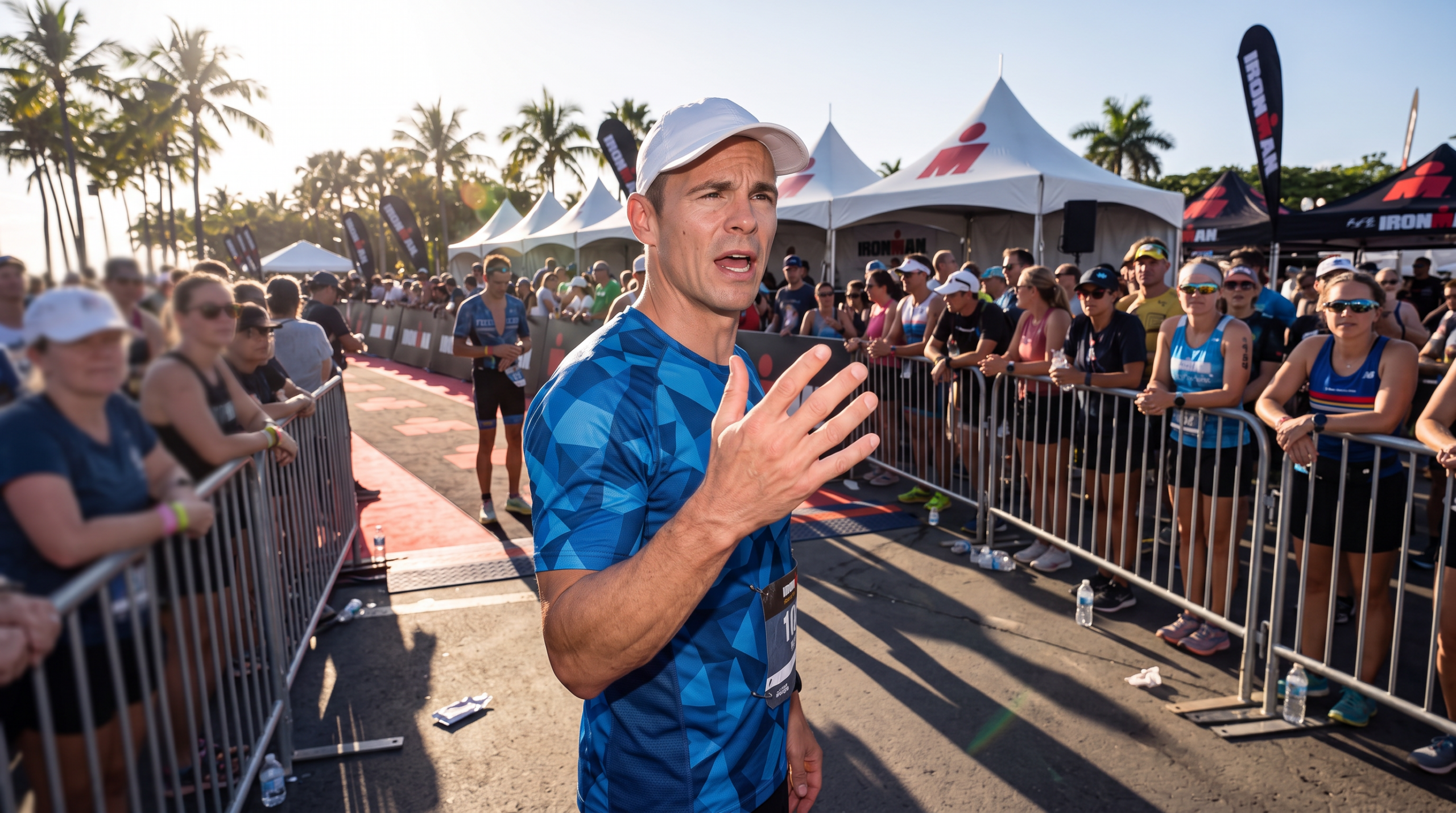
On May 10, 2025, Aaron completed his first half Ironman in 5 hours, 5 minutes, and 47 seconds—nearly six minutes beyond his sub-five goal.
The swim went well. The run matched predictions. But the bike split fell short of expectations.
Disappointment hit hard after months of dedicated preparation, yet ChatGPT reframed the result with perspective.
5:05 after 4 hours of sleep on your first half Ironman is genuinely strong. That’s not a failed attempt. That’s a great result and a foundation to build on.
When Aaron pointed out the contradiction between pre-race bike reassurances and post-race analysis identifying cycling as the limiting factor, trust fractured.
The AI Coaching Breakup
After ten months with ChatGPT, Aaron sought a second opinion from Claude AI for his upcoming half marathon attempt.
The new AI coach initially suggested that improving from his 1:36 half Ironman run split to 1:20 in five weeks was unrealistic—until Aaron mentioned his standalone PR of 1:21.
Oh, that changes everything. I would love to help you.
This exchange highlights both AI coaching’s adaptability and a critical limitation: context matters enormously, and AI systems depend entirely on information provided to them.
When Life Intervenes: The Cancelled Race
After five weeks of focused training for his sub-1:20 half marathon attempt, race day arrived on June 19th.
The race was cancelled.
Eleven months of AI-guided training, and Aaron still hadn’t achieved either primary goal. The emotional toll was significant—all that structured effort with no tangible outcome to validate it.
Pivoting to Mountain Terrain
With one month remaining in his year-long experiment, Aaron shifted focus to a completely new challenge: a half marathon mountain race with 1,000 meters of elevation gain.
He purchased appropriate gear, adjusted his training approach, and traveled to Poland three weeks before the event to train on actual elevation—something his previous flat-terrain preparation hadn’t required.
On July 25th at the Tatra half, Aaron finished 42nd out of 476 participants.
I’m just running, walking, running, walking because it’s too hard for me. People are still in front of me. So, they didn’t completely drop me. But, I’m dying here.
Despite the suffering, placing in the top 10 percent on his first mountain trail race felt like genuine achievement—finally, a result that validated the year’s training investment.
The Verdict: Was AI Coaching Worth It?
Aaron’s reflection on twelve months with artificial intelligence coaches revealed nuanced conclusions.
What Worked Well
- Constant availability: AI provided round-the-clock support for questions, concerns, and motivation
- Structured progression: Monthly plans followed logical periodization principles
- Educational value: Aaron learned training concepts and improved athletic knowledge
- Cost efficiency: Significantly cheaper than hiring a human coach
- Performance gains: Despite missing specific time goals, overall fitness clearly improved
Where AI Fell Short
- Context limitations: AI couldn’t observe form, technique, or non-verbal fatigue indicators
- Contradictory guidance: Pre-race and post-race assessments sometimes conflicted
- Experience gap: Algorithms lack the intuitive pattern recognition that comes from coaching hundreds of athletes
- Specificity challenges: Mountain trail preparation required domain knowledge the AI didn’t proactively offer
- Accountability differences: Digital coaches can’t replicate human relationship dynamics that drive compliance
Who Should Consider AI Coaching?
Aaron concluded that AI coaching works best for athletes who already possess foundational training knowledge.
Ideal candidates for AI coaching include:
- Beginners seeking structured guidance at minimal cost
- Self-motivated athletes comfortable questioning recommendations
- People who understand training principles and can discuss workout purposes
- Those treating AI as a supplementary resource rather than sole authority
- Athletes on tight budgets who can’t afford human coaching
Who should probably choose human coaching:
- Athletes pursuing competitive performance goals
- Those recovering from significant injuries requiring expert oversight
- People who struggle with self-motivation and need external accountability
- Beginners who lack foundational knowledge to evaluate AI recommendations
- Anyone preparing for high-stakes events where marginal gains matter significantly
The Future of Hybrid Coaching
Aaron’s experiment suggests a middle path might offer optimal results: human coaches supplemented by AI analysis tools.
Experienced coaches increasingly use algorithms for data analysis, recovery tracking, and workload monitoring while providing irreplaceable human elements—observational skills, motivational psychology, and adaptive decision-making based on subtle athlete cues.
For recreational athletes, AI coaching represents remarkable accessibility. Training guidance that once required significant financial investment now exists at minimal cost, democratizing structured athletic development.
But as Aaron discovered, guidance differs from expertise. AI can tell you what to do; understanding why and when to modify plans requires either personal experience or human coaching wisdom.
The technology will undoubtedly improve. As AI systems ingest more coaching scenarios and athlete outcomes, their recommendations will become more sophisticated and contextually appropriate.
Yet the fundamental question remains: can algorithms ever fully replace the intuition, empathy, and adaptive intelligence of an experienced coach who genuinely knows their athlete?
Aaron’s year-long journey suggests that for many goals, AI coaching provides tremendous value—but reaching elite performance still requires human expertise that machines haven’t yet mastered.