In a recent YouTube Short, a posture coach argued that most chin tucks fail for one sneaky reason.
Forward head posture rarely budges when exercise form ignores basic neck anatomy.
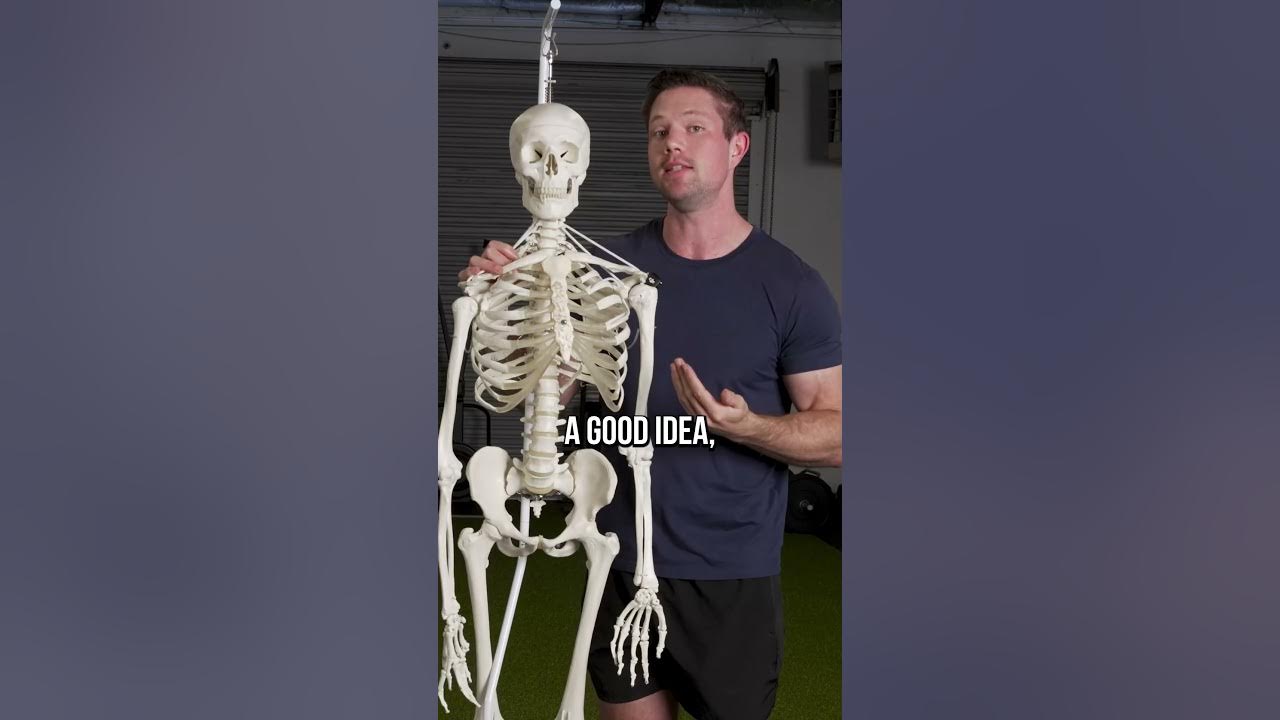
The coach’s fix swaps the aggressive head shove for something far subtler.
Curious what a rolled-up hand towel has to do with it?
Here comes the full setup, plus a standing progression you can do against a wall.
Jump to:
Why Most Chin Tucks Miss the Mark
The reason why chin tucks are done so poorly 99% of the time is because the way they’re doing them is based off of a concept that’s outdated and inaccurate.
That 99% figure works as a rhetorical flourish rather than a measured statistic. Still, the critique behind it deserves attention.

If you want something simple that actually works, this is one of the most effective tools I’ve used to build strength, conditioning, and endurance without needing a full gym setup.
- Full-body training with one weight using swings, squats, and presses
- Solid cast iron build that feels stable and lasts for years
- Comfortable grip that makes high-rep workouts easier to handle
The flawed logic goes like this: head stuck forward, so repeatedly shove it backward. Sounds sensible. Feels productive. Yet the coach says this approach ignores what the neck actually needs.
Orient the entire head and neck back in space trying to activate the deep neck muscles that help pull it back without respecting the nuances of what we actually need to improve the neck position.
The Overlooked Factor: Your Airway
Your neck has a natural curve, and that curve is not a flaw to be flattened.
What we need to respect is that the neck has some degree of natural curvature to it. This allows the airway to be maintained in a good open position.
Try a quick experiment. Jam your head straight back, then inhale.
If you try to shove your head and neck back like this and breathe in, it feels terrible because you’re closing off your airway.
Worth noting: the coach does not dismiss the muscle-targeting idea itself. Waking up the deep neck flexors is still a smart goal, as long as curvature and airway stay protected.
How to Set Up a Better Chin Tuck
Step 1: Build Your Towel Roll Station
Lie on your back in an A-frame position (knees bent, feet flat). Roll up a hand towel to support the neck.
Thickness varies from person to person, so expect some trial and error.
If you want something simple that actually works, this is one of the most effective tools I’ve used to build strength, conditioning, and endurance without needing a full gym setup.
- Full-body training with one weight using swings, squats, and presses
- Solid cast iron build that feels stable and lasts for years
- Comfortable grip that makes high-rep workouts easier to handle
The goal should be that when this towel roll is underneath your neck like this, you can have your chin passively pointing towards the ceiling.
Step 2: Find Your Two Contact Points
- Lowest neck vertebra: the one that sticks out most at the back should rest on the ground.
- Occiput: the back of your skull should touch down as well.
Next, link your hands over your lower ribs so everything stays relaxed. Then rest two fingers on the front of your chin.
Step 3: Perform the Subtle Nod
Motion here is tiny on purpose. Big movements flatten the curve and pinch the airway.
Let your teeth separate slightly, as if your jaw has gone completely slack. Never let the jaw glide backward.
All you’re going to do is a subtle retraction and nodding. It’s more of a nod than it is a retraction.
Done correctly, you should feel muscles working deep in the front of your neck. Not your throat. Not your jaw.
Want to add breathing? Inhale as the chin goes down, exhale as it returns up. Towel support can be adjusted anytime for more or less assistance.
Level Up: The Standing Wall Version
Once the floor version feels easy, move upright. Standing demands more control, which is exactly the point.
If you want something simple that actually works, this is one of the most effective tools I’ve used to build strength, conditioning, and endurance without needing a full gym setup.
- Full-body training with one weight using swings, squats, and presses
- Solid cast iron build that feels stable and lasts for years
- Comfortable grip that makes high-rep workouts easier to handle
- Distance: stand a little more than one foot from the wall.
- Knees: bend slightly until your mid to low back gently flattens.
- Towel: use the same roll, but with less thickness than on the floor.
- Contact points: find those same two spots against the wall.
- Chin: level it out, place two fingers on it, then repeat the subtle nod and slight retraction.
Keep one rule front and center: fingers guide, but never push your jaw backward.
Quick Form Checklist
- Chin rests passively toward the ceiling before you begin.
- Jaw stays loose, with teeth slightly apart.
- Breathing feels easy, never restricted. Any tightness signals too much retraction.
- Effort lives deep in the front of the neck, not in superficial muscles.
- Movement stays small. Think nod, not shove.
When a Towel Isn’t Enough
Long-standing forward head posture, especially paired with related aches, may call for individualized help. A single exercise rarely tells the whole story, since posture reflects daily habits, mobility, and strength across the whole body.
The coach behind this tip offers one-on-one work with a trainer personally selected and trained for the job. Details live in the related video linked at the bottom left corner of the original YouTube Short.