In a recent YouTube interview, fitness creator Thomas DeLauer sat down with Dr. John Chef to unpack a fasting protocol aimed at visceral fat and insulin resistance.
Forget daily eating windows.
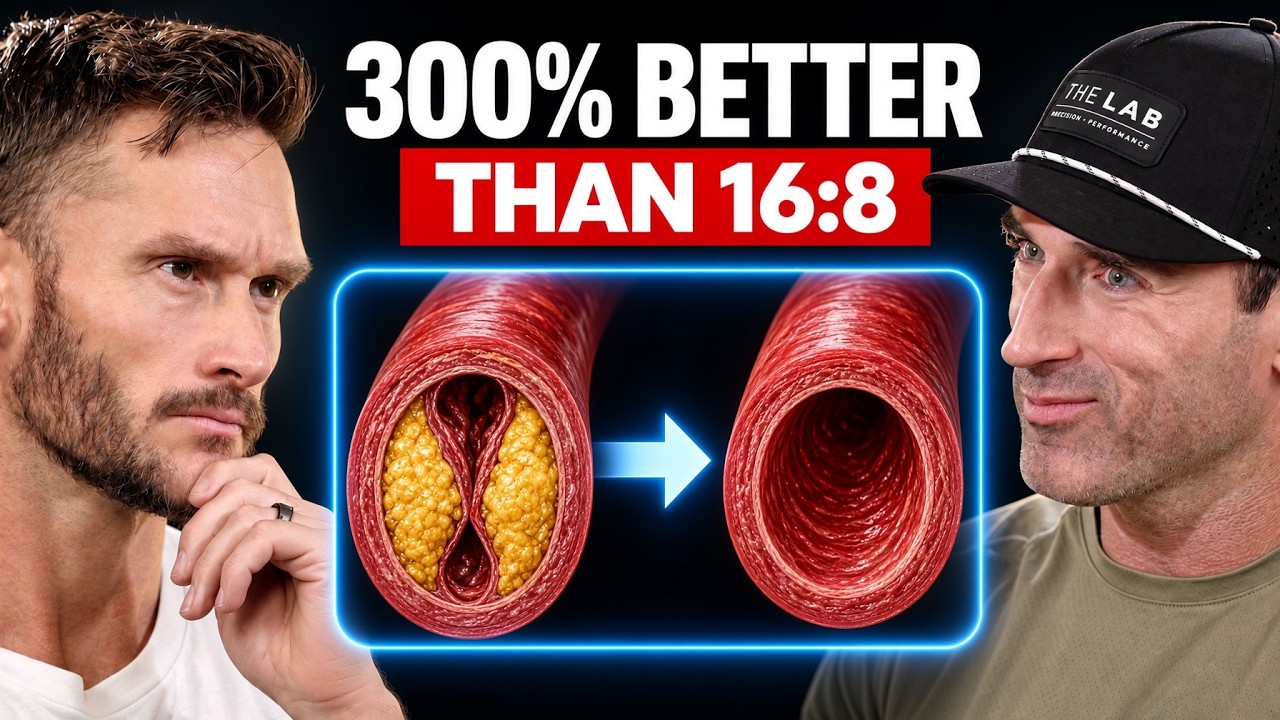
This plan squeezes one 32 to 36 hour fast into a single day each week.
Surprise: the fast itself is only one-third of the strategy.
Keep reading for the three-day lock-in, specific ketone targets, and one counterintuitive rule about movement.
Jump to:
Three Phases Drive the Whole Protocol
Phase one, glycogen depletion. Phase two, metabolic transition. Phase three, refeed. Simple. That’s it in a nutshell.
Dr. Chef’s “accelerator protocol” runs 32 to 36 hours, once weekly, for up to six weeks. His stated goal is to recreate what a much longer fast delivers, minus the muscle loss.

If you want something simple that actually works, this is one of the most effective tools I’ve used to build strength, conditioning, and endurance without needing a full gym setup.
- Full-body training with one weight using swings, squats, and presses
- Solid cast iron build that feels stable and lasts for years
- Comfortable grip that makes high-rep workouts easier to handle
He argues that fasting is a biological tool, and that setup matters more than duration.
Fasting duration is less of an issue than the biological setup that you create.
Important context: claims that 36 hours can mimic a 7-day fast, or that clients cut total body fat mass by half in six weeks, come from his own clinical database. He openly says so. No randomized controlled trial was cited in the conversation, so treat these numbers as promising clinical observations, not settled science.
Who Should Wait Before Trying This
Nutrition outside the fast has to be locked in first. Dr. Chef wants clients to know their TDEE and macronutrient intake.
His readiness markers include:
- Fasting insulin under 10
- Visceral fat index under 10
- Liver markers screened for non-alcoholic fatty liver disease
We have to meet a certain fundamental level of criteria. Otherwise, this is a suicide mission.
Strong language, and worth heeding. Anyone with diabetes, a medical condition, or prescription medication should involve a healthcare provider before attempting extended fasting.
No stacking extra 24-hour fasts. No calorie restriction on other days. Dr. Chef calls this approach “pure potency.”
If you want something simple that actually works, this is one of the most effective tools I’ve used to build strength, conditioning, and endurance without needing a full gym setup.
- Full-body training with one weight using swings, squats, and presses
- Solid cast iron build that feels stable and lasts for years
- Comfortable grip that makes high-rep workouts easier to handle
Day One: The Pre-Fast Glycogen Drain
Say the fast lands on Monday. Sunday becomes the setup day.
Why drain glycogen? Stored glycogen lets the body mount an insulin response. Muscle glycogen stays trapped in muscle, so liver glycogen is the real target, roughly 100 grams depending on the person.
The Pre-Fast Checklist
- Train early: heavy lower-body or full-body lifting, then a cardio-metabolic finisher with built-in resistance, like goblet squats
- Skip Pilates and yoga for this session; heavy weights are the point
- Fuel the workout: about 15 grams of fast carbs, plus ketones and essential amino acids
- Zero exogenous carbs afterward; leafy greens are fine
- Light dinner before 6 p.m., such as salad with salmon, built on protein and quality fat
- 60 minutes of easy movement and an evening sauna
Wipe that glycogen and then do not replace the glycogen.
One more twist: movement timing matters. Dr. Chef says anchoring steps around meals shifts glycemic variability dramatically versus random walking.
Day Two: The Fast Itself
Forget lying on the couch. Dr. Chef wants an energy demand created while fasting.
His clients target 20,000-plus steps. His reasoning? Eating consumes about 3.5 hours daily, so that time is freed up.
Move more. Be obsessed about moving on the fasting day. That’s how you get more out of it.
What’s Allowed
- Coffee is a “must” in his view
- Zero-calorie, zero-sugar drinks have minimal impact on his ketone readings
- Electrolytes become imperative with heavy sauna use, since sodium losses add up
What’s Off the Menu
- Bone broth and amino acids, since leucine triggers an insulin response and can shut down ketosis
Sauna is a centerpiece. Dr. Chef personally builds up to two 45-minute high-heat sessions, ideally two 45-minute or three 30-minute rounds. No sauna? A very hot bath for 20 minutes can also trigger heat shock proteins, though he says it’s far less comfortable.
If you want something simple that actually works, this is one of the most effective tools I’ve used to build strength, conditioning, and endurance without needing a full gym setup.
- Full-body training with one weight using swings, squats, and presses
- Solid cast iron build that feels stable and lasts for years
- Comfortable grip that makes high-rep workouts easier to handle
He also stresses he is not giving medical advice. Heat exposure while fasting can be risky for some people, so build up slowly.
Ketones Are the Dashboard
Ketones are the biomarker to follow. If your ketones are going up, every other condition has to be met. Glycogen depletion, insulin normalization, high-grade lipolysis, then ketones.
Skip urine strips. He recommends blood fingersticks like KetoMojo, or a continuous ketone monitor.
- Fast start: serum ketones around 1 to 1.2 mmol/L, though newcomers may not hit this
- Midday on fast day: at least 1.5 mmol/L
- Peak goal: 4 to 4.5 mmol/L, which he says clients reach in about 16 hours
Exogenous ketones don’t count here. They raise the number on a meter without meeting the underlying conditions.
The autophagy link is also framed carefully. Dr. Chef admits ketones aren’t autophagy biomarkers, calling the mechanistic connection “very compelling” rather than proven. Direct autophagy measurement requires expensive lab work and tissue biopsies.
When to Pull the Plug
One client sat in low ketone ranges and mentioned a sore throat. Within hours, she landed in urgent care with influenza.
I stop people’s fasts all the time. Don’t waste your time. Let’s reset.
Day Three: Refeed Without Wrecking Your Gut
Waking up energized? Sauna and movement are on the table. Feeling gassed? Refeed immediately.
If you want something simple that actually works, this is one of the most effective tools I’ve used to build strength, conditioning, and endurance without needing a full gym setup.
- Full-body training with one weight using swings, squats, and presses
- Solid cast iron build that feels stable and lasts for years
- Comfortable grip that makes high-rep workouts easier to handle
Bone broth comes first, and only bone broth. It’s gentle on the gut and lacks leucine.
- Sip bone broth freely
- Wait a minimum of 2 hours
- Start whole food with protein
- Add fat
- Bring in carbohydrates last
Dr. Chef once broke a fast with a ribeye. His verdict: “really harsh.”
Avoid high-intensity training on fasting and post-fast days. Lifting at roughly 50% effort is fine, and the next intense session lands on day four.
Do Women Fast Differently?
Dr. Chef argues women tolerate chronic calorie restriction poorly but handle short, intense fasts well, citing his own patient data. DeLauer added that women’s fatty acid oxidation response to adrenaline appears stronger than men’s.
Women, please, not only can you fast, you’re actually biologically optimized to fast, period.
Fair warning: that conclusion rests on clinical experience and a study DeLauer recalled but didn’t name. Research on fasting in women remains less settled than this confident delivery implies, so individual response and medical guidance matter.
The Rest of the Week Matters Too
Non-fasting days use carb cycling. Training days get carbs before and after workouts, while rest days stay around 75 to 100 grams.
If you want something simple that actually works, this is one of the most effective tools I’ve used to build strength, conditioning, and endurance without needing a full gym setup.
- Full-body training with one weight using swings, squats, and presses
- Solid cast iron build that feels stable and lasts for years
- Comfortable grip that makes high-rep workouts easier to handle
Growth is the goal, too. Dr. Chef reports clients gaining roughly half to one percent skeletal muscle during the program.
It’s all about growth and fasting. When you’re not fasting, I still want your growth signals on.
Medical-Practice Add-Ons
In his clinic, Dr. Chef sometimes pairs the protocol with prescription GLP-1 medications like tirzepatide, dosed with a bolus on the pre-fast morning to quiet “food noise.” He also mentions dihydroberberine and urolithin A for mitochondrial support.
These are physician-directed tools. Nobody should copy them without medical supervision.
Reality Check Before You Start
- Evidence status: results come from one practitioner’s clinic data, not published trials
- Muscle matters: lifting is non-negotiable in this framework
- Data over feelings: blood ketone tracking guides every decision
- Medical clearance: essential for anyone with metabolic disease, medications, or a history of disordered eating