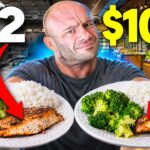
In a recent YouTube video, Renaissance Periodization co-founder Dr. Mike Israetel ran a grocery experiment that could reshape your food budget.
His mission: buy one full day of bodybuilding meals from a bargain chain, then repeat the shopping spree at America’s poshest grocer.
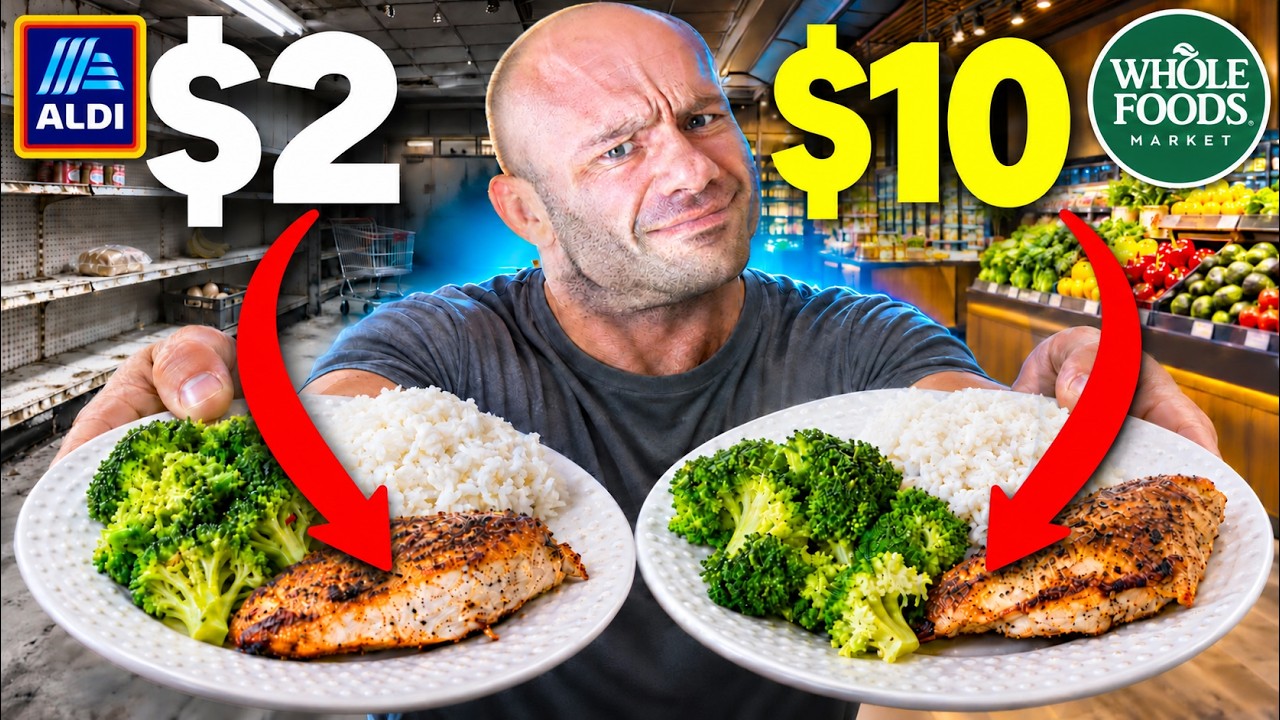
Blind taste tests settled whether splurging buys better food.
Spoiler: one cart cost roughly 2.5 times more than the other.
Verdicts on chicken, rice, and blueberries might surprise you.
Jump to:
The Price Gap: About $10 vs. $25 for One Day of Eating
Israetel’s discount-store day of meals totaled roughly $10. Identical dishes from the premium grocer hit $25.15.

If you want something simple that actually works, this is one of the most effective tools I’ve used to build strength, conditioning, and endurance without needing a full gym setup.
- Full-body training with one weight using swings, squats, and presses
- Solid cast iron build that feels stable and lasts for years
- Comfortable grip that makes high-rep workouts easier to handle
That works out to two and a half times more money for food he judged nearly identical.
Aldi is undefeated.
- Breakfast: $3.73 (Aldi) vs. $7.78 (premium)
- Lunch: $1.78 (Aldi) vs. $6.96 (premium)
- Dinner: $4.51 (Aldi) vs. $10.41 (premium)
Sticker Shock Down Every Aisle
Israetel deliberately grabbed the cheapest basics at Aldi, then chased the ritziest options across town. Per-pound comparisons got wild.
- Chicken breast: $1.99 vs. $9.99
- White rice: 98 cents vs. $4.96
- Broccoli: about $2 vs. about $4
- Russet potatoes: 45 cents vs. $1.10
- Green beans: $3.20 vs. $5.99
- Olive oil: about 30 cents vs. $1.89 per fluid ounce
- Ground beef: premium version hit $15.99, more than double
Even the shoppers noticed. A fellow customer who recognized Israetel got told, “Shit here is not cheap.”
The Blind Taste Test: Did Money Buy Better Food?
Videographer Scott plated each meal in secret. Israetel then guessed which came from where.
Breakfast: Egg Whites, Oats, and Blueberries
Blueberries were the lone giveaway. Larger, juicier berries tipped him off to the pricey plate.
Everything else? A coin flip, or worse for the expensive version.
If you want something simple that actually works, this is one of the most effective tools I’ve used to build strength, conditioning, and endurance without needing a full gym setup.
- Full-body training with one weight using swings, squats, and presses
- Solid cast iron build that feels stable and lasts for years
- Comfortable grip that makes high-rep workouts easier to handle
The oatmeal from Aldi tastes better than this.
Israetel also found the premium egg whites tasted less like eggs. His verdict: a tie at best, with Aldi getting the nod. Paying double was “categorically” not worth it, in his opinion.
Lunch: Chicken, Rice, and Broccoli
Pricier rice tasted slightly more like rice. Broccoli? A draw.
Chicken delivered the real shock, given a $8 per pound difference.
The chicken on the left here is actually more juicy and softer and more enjoyable.
Premium chicken came across as gamey and chewy. Cheaper breast looked bigger and thicker too.
Israetel estimated that budget plate packs about 50 grams of protein and 100 grams of carbs for just $1.78.
Dinner: Ground Beef, Potatoes, and Green Beans
Potatoes tasted the same. Scott’s theory: bagged at one factory, then stamped with different price tags.
If you want something simple that actually works, this is one of the most effective tools I’ve used to build strength, conditioning, and endurance without needing a full gym setup.
- Full-body training with one weight using swings, squats, and presses
- Solid cast iron build that feels stable and lasts for years
- Comfortable grip that makes high-rep workouts easier to handle
Slightly sweeter green beans gave away the French-style premium variety. Beef flavor, meanwhile, favored the bargain option.
This meal is worse. I like the taste of this food better.
Is Eating Healthy Really Expensive?
Israetel targets a popular myth: fast food beats home cooking on price.
When people say it’s cheaper to eat at McDonald’s than it is to eat healthy, they are almost always and almost everywhere wrong.
His math: cooking basics in bulk takes about an hour and a half per week. Result? Full days of high-protein eating for around ten dollars.
Is there an income category in the United States that cannot afford $10 per day of food?
Prepared meals, he warns, are where costs balloon into hundreds of dollars weekly.
So What Are You Actually Paying For?
Premium grocers lean on local sourcing, artisanal farms, and organic or GMO-free labels. Israetel’s blunt answer to what you’re buying:
It is literally just the vibe and the prestige.
Organic and GMO-Free Claims
Israetel argues organic food shows no nutritional or health advantage in measured research. He says multiple meta-analyses spanning roughly 25 years back this up, and sees no solid evidence that GMO foods harm health.
If you want something simple that actually works, this is one of the most effective tools I’ve used to build strength, conditioning, and endurance without needing a full gym setup.
- Full-body training with one weight using swings, squats, and presses
- Solid cast iron build that feels stable and lasts for years
- Comfortable grip that makes high-rep workouts easier to handle
Worth remembering: his argument concerns nutrition and health outcomes. Preferences about farming practices or supporting small producers remain personal values, not nutrition science.
The “Local Is Greener” Question
Israetel also challenges the assumption that local always means lower environmental impact. His example: bananas grown in northern climates demand far more energy than bananas shipped from sun-soaked regions like Colombia.
His position? Local sourcing is a cool vibe, not a proven moral or ecological win. Wealthy shoppers can pay for it happily. Budget-conscious lifters needn’t.
How to Eat Like a King on a Budget
- Buy basics in bulk: chicken breast, white rice, potatoes, broccoli, and oats anchor Israetel’s cheap plates.
- Cook everything at home: batch cooking weekly beats pre-prepared meals by hundreds of dollars.
- Choose discount chains: Aldi, Walmart, or similar stores deliver identical macros.
- Splurge selectively: if you love hot bars or artisanal vibes, enjoy them guilt-free, but skip assuming they’re healthier.
You can literally eat like a king.
Nobody needs permission to shop wherever they like. But healthy, muscle-building food doesn’t require a premium price tag, and Israetel’s blind test suggests your taste buds may not notice the difference.