In a recent YouTube video, a popular fitness creator revealed the extreme playbook he would follow to get shredded in 8 to 12 weeks.
Some tactics are smart and practical.
Others deserve a much closer look before anyone tries them.
He opens with a blunt warning that he repeats throughout.
Here is what he does, plus what the science says about each move.
These are things that I would do. It doesn’t mean you have to.
Jump to:
The Diet Backbone: Alternate-Day Calorie Cycling
His first move is every-other-day caloric restriction. Baseline calories one day, aggressive cuts the next, repeated for the full 8 to 12 weeks.
So, what hypothetically it might look like for me is maybe 3,000 calories one day, and then aggressively low down to like 1,200 calories the next day.
Protein stays high on both days, roughly one gram per pound of lean body mass. Fats do the flexing: high on big days, lower on lean days.
He believes this approach shields his metabolism. The evidence is more mixed than that suggests. Intermittent restriction tends to produce fat loss comparable to steady daily dieting, not clearly better, and metabolic protection remains unproven.
One Week of Protein-Sparing Fasting
For one of those weeks, he suggests a protein-sparing modified fast: lean chicken, fish, tuna, protein shakes, and veggies.
Only track your protein. Don’t look at the calories.
He admits you “will probably not feel too good after day four.” He also calls it “rabbit starvation,” a term historically tied to protein poisoning from eating lean meat with almost no fat or carbs. Anyone considering this needs medical supervision, a multivitamin, and a short timeline.
The Stimulant Stack: Mate, Caffeine, and Yohimbine
Next up: yerba mate each morning, which he says may nudge fat oxidation higher. His own experience is that tolerance builds fast, so he saves it for lean-out phases.
He also admits that he sees no scientific literature backing the tolerance effect. That honesty is refreshing.
Caffeine comes next, with one condition: move after you consume it.
If you consume more caffeine, you should use that energy because you mobilize the fat and then you move.
To protect sleep, he adds rutaecarpine, which he says clears caffeine faster. He then slips into discussing rauwolscine, a different compound that acts on alpha-2 receptors like yohimbine. Human evidence for either as a caffeine-clearing sleep aid is thin.
Yohimbine: Powerful, Jumpy, and Not for Everyone
He takes 15 to 20 mg of yohimbine, two days on and one day off. It binds alpha-2 adrenergic receptors, which boosts fat mobilization and suppresses appetite.
It can make you feel kind of jumpy.
That is putting it mildly. Yohimbine can raise heart rate and blood pressure and trigger anxiety, and over-the-counter products vary widely in actual content. People with heart or blood pressure issues should skip it.
Training Smarter, Not Harder
His training philosophy flips typical “more is better” advice.
- Return to a classic split: push/pull/legs or back-biceps and chest-triceps
- Separate cardio from lifting and emphasize zone two work
- Cut training volume 25 to 30% while keeping intensity high
- Sprinkle bodyweight pushups, squats, and dips throughout the day
The logic? Reminding your body that muscle is relevant helps keep it during a deficit. He adds that VO2 max may dip when zone two dominates, which he does not recommend for most people.
The NEAT Secret
Lower training volume frees energy for non-exercise activity thermogenesis, meaning everyday movement. He cites an overfeeding study in which NEAT changes drove a 10-fold difference in fat storage.
You’re going to burn more fat by just moving around. Move around, do the dishes, walk.
Spot Reduction: Possible After All?
Here comes the section he expects to draw heat. He points to a 2023 physiology study suggesting that cardio plus ab work trimmed more abdominal fat than cardio alone at equal calorie burn.
It’s one study and I haven’t seen it replicated yet.
Worth remembering: decades of earlier research found that targeted exercise does not preferentially burn fat from that region. Treat this as a preliminary finding, not settled fact. He suspects any benefit shows up mostly in people already around 12 to 15% body fat.
Sleep, Recovery, and Peptides
Sleep gets tricky when adrenaline runs high. His nightly fix: 1,000 mg of tryptophan and 400 mg of theanine, plus magnesium glycinate.
The tryptophan and the theanine in those dosages for me, game-changer.
He also uses BPC-157 and TB500, supplied by his physician, to support recovery in a low-calorie state. He stresses going through a qualified professional. That advice matters: both are unapproved for general use, human trial data is very limited, and both are banned in competitive sport.
Protein Shakes, Collagen, and Creatine
- Alternate fasted workouts with pre-workout protein shakes mixed in water
- Lean on protein powder as a low-calorie, low-fat protein source
- Add collagen to shakes, aiming to support connective tissue alongside whey’s muscle benefits
- Use creatine, powder on fasting days and gummies on non-fasting days
He notes that the creatine brand he uses sponsors his channel. He admits relying on protein powder is “not super proud” territory because it is hyper-processed. Creatine has strong research behind it; the collagen synergy idea is still more theory than proof.
Small Habits That Make Big Differences
Skip Dinner When You Slip
Overdid it? Trimming dinner is his easy reset. He says it also helps him sleep better.
Swap the Cheat Meal for a Daily Treat
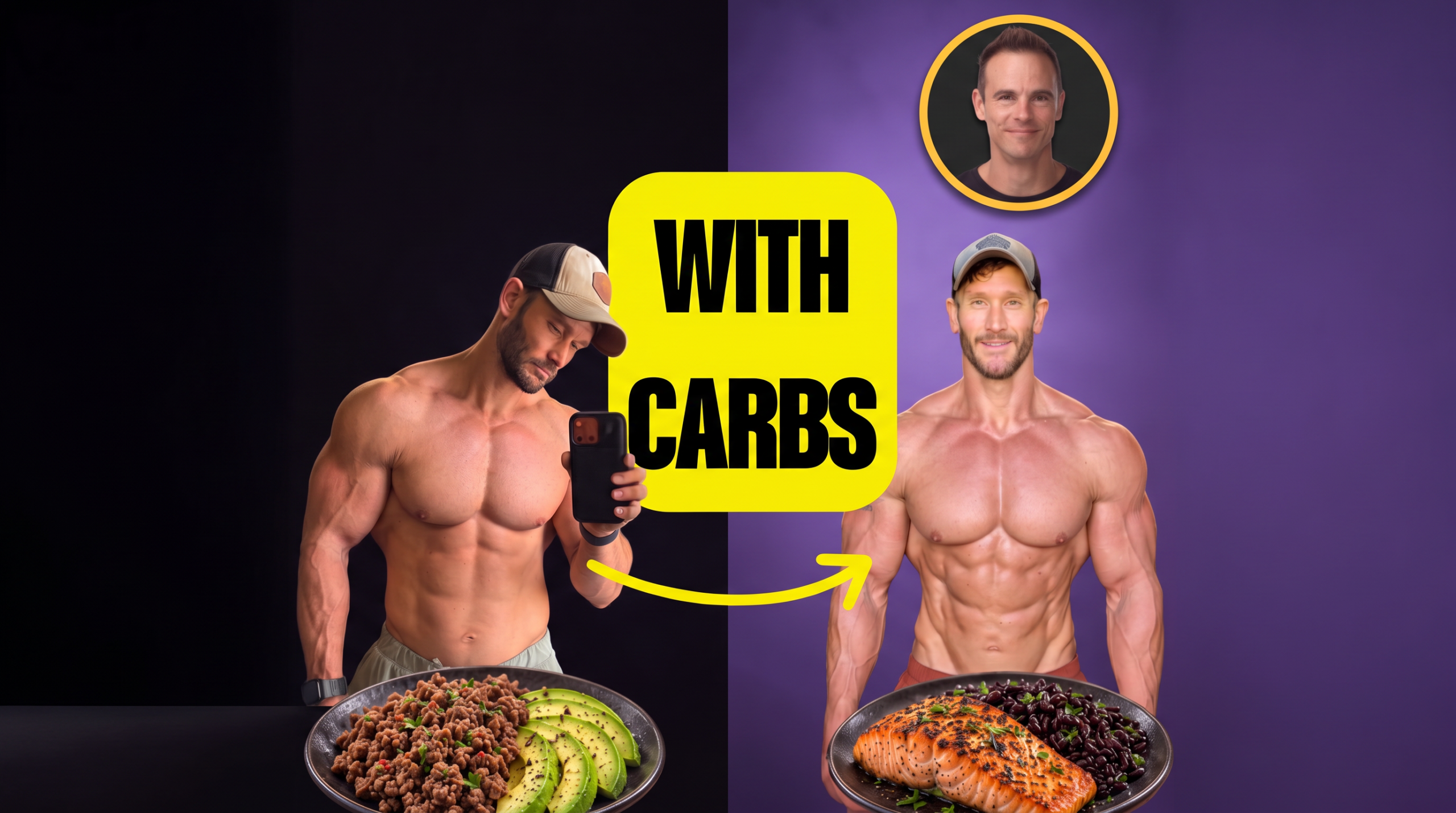
His final rule: no weekend cheat meals. Big cheats trigger overeating by as much as 2,000 calories, he says. A daily 150 to 250 calorie treat, such as a brownie square or light ice cream, keeps cravings quiet.
Ditch the cheat day attitude.
The Takeaway
Several ideas here are low-risk and well aligned with fat-loss research: high protein, more daily movement, less training volume during a deficit, and planned small treats.
Higher-risk elements, including yohimbine, peptides, and extended very-low-calorie phases, belong in a conversation with a doctor first. Extreme cuts are short-term tools, not lifestyle habits.