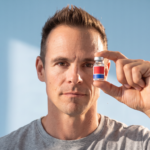
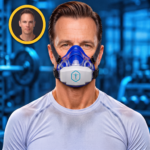
In a recent YouTube video, popular health educator Dr. Berg argued that one measurement outshines cholesterol, blood pressure, and blood sugar as a longevity predictor.
That measurement is VO2 max.
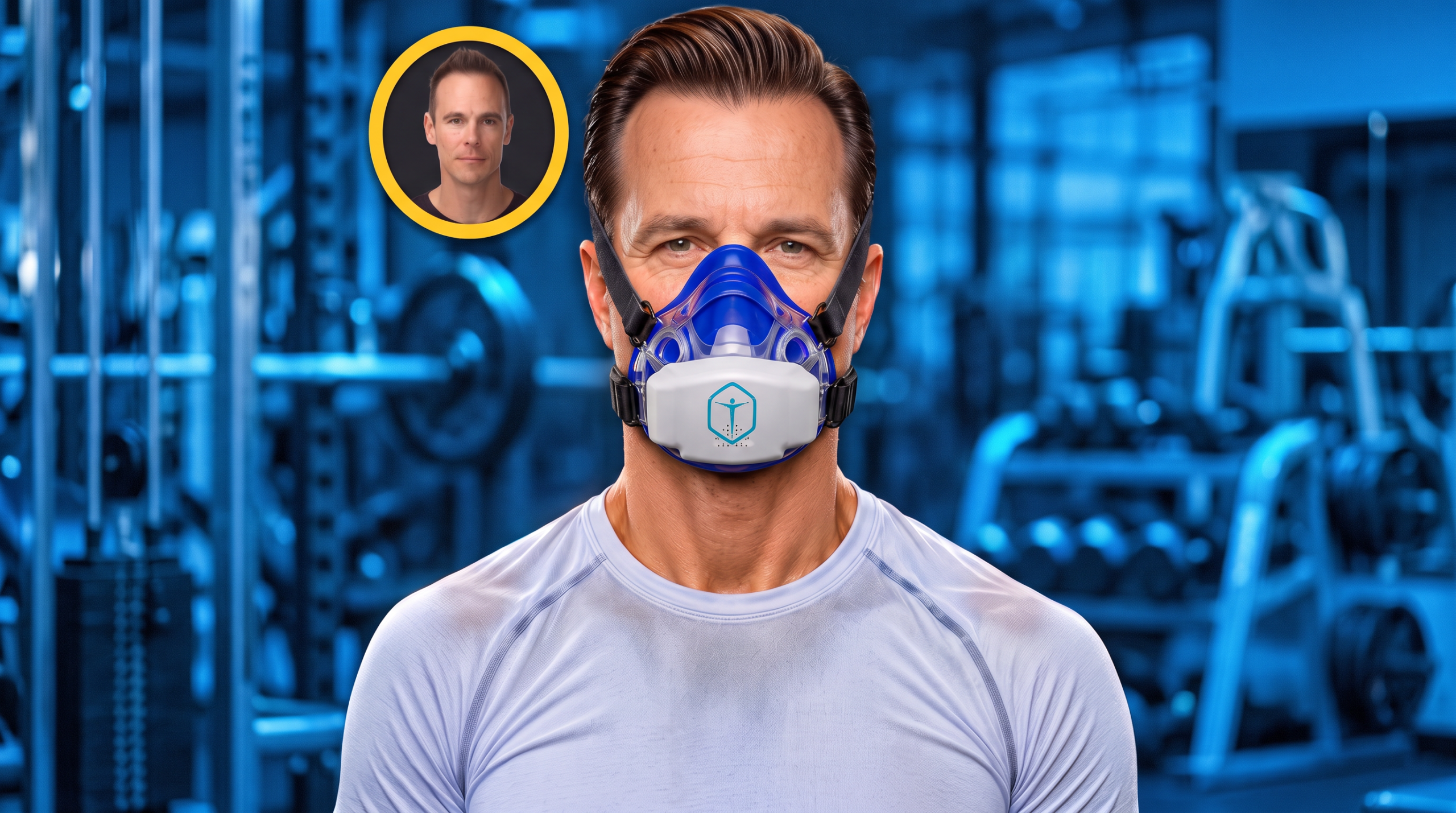
Berg took his own test just two days before filming, and the numbers surprised him.
Why would a single fitness score outrank everything on a routine lab panel?
Read on for the pipeline behind it, the interval workout he trusts, and his actual results.
Jump to:
Why Low Fitness May Be a Bigger Red Flag Than Smoking
Berg points to research published in JAMA that followed roughly 122,000 people. He also cites a second study of about 750,000 patients with matching results.
Those in the lowest fitness bracket were five times more likely to die than people in the elite group.
Smoking doubles your risk of death. Type 2 diabetes roughly doubles it. Uncontrolled hypertension roughly doubles it. But having low fitness trumps all of them.
Worth remembering: studies like these are observational. Fitter people often sleep better, eat better, and visit doctors more, so fitness is a powerful marker rather than the lone driver.
Not a Lung Test: The Whole Pipeline
Many assume VO2 max simply reflects lung capacity. Berg says no.
VO2 max measures the entire cardiovascular and metabolic system under maximum stress.
Oxygen travels from air to lungs, through the heart, along blood vessels, into muscles, and finally to mitochondria, where energy gets produced.
I’ve looked at a lot of different biomarkers and VO2 max is probably the best way to describe your health reserve.
Think of it as fitness abundance: extra savings that buffer aging, protect the brain through better blood flow, and preserve independence.
Lungs: Rarely the Bottleneck
Healthy lungs typically supply enough oxygen. Berg lists several exceptions:
- Smoking (quitting brings a big change)
- Heavy air pollution
- Sleep apnea or lung damage
- High altitude before adaptation
He also champions nose breathing during workouts and sleep. His reasoning: restricted airflow raises carbon dioxide, which helps hemoglobin release oxygen (the Bohr effect), while nasal air boosts nitric oxide, a molecule that relaxes arteries.
Heart: Lower Rate, Bigger Output
A resting person circulates about 5 liters of blood. An elite athlete at maximum effort moves roughly double.
the body adapts as you get more fit with a lower heart rate, but much more blood volume coming out.
Several things push the score down:
- Sedentary living or hospital stays after surgery
- Prolonged extreme endurance training
- Each additional year of age
- Poor sleep
Berg, 61, even napped daily before testing to remove sleep debt as a variable.
Blood: Nitric Oxide, Plasma, Salt, and Iron
Berg names several ways to raise nitric oxide:
- Exercise, especially high-intensity intervals
- Arugula, which he ranks first among foods
- Cacao
- Beet root powder
Chronically high insulin worries him too. Excess sugar can attach to proteins, a process called glycation, leaving red blood cells too stiff to bend through tiny capillaries.
Fit people also carry more plasma, not necessarily more red cells, which thins blood and helps it flow. His hydration check: stand up quickly and notice any dizziness.
Berg loaded meals with sea salt and drank extra fluid before testing, noting that low-carb dieters often run short. Anyone with high blood pressure or kidney concerns should check with a clinician first.
Iron matters as well, since too little (anemia) or too much hampers oxygen transport. Berg favors red meat over spinach and avoids iron supplements and cast-iron skillets, because the body has no easy way to excrete excess.
Iron needs differ widely, so bloodwork is the smart starting point.
Muscle: Your Secondary Heart
the muscle is a secondary heart.
Berg says skeletal muscle contributes about 30% of the pumping action during exercise, easing pressure on the heart and pushing blood through veins. Prolonged sitting, he warns, invites venous problems such as varicose veins.
Muscle erodes with age, particularly for women after menopause, when falling estrogen removes some protection. His answer: weight training into your 60s, 70s, 80s, and 90s, paired with animal protein.
Mitochondria: Where Oxygen Becomes Energy
Oxygen serves as the final step in making ATP, the body’s energy currency. Berg says this chemistry depends on B vitamins, magnesium, and coenzyme Q10, which he notes some medications deplete.
He also credits intermittent fasting with supporting mitochondria and blames constant snacking for harming them. Those points reflect his perspective, so supplement decisions deserve a conversation with a healthcare provider.
The Workout: Norwegian 4 by 4
Which training moves the dial most? Berg’s pick is the Norwegian 4 by 4, done on a bike or treadmill:
- Warm up for about 10 minutes at an easy pace.
- Push for 4 minutes at 85 to 90% of maximum heart rate.
- Ease off substantially for about 3 minutes.
- Repeat until four hard rounds are complete.
Why 4 minutes? Berg says the first 120 seconds merely ramp intensity up to where adaptation begins, so you must build up to it.
At 61, he performs it once weekly, filling other days with zone 2 cardio and weights. Younger exercisers might manage twice.
I would not over train this because really hard on your body.
Berg’s Score, Explained by an Olympic Coach
Berg tested with Andrew Lambert, a former Olympic coach with a master’s in kinesiology and sports science, now at VO2 Master. Results: 47, then 52 four months later.
you’re in the 99th percentile after your follow-up test.
Lambert added that Berg ranked in the 80th percentile versus men in their 20s. Berg later contrasted the numbers: an average 60-year-old scores around 29, while an average 20-year-old sits near 45.
Can improvement continue forever? Lambert cautioned otherwise.
when your VO2 max is already quite high it’s harder to improve that score.
Smartwatch Estimate or Mask Test?
we’re talking about the difference between an estimate and a direct measurement.
Lambert explained that wearables lean on age, gender, height, weight, and activity data. Studies, he said, show readings can land significantly higher or lower than true values.
A valid lab test demands a 10-out-of-10 effort. Berg’s treadmill speed climbed 0.5 mph each minute until he hit 9 mph, all while a mask measured oxygen consumption.
Recovery Is Where Gains Happen
the recovery you take after the exercise is just as important as the exercise itself.
Lambert’s example: junk food, shortened sleep, and three HIIT classes weekly, then wondering about stalled progress. The culprit is usually what happens between workouts.
Getting Tested
Lambert says VO2 Master practitioners operate in more than 50 countries, searchable through a facility finder at vo2master.com. Berg plans to retest every six weeks, though a clinic visit works fine for most people.