Animal flow training might sound gimmicky at first—awkward movements mimicking creatures on all fours.
But one fitness content creator recently discovered that what seems silly on the surface delivers profound physical adaptations most traditional workouts simply can’t touch.
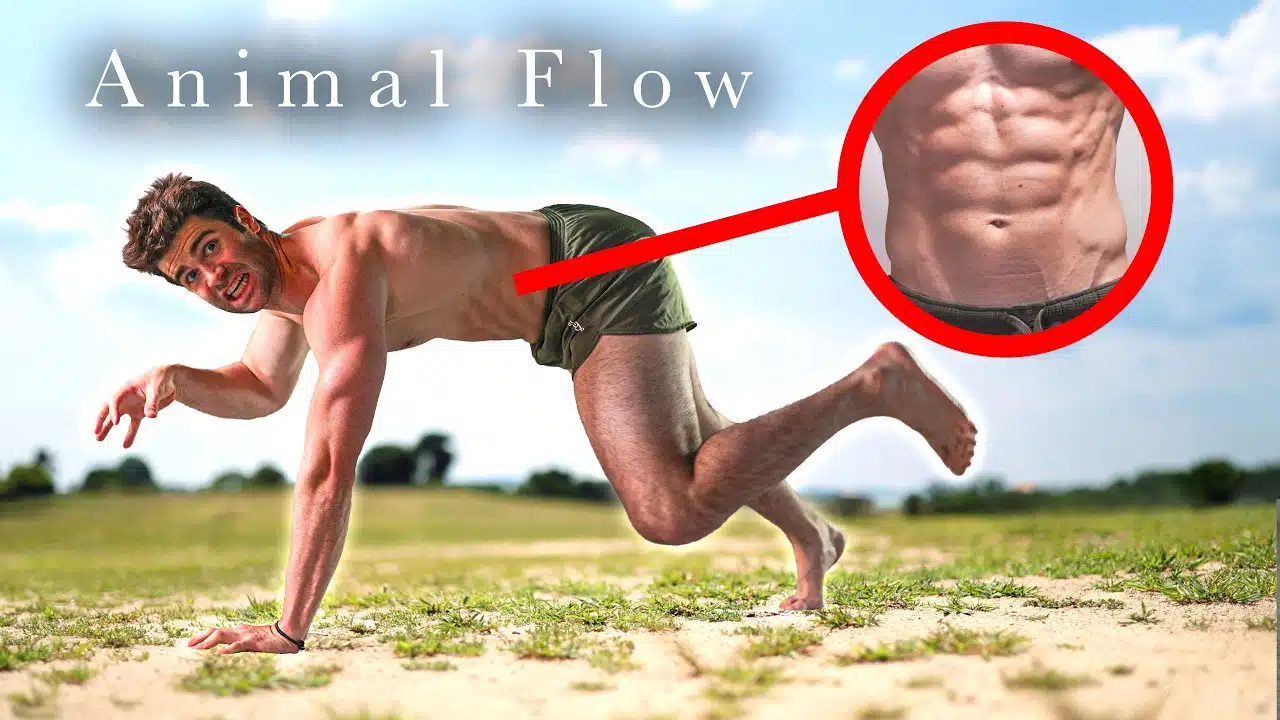
After dedicating an entire month to learning and practicing animal flow movements, he experienced humbling challenges alongside unexpected gains in mobility, core strength, and mind-body coordination.
The journey wasn’t without setbacks—wrist pain, hamstring strains, and serious mental frustration tested his commitment—but the results speak volumes about this unconventional training method’s potential.
Jump to:
- Starting From Zero: The Foundation Movements
- Nature’s Gym Brings Unexpected Humility
- Week Two: Coordination Challenges Mental Patterns
- Injury #1: Wrist Pain Demands Adaptation
- The Lizard: When Movements Fight Intuition
- Rediscovering Connection Strength
- Building Endurance Through Distance
- Injury #2: Hamstring Strain From Mobility Gaps
- The Harsh Reality: Hands and Feet Take Punishment
- One Month Results: Humbled and Enlightened
- Who Should Consider Animal Flow Training?
- The Bigger Picture: Movement Diversity Matters
Starting From Zero: The Foundation Movements
Like most beginners, the experimenter started by watching instructional videos of basic animal flow patterns. Three foundational movements formed the base: the beast crawl, the spider, and the two-step.
The beast crawl—essentially walking forward on all fours—seemed deceptively simple. Yet holding that position immediately engaged muscles in ways standard exercises don’t.

If you want something simple that actually works, this is one of the most effective tools I’ve used to build strength, conditioning, and endurance without needing a full gym setup.
- Full-body training with one weight using swings, squats, and presses
- Solid cast iron build that feels stable and lasts for years
- Comfortable grip that makes high-rep workouts easier to handle
My core, my shoulders, my like hips, my knees, everything’s getting fatigued. This is going to be challenging.
The spider reversed the pattern, while the two-step helped transition between movements. Even these beginner-level exercises proved remarkably demanding, activating the entire kinetic chain simultaneously rather than isolating muscle groups.
Nature’s Gym Brings Unexpected Humility
Taking the practice outdoors added another dimension entirely. Training on uneven terrain, grass, and natural surfaces intensified the challenge exponentially.
Just 15 minutes of beast crawls uphill, two-steps, and crab walks left everything feeling completely fatigued. The body was making neuromuscular connections absent from years of conventional training.
I’m not exaggerating. I woke up this morning and my wrists are sore. It’s reminding me of my old B-boy days back when, you know, I was doing movements kind of like this, I guess.
That deep structural soreness differed completely from typical muscle fatigue. Tendons, ligaments, and joint stabilizers were adapting to unfamiliar stress patterns.
Week Two: Coordination Challenges Mental Patterns
Moving into week two, more advanced movements entered the rotation: the galloping ape, bear crawl, and crab spin. Each presented unique coordination puzzles.
One movement in particular—the skipping ape—created significant mental frustration. The pattern required breaking natural movement tendencies, forcing conscious override of intuitive sequencing.
If you want something simple that actually works, this is one of the most effective tools I’ve used to build strength, conditioning, and endurance without needing a full gym setup.
- Full-body training with one weight using swings, squats, and presses
- Solid cast iron build that feels stable and lasts for years
- Comfortable grip that makes high-rep workouts easier to handle
This mental-physical battle, while frustrating, represents precisely what makes animal flow valuable. Novel movement patterns force new neural pathways, maintaining cognitive flexibility and potentially supporting healthy aging.
Other moves like the ostrich unlocked mobility in unexpected areas, accessing ranges of motion that hadn’t been challenged in years.
One thing’s for sure, man, this is no joke. I’m sweating up a storm out here. My arms are like aching, my legs are cramping up, my knees are locking up, dude.
Injury #1: Wrist Pain Demands Adaptation
The constant loading on hands and wrists eventually caught up. Sharp pain developed in one wrist, particularly during certain positions.
Rather than pushing through, he modified his approach—practicing movements on fingertips and fists instead of flat palms. He also reduced volume and took two full rest days.
This response demonstrates intelligent training. Wrist joints require gradual adaptation to unusual loading patterns. Forcing progression risks serious tendon issues.
The brief rest worked. Wrist pain disappeared entering week three, allowing training to continue with renewed intensity.
If you want something simple that actually works, this is one of the most effective tools I’ve used to build strength, conditioning, and endurance without needing a full gym setup.
- Full-body training with one weight using swings, squats, and presses
- Solid cast iron build that feels stable and lasts for years
- Comfortable grip that makes high-rep workouts easier to handle
The Lizard: When Movements Fight Intuition
Week three introduced the lizard, a complex movement requiring counterintuitive sequencing. Initial attempts felt completely awkward and wrong.
Yet battling through that discomfort created something valuable—deeper mind-body integration that ordinary exercises rarely demand. Each repetition refined coordination slightly, building connections attempt by attempt.
The movements still weren’t “flowy,” but physical challenge remained intense. Isometric holds between transitions, joint stability demands, and mobility requirements taxed the body comprehensively.
Rediscovering Connection Strength
Perhaps the most significant discovery came around week three—a sensation he described as “connection strength” returning after feeling lost for years.
There were moments in the recent past and even like the last like decade or so where like I just felt like like dis- like disconnected. Like I might have felt like I was strong here, but like it just it didn’t go through the body, you know what I’m saying?
This describes what movement specialists call kinetic chain integration—force transferring smoothly through joints rather than being absorbed or blocked. Modern sedentary patterns disrupt these connections.
Animal flow’s requirement to coordinate complex full-body patterns while supporting body weight rebuilds that integration systematically.
If you want something simple that actually works, this is one of the most effective tools I’ve used to build strength, conditioning, and endurance without needing a full gym setup.
- Full-body training with one weight using swings, squats, and presses
- Solid cast iron build that feels stable and lasts for years
- Comfortable grip that makes high-rep workouts easier to handle
Building Endurance Through Distance
By week four, basic movements became warm-up exercises. The beast crawl and spider activated core, shoulders, and hips, preparing for more demanding patterns.
To progress further, he began treating animal flow like structured workouts—completing basketball court lengths as “reps” and tracking volume. Galloping ape for 100 feet created serious cardiovascular demand while building joint mobility.
Form degraded toward the end of sets, but that represents progressive overload in action. Muscles, joints, and coordination systems adapt when pushed beyond current capacity.
Injury #2: Hamstring Strain From Mobility Gaps
Attempting a galloping ape to cartwheel combination produced sharp pain—a minor hamstring strain. Years of sitting had created significant tightness, and rapid progression into extreme ranges proved too aggressive.
The injury served as reminder: mobility improvements require patience. Tissue extensibility adapts slowly compared to strength or cardiovascular capacity.
He adjusted by warming hamstrings thoroughly and moving slowly through challenging ranges. Training continued throughout week four with appropriate caution.
If you want something simple that actually works, this is one of the most effective tools I’ve used to build strength, conditioning, and endurance without needing a full gym setup.
- Full-body training with one weight using swings, squats, and presses
- Solid cast iron build that feels stable and lasts for years
- Comfortable grip that makes high-rep workouts easier to handle
The Harsh Reality: Hands and Feet Take Punishment
Training outdoors on concrete and grass roughed up hands significantly. Skin on fingers, thumb pads, and palms developed calluses. Toes literally peeled.
Like, especially on the cement, but even on like the grass and stuff, my hands are getting so roughed up.
This represents legitimate consideration for outdoor animal flow practice. Gradual exposure allows skin to toughen. Gloves or training on softer surfaces provides alternatives.
One Month Results: Humbled and Enlightened
After 30 days, the verdict was clear—animal flow delivered way more difficulty and benefit than anticipated.
Key improvements included:
- Enhanced joint stability particularly in shoulders and hips
- Significant core strength and mobility through unfamiliar ranges
- Improved mind-body coordination from novel movement patterns
- Better kinetic chain integration creating “connection strength”
- Increased shoulder stability potentially helping old injuries
Positions and movements absent from conventional training created adaptations impossible to achieve through standard gym exercises alone.
Who Should Consider Animal Flow Training?
Animal flow suits anyone seeking:
If you want something simple that actually works, this is one of the most effective tools I’ve used to build strength, conditioning, and endurance without needing a full gym setup.
- Full-body training with one weight using swings, squats, and presses
- Solid cast iron build that feels stable and lasts for years
- Comfortable grip that makes high-rep workouts easier to handle
- Improved functional mobility and joint health
- Enhanced core integration and stability
- Novel movement stimulation for cognitive benefits
- Bodyweight training requiring minimal equipment
- Supplemental training to address movement pattern gaps
Start conservatively with basic patterns, allowing joints and connective tissue adequate adaptation time. Progress gradually, particularly if mobility limitations exist.
Those with wrist issues should modify hand positions. Anyone with significant movement restrictions should address those systematically rather than forcing advanced patterns prematurely.
The Bigger Picture: Movement Diversity Matters
This experiment reinforces what movement specialists increasingly emphasize—training diversity produces comprehensive fitness better than any single modality.
Traditional strength training builds muscle and force production excellently. But ground-based movement patterns challenge stability, mobility, and coordination in complementary ways.
Incorporating unconventional movement—whether animal flow, martial arts, dance, or gymnastics—addresses physical capacities standard training neglects.
The result? More resilient, adaptable bodies capable of handling varied physical demands throughout life.
If you want something simple that actually works, this is one of the most effective tools I’ve used to build strength, conditioning, and endurance without needing a full gym setup.
- Full-body training with one weight using swings, squats, and presses
- Solid cast iron build that feels stable and lasts for years
- Comfortable grip that makes high-rep workouts easier to handle