We’ve been eating wrong this entire time.
Not because we lack willpower or discipline, but because the way we eat is fundamentally misaligned with our biology.
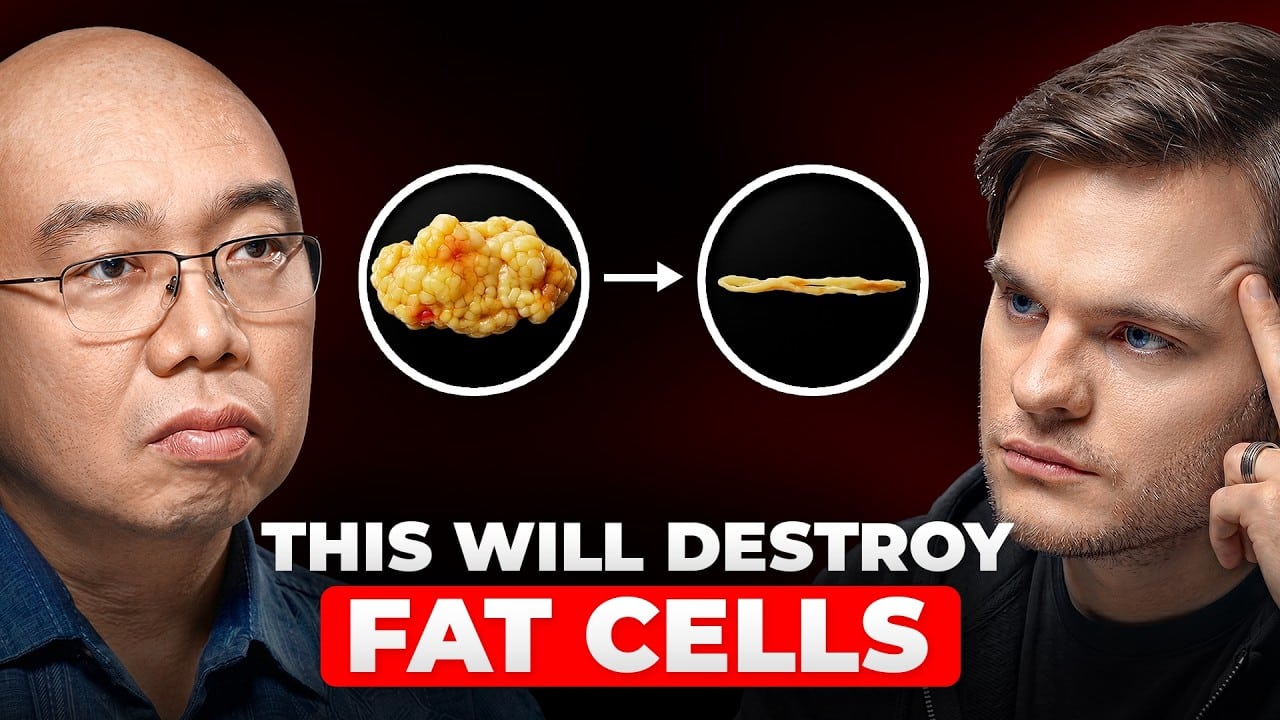
Professor Giles Yeo, a molecular neuroendocrinology expert at the University of Cambridge who’s spent 25 years studying the genetics of obesity, recently sat down to dismantle nearly everything we think we know about food, weight loss, and nutrition.
His insights challenge the calorie-counting obsession, question popular diets, and reveal why some of our food decisions aren’t really ours to begin with.
Jump to:
- The Calorie Myth That’s Been Fooling Us Since 1880
- Why Calories Are Nutrient-Blind
- Orange Juice Is More Dangerous Than Coca-Cola
- Why Some People Can Eat More Without Gaining Weight
- Your Mom Was Right About Breakfast
- Intermittent Fasting: Useful Tool or Overhyped Trend?
- Food Is Not Medicine
- The Ozempic Reality Check
- Your Parents’ Lifestyle Affects Your Genes
- Three Simple Guidelines for Eating Well
- The Gluten-Free Fad
- Meat: Quality Over Quantity
- Vegetarian vs. Vegan: A Critical Distinction
- Reclaiming Our Relationship With Food
The Calorie Myth That’s Been Fooling Us Since 1880
Every calorie count on every food package is based on research from 1880. Professor Wilbur Atwater traveled to Germany, learned to burn food in a container, measured temperature changes in surrounding water, and created the calorie system we still use today.
But there’s a massive flaw.

If you want something simple that actually works, this is one of the most effective tools I’ve used to build strength, conditioning, and endurance without needing a full gym setup.
- Full-body training with one weight using swings, squats, and presses
- Solid cast iron build that feels stable and lasts for years
- Comfortable grip that makes high-rep workouts easier to handle
The problem with Atwater is he didn’t count how much energy it takes to metabolize the food. He only took into account how much energy it took to digest the food.
Yeo explains that digestion only covers the journey from mouth to gut. Once nutrients enter our bloodstream, we still need energy to metabolize them—and that cost varies dramatically.
Protein is the biggest offender. If you eat 100 calories of protein, your body only uses 70 calories. The remaining 30 calories burn off as heat during processing.
So protein calories on the side of every pack everywhere is 30% wrong on average.
Fat? Nearly 100% available. Sugar? About 98%. White flour? Around 95%. Brown bread with fiber? Only 90% available.
Calorie counts are easily 5 to 10% wrong everywhere.
Why Calories Are Nutrient-Blind
Yeo doesn’t reject physics—he knows weight loss requires burning more than you consume. But he argues the calorie is a deeply flawed tool.
The problem with the calorie is that it is nutrient blind. It doesn’t tell us how much fat, how much sugar, how much salt, how much protein, how much carbs are in a food. Nothing.
Two hundred calories of potato chips contains the same energy as 200 calories of carrots, but the nutritional impact couldn’t be more different. One is packed with fiber, vitamins, and minerals. The other is loaded with salt, fat, and almost nothing beneficial.
If you want something simple that actually works, this is one of the most effective tools I’ve used to build strength, conditioning, and endurance without needing a full gym setup.
- Full-body training with one weight using swings, squats, and presses
- Solid cast iron build that feels stable and lasts for years
- Comfortable grip that makes high-rep workouts easier to handle
Our real problem isn’t quantity—it’s quality.
The vast majority of non-infectious diseases that we face today as a human species are diet related.
Yeo believes improving diet quality across all income levels would solve more health problems than any calorie-counting app ever could.
Orange Juice Is More Dangerous Than Coca-Cola
Yes, he actually said that.
I think orange juice is more dangerous than Coca-Cola. Let me explain why.
Orange juice contains exactly the same amount of sugar as Coca-Cola. It does have more vitamins and minerals, sure. But here’s the problem: people perceive orange juice as a health drink.
No one thinks Coca-Cola is healthy. Everyone guards their intake. But three glasses of orange juice a day? Many consider that virtuous.
When you eat an orange, you chew it. The fiber slows sugar absorption. You might eat one, maybe two oranges. But one large glass of orange juice can contain five squeezed oranges—more sugar than you’d ever consume naturally.
If you want something simple that actually works, this is one of the most effective tools I’ve used to build strength, conditioning, and endurance without needing a full gym setup.
- Full-body training with one weight using swings, squats, and presses
- Solid cast iron build that feels stable and lasts for years
- Comfortable grip that makes high-rep workouts easier to handle
We were never designed to drink our food. The only exception is milk.
His advice? Eat your sugar, don’t drink it. Keep free sugars—juice, honey, maple syrup, added sugars—to 5% or less of your energy intake.
Why Some People Can Eat More Without Gaining Weight
Fat storage isn’t about gaining or losing fat cells. That’s a common misconception.
Our fat cells are like balloons. They get bigger and they get smaller. The number stays the same.
Problems start when fat cells become full. Once they reach capacity, fat spills into muscles, liver, and pancreas—organs not designed to store it safely. That’s when insulin resistance develops and health deteriorates.
Here’s the twist: fat cell capacity varies dramatically between individuals.
Some people have highly elastic fat cells that expand significantly before causing problems. Others have limited storage capacity. That’s why some thin people develop diabetes while some larger people remain metabolically healthy.
Genetics and ethnicity play roles too. Chinese, Indian, and Pakistani populations cannot store as much fat safely compared to white Europeans or Polynesians.
If you want something simple that actually works, this is one of the most effective tools I’ve used to build strength, conditioning, and endurance without needing a full gym setup.
- Full-body training with one weight using swings, squats, and presses
- Solid cast iron build that feels stable and lasts for years
- Comfortable grip that makes high-rep workouts easier to handle
You need to look at the individual, the individual genetics, the ethnicity of the person in order to understand how much fat is safe and how much fat is unsafe.
Your Mom Was Right About Breakfast
Cultures worldwide share similar wisdom about meal timing. In English: eat like a king at breakfast, a prince at lunch, and a pauper at dinner. In Mandarin, similar advice exists.
There’s biological truth behind these sayings.
Humans are diurnal—awake during day, asleep at night. Our metabolism peaks during daylight hours when we’re active and drops dramatically during sleep.
What we should be doing is having our biggest meal as we wake up in the morning because our metabolism, when we need to use the fuel, is going to be greatest during the day.
But modern life flipped everything. Electricity, shift work, nightlife—we now eat our smallest meal in the morning and our largest at night, exactly opposite to our biology.
Yeo doesn’t claim this mismatch caused the obesity epidemic alone, but it’s part of a vicious cycle. Studies show shift workers have higher rates of type 2 diabetes than those with regular schedules.
The takeaway? If you’re trying to lose weight, don’t cut breakfast. Cut dinner instead.
If you want something simple that actually works, this is one of the most effective tools I’ve used to build strength, conditioning, and endurance without needing a full gym setup.
- Full-body training with one weight using swings, squats, and presses
- Solid cast iron build that feels stable and lasts for years
- Comfortable grip that makes high-rep workouts easier to handle
Intermittent Fasting: Useful Tool or Overhyped Trend?
Intermittent fasting works primarily because it reduces overall calorie intake. Whether it’s 5:2 (eating normally five days, fasting two) or time-restricted eating, the mechanism is straightforward: eat less, lose weight.
Yeo tried it himself. He lost weight. He also hated every minute.
I love my food so much that on the two days I was fasting, I was so miserable. And then on the five days that I was eating normally, I was so stressed out about the two days that I would feel miserable that I felt miserable the entire time.
But does fasting offer metabolic benefits beyond weight loss? High-quality human studies are scarce. You can’t blind a fasting trial—people know whether they’re eating or not.
Animal studies suggest subtle metabolic improvements. Evolutionarily, it makes sense—our ancestors didn’t eat three meals daily. Sometimes they had food, sometimes they didn’t.
Yeo’s verdict? If fasting works for you and you can maintain it, there are likely some benefits. But it’s not magic, and it won’t cure disease.
Food Is Not Medicine
This distinction matters more than almost anything else Yeo discusses.
If you want something simple that actually works, this is one of the most effective tools I’ve used to build strength, conditioning, and endurance without needing a full gym setup.
- Full-body training with one weight using swings, squats, and presses
- Solid cast iron build that feels stable and lasts for years
- Comfortable grip that makes high-rep workouts easier to handle
His own mother, after finishing chemotherapy for cancer, called him about advice from a friend suggesting dietary changes could replace treatment.
It’s the most dangerous of the myths because cancer will definitely kill you if you don’t take the treatment. People say food is medicine. I disagree. Food is food. Medicine is medicine.
Good food supports your body while taking medicine. Good food promotes overall health. But food does not cure disease.
If your diet was healthy but you simply ate too much, medication that suppresses appetite makes sense. If your diet was terrible—potato chips, chocolate bars, soda—medication will just make you eat less of that garbage.
That’s not health. That’s not healing.
The Ozempic Reality Check
One in eight Americans now takes GLP-1 medications like Ozempic. In the UK, 2.5 million people are on these drugs, projected to reach 6-7 million by mid-2026.
Yeo studies these medications. He understands how they work. And he’s concerned.
If you want something simple that actually works, this is one of the most effective tools I’ve used to build strength, conditioning, and endurance without needing a full gym setup.
- Full-body training with one weight using swings, squats, and presses
- Solid cast iron build that feels stable and lasts for years
- Comfortable grip that makes high-rep workouts easier to handle
We are probably undertaking one of the largest human experiments that I have seen, certainly in my lifetime.
The drugs were tested on people with obesity and diabetes—people who needed to lose weight. They weren’t tested on people at normal weight. They weren’t tested with on-off cycling. They weren’t tested over decades.
For treating disease? There’s a cost-benefit analysis. The health problems from obesity outweigh the drug’s side effects.
But too many people use Ozempic cosmetically—for beach bodies, to fit into smaller clothes. Cosmetic tools shouldn’t carry health risks.
The drug will work if you are 150 kilos and need to lose 20. The problem is the drug will also work if you are 16 years old and weigh 40 kilos. That’s the problem.
These drugs suppress appetite. They don’t improve diet quality. If you ate poorly before, you’ll just eat less of the same poor-quality food.
Rapid weight loss means losing muscle mass alongside fat. Without proper nutrition and exercise, people on these medications may end up thinner but weaker and still unhealthy.
Your Parents’ Lifestyle Affects Your Genes
Epigenetics—how genes turn on or off—plays a powerful role in health that most people don’t understand.
If you want something simple that actually works, this is one of the most effective tools I’ve used to build strength, conditioning, and endurance without needing a full gym setup.
- Full-body training with one weight using swings, squats, and presses
- Solid cast iron build that feels stable and lasts for years
- Comfortable grip that makes high-rep workouts easier to handle
The Dutch Hunger Winter study revealed something remarkable. Women pregnant during a six-month famine gave birth to babies whose genes were epigenetically programmed for scarcity. When those babies were born into abundance after the famine ended, the mismatch created health problems.
What the mom eats, what the mom does really influences the baby. This is unsurprising. But not only when you’re pregnant, even before you decide to have a baby.
Even before conception, unhealthy lifestyles can pass epigenetic signals through sperm and eggs. The echo of unhealthy habits can reach your children.
We understand epigenetics of diabetes fairly well because we can study muscle tissue. But obesity’s epigenetics involves the brain, which we can’t easily access in living people. Research continues, but the message is clear: lifestyle choices create biological ripples across generations.
Three Simple Guidelines for Eating Well
Yeo doesn’t like rigid rules, but he offers three evidence-based guidelines applicable to nearly any dietary approach:
- Eat adequate protein: About 16% of your energy should come from protein. Not too little (inadequate nutrition), not too much (kidney stress). Adjust based on activity level.
- Double your fiber intake: Most people eat only 15g daily. Aim for 30g minimum. Fiber only comes from fruits, vegetables, and whole grains.
- Limit free sugars to 5% or less: Free sugars include juice, honey, syrups, and added sugars. Sugars naturally present in whole fruit don’t count—the fiber makes them safe.
These guidelines work whether you’re vegan, vegetarian, keto, or omnivorous. They focus on what you eat, not just how much.
The Gluten-Free Fad
Only 1% of people have celiac disease and must avoid gluten. Another 3-4% have genuine gluten intolerance with symptoms ranging from mild bloating to severe digestive distress.
If you want something simple that actually works, this is one of the most effective tools I’ve used to build strength, conditioning, and endurance without needing a full gym setup.
- Full-body training with one weight using swings, squats, and presses
- Solid cast iron build that feels stable and lasts for years
- Comfortable grip that makes high-rep workouts easier to handle
Yet 20-25% of people regularly buy gluten-free products.
The market has become absurd—gluten-free rice (rice never contained gluten), gluten-free water, even gluten-free shampoo.
Why do people lose weight on gluten-free diets? Because removing grains means removing carbohydrates, creating a higher-protein diet. More protein means greater satiety, less eating, weight loss.
For 95% of people, gluten-free is an expensive trend with no health benefit.
Meat: Quality Over Quantity
Yeo identifies a hierarchy of meat from least to most healthy:
- Processed meats (worst): Linked to increased cancer risk, particularly bowel cancer
- Red meat: Beef, lamb, venison—moderate consumption advised due to disease associations
- White meat (neutral): Poultry shows no significant health risks in studies
- Seafood and oily fish (best): Actively beneficial for health
Eating 300g of meat daily isn’t catastrophic by European standards, though it’s substantial. The key is variety and moderation.
If you want something simple that actually works, this is one of the most effective tools I’ve used to build strength, conditioning, and endurance without needing a full gym setup.
- Full-body training with one weight using swings, squats, and presses
- Solid cast iron build that feels stable and lasts for years
- Comfortable grip that makes high-rep workouts easier to handle
Balance red meat with fish and poultry. Choose lean options when possible. Think about the quality of your meat choices, not just eliminating meat entirely.
Vegetarian vs. Vegan: A Critical Distinction
Throughout most of human history, we were largely vegetarian by circumstance. Chasing down animals was difficult and unreliable.
Vegetarianism—consuming eggs and dairy—provides nutritionally complete protein sources. You can be poor and vegetarian and still maintain excellent health.
Veganism is different.
My issue with veganism is that it is a privileged choice. People like you and me, if we choose to be vegan, we can afford to.
Vegans must carefully plan nutrition, often requiring supplements for iron, iodine, and vitamin B12—nutrients primarily found in animal products. This requires knowledge, time, and money.
Eggs and milk are cheap. Quinoa, miso, and specialized vegan products are not.
If you want something simple that actually works, this is one of the most effective tools I’ve used to build strength, conditioning, and endurance without needing a full gym setup.
- Full-body training with one weight using swings, squats, and presses
- Solid cast iron build that feels stable and lasts for years
- Comfortable grip that makes high-rep workouts easier to handle
Yeo’s stance? Choose veganism if you want and can afford it. But don’t impose vegan views on people who lack that choice.
Reclaiming Our Relationship With Food
The word “diet” comes from the Greek diaita, meaning “a way of life.” Somewhere along the way, we lost that beautiful meaning.
When we talk about diets, we don’t talk about what we should eat, we talk about what we shouldn’t eat. And I think that is a big shame.
Conversations around food have become toxic. Social media and mainstream media focus on restriction, fear, and shame rather than joy, culture, and nourishment.
Yeo envisions a different future:
- Understanding where food comes from
- Learning to love food again
- Teaching children about food culture from an early age
- Eating chocolate and cake—just not every day
- Consuming meat—but better quality meat in moderation
- Embracing variety and moderation rather than elimination and extremism
We need to regain our relationship with food into being not just something we’re fueling ourselves with, but we need to try and make food, food culture, a way of our life again.
Perhaps the most important takeaway from Professor Yeo’s decades of research isn’t about calories, macros, or specific foods. It’s about shifting perspective from deprivation to nourishment, from fear to understanding, from isolated nutrients to holistic well-being.
Food isn’t just fuel. It’s culture, connection, pleasure, and health woven together. The sooner we remember that, the healthier we’ll all become.
If you want something simple that actually works, this is one of the most effective tools I’ve used to build strength, conditioning, and endurance without needing a full gym setup.
- Full-body training with one weight using swings, squats, and presses
- Solid cast iron build that feels stable and lasts for years
- Comfortable grip that makes high-rep workouts easier to handle