When it comes to improving performance in CrossFit, many athletes misunderstand how to properly test and train aerobic capacity.
In a recent episode of the Corpus Podcast, the hosts dove deep into what aerobic capacity really means for CrossFitters, how to identify whether it’s your limiting factor, and why most athletes are training it the wrong way.
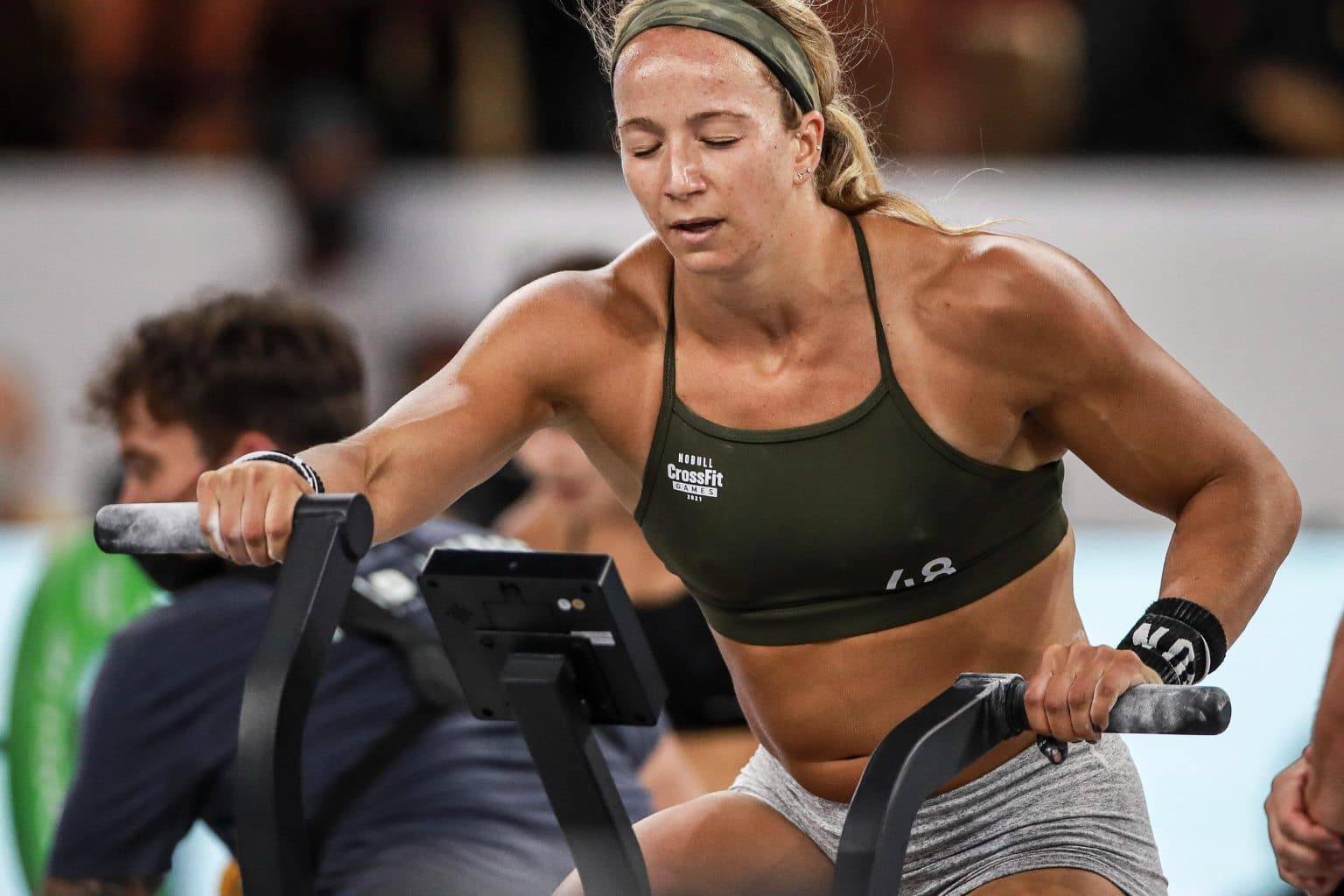
Whether you’re training for the CrossFit Open, Semifinals, or just want to perform better during long Metcons, understanding how to effectively build your aerobic engine can transform your performance.
In this article, we’ll break down the difference between muscular endurance and aerobic capacity, why CrossFit workouts aren’t the best method for building cardio, and how to design the right tests and training to actually get better.
Jump to:
- What Is Aerobic Capacity in CrossFit?
- Why Standard CrossFit Workouts Don’t Build Aerobic Capacity
- How to Properly Test Your Aerobic Engine
- Differentiate Any Limiter: Cardio or Movement?
- How to Build Aerobic Capacity: The Right Way
- Common Mistake: Using CrossFit to Build Your Engine
- Example Test: “Run-Bike-Run” (The Sandwich Test)
- Interpreting the Results
- Progressing Your Cardio Training
- When Aerobic Training Has the Most Value
- Final Thoughts
What Is Aerobic Capacity in CrossFit?
At its core, aerobic capacity refers to your ability to sustain high respiration and a high heart rate for an extended period of time. In the CrossFit space, this typically means performing at 90%+ of your heart rate max for anywhere between 15 to 25 minutes in a workout setting. This might stretch out to 60–90 minutes in events like HYROX.
But sustaining this pace isn’t just about how tough you are. It’s about how well your cardiovascular system can support continuous work under fatigue—and that’s a physiological trait you need to train deliberately.
Why Standard CrossFit Workouts Don’t Build Aerobic Capacity
Most CrossFitters mistakenly equate longer AMRAPs or chipper-style workouts with building endurance. But many of those tests include high-skill, high-tension movements (e.g., handstand push-ups, GHD sit-ups, heavy barbell work) that aren’t limited by your lungs or heart but rather by local muscular fatigue or movement inefficiency.
Here’s a simple example: Consider the workout Cindy (20-minute AMRAP of 5 pull-ups, 10 push-ups, 15 air squats). Many athletes will fatigue in their push-ups, forcing them to stop and rest—not because they’re out of breath, but because their muscular endurance has failed. Heart rate and breathing drop during these rests, meaning you’re not sustaining cardiovascular output, which is the key to building aerobic capacity.
How to Properly Test Your Aerobic Engine
For accurate testing, the format must be:
- Long enough (18–25 minutes) to challenge sustained effort
- Straightforward in movement selection to avoid skill bottlenecks
- High effort throughout, without mechanical limitations
One solid option: a test like the benchmark “Jerry”—1-mile run, 2,000m row, 1-mile run. It’s long, cyclical (pure cardio movements), and simple.
Testing aerobic capacity with complex CrossFit workouts is often misleading unless you’re among the top 1% of elite athletes. For nearly everyone else, those tests are limited by skill, mobility, strength endurance, or inefficient transitions—not actual aerobic capacity.
Differentiate Any Limiter: Cardio or Movement?
Start by asking: Where do I fail in long workouts? Am I gassed out of breath and unable to breathe? Or do my arms give out? Do I lose coordination on ring muscle-ups or barbell cycling? The ability to self-assess is crucial.
Compare your performance on two different types of workouts:
- One cyclical-only (e.g., Jerry, or a run-row-run style test)
- One gymnastics or complexity-heavy (e.g., Cindy, muscle-up and HSPU workouts)
If you crush cyclical work but struggle with CrossFit benchmarks, your limiter is skill or stamina. If you struggle across both, your aerobic capacity likely needs major improvement. Proper programming requires different solutions for each.
How to Build Aerobic Capacity: The Right Way
To specifically improve aerobic capacity, use cyclical, low-skill modalities that allow for continuous, high-effort breathing and high heart rate. Top choices include:
- Assault/Echo bike
- Rowing machine
- SkiErg
- Running
- Swimming or C2 bike
These allow athletes to train the cardiovascular system without mechanical or muscular limitations getting in the way.
Pro Tip:
Aerobic work doesn’t have to wreck you. In fact, many sessions should feel “comfortable hard.” You want 6–7 out of 10 RPE—tough, but sustainable. If you constantly crush yourself in training, you’re probably missing the physiological response you’re aiming for.
Common Mistake: Using CrossFit to Build Your Engine
Many CrossFitters try to fix “aerobic” issues by doing more CrossFit. But performing 20-minute AMRAPs of GHDs, barbell cycling, or gymnastics heavy workouts won’t help you breathe harder. Why?
- They introduce muscular limitations before your aerobic system fails.
- They require more recovery between sessions due to eccentric loading or technique failure.
- You can’t maintain consistent effort if you’re constantly breaking or failing reps.
All of this leads to misleading feedback: you think it’s your engine, but it may be technical stamina, not your cardiovascular capacity.
Example Test: “Run-Bike-Run” (The Sandwich Test)
Many coaches are now using a simple but brutal format to test aerobic progress:
Run-Bike-Run: For Time
- Run 1 mile
- 150 calorie Echo Bike (120 for women)
- Run 1 mile
This 20–25 minute test keeps things simple and effective. It isolates aerobic capacity while still providing enough challenge to simulate competition fatigue.
Why it works:
- Both modalities are cyclical and scalable
- Effort remains consistent—no rest required for technique breaks
- It mimics real competitive pacing (like fatigued running after bike effort)
Interpreting the Results
If a 1-mile run at the end of this test feels like crawling despite a strong first mile, aerobic fatigue—not muscle failure—is likely your limiter. And if this test wrecks you, that’s not a bad thing—it tells you exactly where to train.
Even elite CrossFitters monitor this carefully. Travis Mayer (semifinal athlete and games veteran) uses this exact style of aerobic testing and matches paces based on his 5K or 30-minute RPM averages.
Progressing Your Cardio Training
Once tested, build cardio across an 8–12 week block using:
- Steady-state zone 2 work: Easy, 45-90 minute sessions (e.g., easy bike or jog)
- Threshold intervals: 10–20 minute efforts just below max sustainable pace
- Progressive repeats: 3–6 x 5 or 6-minute intervals building toward consistent effort
- Pacing drills: Learn to hold and repeat exact times/RPMs
Reminder:
Resist the urge to test every week. Train your system. Don’t burn it out chasing intensity every time.
When Aerobic Training Has the Most Value
If you’re in offseason preparation or building your base for upcoming qualifiers, aerobic capacity work should be prioritized now. Especially if:
- You struggle to recover between workouts
- You’re inconsistent in longer AMRAPs or EMOMs
- You cramp or hit walls during 15+ minute pieces
For athletes coming from strength backgrounds or teens aging into the adult division, these deficits are even more common. Aerobic base takes years to build—but you’ll thank yourself when you notice faster recovery, improved pacing, and more output in every workout across the board.
Final Thoughts
If you want to improve your performance in 15–25 minute CrossFit workouts, simply doing more CrossFit isn’t the answer. Training your heart and lungs—deliberately, with pacing, structure, and cycles—is the key.
So separate the systems, isolate what’s holding you back, and train it intentionally. When you return to sport-specific work, you’ll do so with a foundation that lets you breathe better, recover faster, and go harder—without breaking down.
You can’t fix your engine if you don’t test the right system. So run, bike, repeat—and embrace the discomfort. That’s how aerobic capacity gets built—and how CrossFit workouts finally start to feel better.