Easy runs are supposed to feel easy.
Yet plenty of runners watch their heart rate rocket to 160 within minutes of leaving the door.
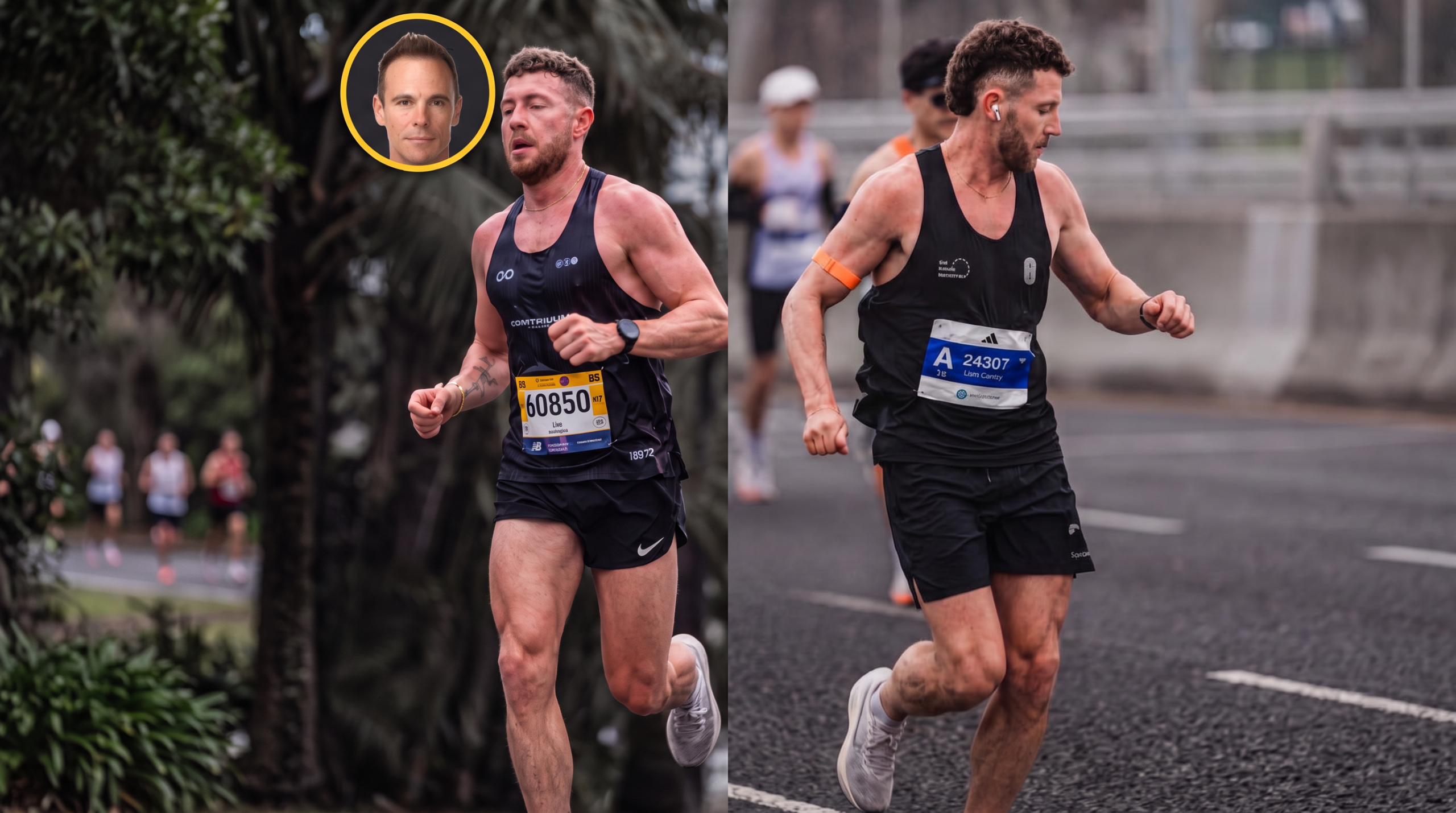
In a recent YouTube video, a runner who went from a 3:02 marathon to 2:45 explained why this happens.
His own 5:34 per km jog once averaged 161 beats, while 5:30 per km now sits near 129.
The surprise? No magic zone two programme did it.
Here’s what he says really moved the needle.
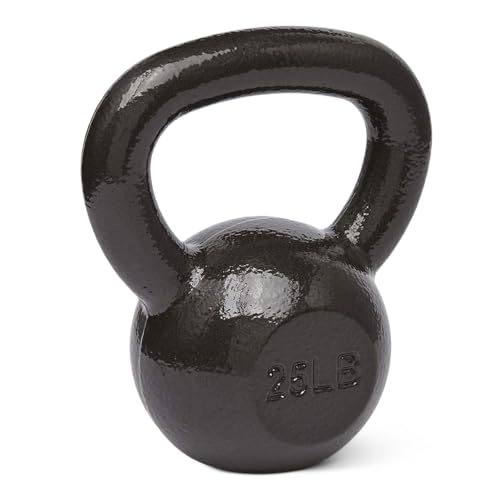
If you want something simple that actually works, this is one of the most effective tools I’ve used to build strength, conditioning, and endurance without needing a full gym setup.
- Full-body training with one weight using swings, squats, and presses
- Solid cast iron build that feels stable and lasts for years
- Comfortable grip that makes high-rep workouts easier to handle
Jump to:
Why Your Heart Rate Runs So High
He narrows it to three culprits: pace, noise, and time.
Culprit 1: Pace Outruns Fitness
Former footballers know the trap. Pre-season hill sessions felt brutal, so anything gentler seemed easy.
At a run club, a friend asked his average heart rate. He proudly said 155, since Strava labelled that zone two, and got a look “as if I had two heads.”
It wasn’t hard. It just wasn’t easy enough. And that’s the trap. Hard and easy are not the same thing.
Team-sport athletes often hold quick bursts of speed, but their aerobic base lags behind. Pace gets paid for with an engine not yet built.
Culprit 2: The Number Is Noisy
Several everyday factors push your reading around:
- Heat and humidity
- Hills
- Poor sleep or illness
- A stressful work week
- A faulty or badly placed sensor
His own proof: a long run in Ireland at 5:07 per km averaged 129. One week later, back in the heat, 5:30 per km produced 130.
If you want something simple that actually works, this is one of the most effective tools I’ve used to build strength, conditioning, and endurance without needing a full gym setup.
- Full-body training with one weight using swings, squats, and presses
- Solid cast iron build that feels stable and lasts for years
- Comfortable grip that makes high-rep workouts easier to handle
Same fitness, same reading, roughly 20 seconds per km slower. A sweltering day doesn’t mean you’ve gone backwards.
Culprit 3: You’re Still Early
Running for only a few months, or even a year? Expect higher numbers at gentle paces.
Consistent training brings small gains within weeks, but big drops take months and years. Watch-generated zones are often guesswork too.
Take the popular MAF formula, 180 minus age. For him, that suggests a ceiling near 150, while he keeps easy days around 136. Too hard by his own experience.
Five Fixes for Your Next Run
- Judge effort first. You should speak in full sentences without gasping, and finish feeling much as you started.
- Slow down. Sometimes 10 to 15 seconds per km is enough. Other days, a walk is the answer.
- Pick flat terrain. Hilly loops quietly convert recovery into a workout, and a treadmill offers tight intensity control.
- Walk the hills. Pausing the watch for a stroll uphill is fine.
- Relax your breathing. One big inhale through the nose, then a slow exhale.
On walking, he’s unapologetic. Even during Sydney Marathon preparation, on a famously hilly course, he stuck to this habit.
If you need to stop at a traffic light or get a drink, that does not ruin the run. And despite what the Strava police say, it’s not cheating either.
Ragged breathing despite a slow pace? The effort is likely too high. Still, he warns against chasing a single metric.
If you want something simple that actually works, this is one of the most effective tools I’ve used to build strength, conditioning, and endurance without needing a full gym setup.
- Full-body training with one weight using swings, squats, and presses
- Solid cast iron build that feels stable and lasts for years
- Comfortable grip that makes high-rep workouts easier to handle
One of them on its own is not much use, but together they are very useful.
What If You’re Already Going Slowly?
He has been there. In January 2023, he tried zone two at 8:38 per km, and his heart rate still hovered in the 150s.
Legs felt fine. The session was simply mind-numbingly boring, so he quit.
His advice for runners stuck there:
- Run-walk intervals count. Five minutes running, one walking, or whatever keeps effort in check.
- Cross-train. Constant niggles once forced him onto the bike and elliptical, which he calls a “blessing in disguise” for his aerobic base.
- Remember the limits. Cross-training doesn’t replace running, so he now puts nearly all energy into running itself.
- Consider heat. Regular sauna use helped him handle warm conditions, and he notes emerging interest in heat training, though he calls it a bonus rather than the foundation.
What Truly Dropped 161 to 129
The answer is unglamorous. Volume.
In 2023, he covered about 300 km all year, matching whoever ran beside him on easy days and chasing the top group in intervals. Over the last 12 months, he has logged more than 4,700 km.
And who would have thought that running more makes you better at running?
Slowing recovery runs let him absorb more mileage and arrive at threshold sessions fresher. He credits coach Marius Bakken for the idea that threshold work only pays off when days between are properly gentle.
If you want something simple that actually works, this is one of the most effective tools I’ve used to build strength, conditioning, and endurance without needing a full gym setup.
- Full-body training with one weight using swings, squats, and presses
- Solid cast iron build that feels stable and lasts for years
- Comfortable grip that makes high-rep workouts easier to handle
His five-by-six-minute session shows the shift:
- October 2024: reps near 4:16 per km, max heart rate 175
- Recently: reps from 3:42 down to 3:34 per km, max heart rate 161
The low heart rate is the result. It was never the method.
How He Uses Heart Rate Today
Somewhere between data obsessive and pure-vibes runner, he sits in the middle.
- Easy days: time and heart rate on screen, pace hidden. In heat and humidity, effort usually lands between 125 and 136.
- Tired or post-race: he checks more often and eases off.
- Threshold sessions: final reps usually finish around 170 to 175, though last week barely topped 160 with the effort still right.
Threshold is a state, it’s not a pace.
Fuelling, caffeine, fatigue and sleep all shift readings. Short reps like 400s or 800s also give your pulse no time to catch up.
A chest strap is the gold standard, he says, but a decent watch barely differs in his testing.
Lessons From Four Marathons
Tokyo and Valencia came with the display hidden. Tokyo produced 3:02, but Valencia was a disaster.
His lab-tested threshold sits near 175, and he was well above it from 5 km to halfway. He blew up at 26 km, visited the medical tent twice, walked much of the back half, and finished in 3:26.
If you want something simple that actually works, this is one of the most effective tools I’ve used to build strength, conditioning, and endurance without needing a full gym setup.
- Full-body training with one weight using swings, squats, and presses
- Solid cast iron build that feels stable and lasts for years
- Comfortable grip that makes high-rep workouts easier to handle
In Seoul, he started conservatively and glanced at heart rate every 5 to 10 km. At 30 km he sat around 160, a green light to push, and he ran 2:51 with a negative split.
Sydney’s rolling terrain made readings noisy, so he mostly ran on feel, checking only at halfway. Result: 2:45.
A high race-day number isn’t automatically bad, since adrenaline lifts it. Knowing your own limit is what matters. For him, 180 is unsustainable beyond an hour.
Try This Monthly Check-In
Pick a flat route or treadmill. Once a month, run the same gentle pace and note both average heart rate and how it felt.
Over several months, that log reveals genuine progress. Hopefully, the number keeps sliding down.
His closing challenge: share your latest average heart rate in the comments and crown the king of low pulse.
If you want something simple that actually works, this is one of the most effective tools I’ve used to build strength, conditioning, and endurance without needing a full gym setup.
- Full-body training with one weight using swings, squats, and presses
- Solid cast iron build that feels stable and lasts for years
- Comfortable grip that makes high-rep workouts easier to handle