A rhythmic breathing technique inspired by military drills is reshaping how casual joggers and competitive athletes approach their runs—one breath at a time.
Popularized recently on TikTok, this so-called “Army Breathing Hack” has racked up millions of views and inspired thousands to rethink one of the most basic, yet overlooked elements of fitness: how we breathe while running.

For many, running feels exhausting not because of weak legs but because of poor breath control. The viral breathing method has given countless runners a way to break through barriers they didn’t realize were tied to their lungs, not their endurance.
Jump to:
Why Breathing Matters More Than You Think
Most runners obsess over shoes, pacing, or stride mechanics. But breathing efficiency may be the secret weapon for better endurance, faster recovery, and fewer side stitches.
“When you control your breathing, you control your heart rate,” explains one TikTok user who demonstrated the hack mid-run. The rhythm transforms shallow, erratic inhales into structured, efficient breaths that calm the nervous system and prevent early fatigue.
Incomplete exhales leave carbon dioxide trapped, leading to cramps, fatigue, and that dreaded “out of breath” feeling. Structured breathing solves this.
No products found.
What Exactly Is the Army Breathing Hack?
Rooted in military marching cadence, the technique is surprisingly simple:
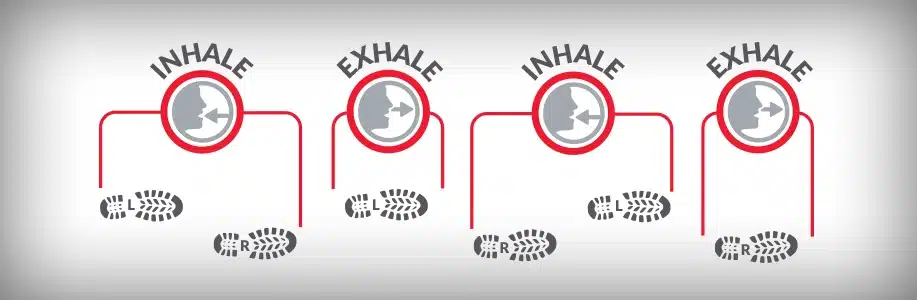
- Inhale deeply on one step (starting with your left).
- Exhale in two shorter bursts over the next two steps.
Think of it as a rhythm: In… out… out, aligned with your footfalls—mirroring the familiar “left, left, left-right-left” chant drilled into military recruits.
By tying breath to steps, it transforms running into a more predictable, meditative rhythm. The hack prevents panicked, shallow breathing and instead keeps oxygen flowing smoothly.
This breathing pattern falls under the concept of locomotor-respiratory coupling (LRC)—a well-documented phenomenon in sports science. Studies, including a 2013 review in the Journal of Sports Sciences, show that syncing breath to movement:
- Improves oxygen uptake and delivery
- Reduces mechanical stress on the diaphragm
- May lower the risk of cramps and side stitches
- Helps regulate heart rate and lactic acid buildup
When runners fall into a rhythm, their nervous system becomes more efficient. The repetitive motion and consistent breath send signals of safety and calm to the brain—allowing the body to push further without triggering fight-or-flight responses.
What the Experts Say

This isn’t just a TikTok trend—it’s supported by sports science and lung health experts.
No products found.
According to Dr. Albert Rizzo, Chief Medical Officer of the American Lung Association, rhythmic breathing techniques like this one fall under the concept of locomotor-respiratory coupling (LRC).
He explains:
“One method is belly breathing or diaphragmatic breathing, the fastest way to get more oxygen into the body. Another is rhythmic breathing. A 3:2 or 2:1 step-to-breath ratio shifts pressure away from the diaphragm and reduces strain, allowing runners to breathe more efficiently.”
This means structured breathing not only improves oxygen delivery but also reduces injury risk, prevents cramps, and keeps heart rate under control.
How to Try the Army Breathing Technique Yourself
Want to test this technique on your next run? Follow these steps to get started:
1. Practice While Walking First
Start with a slower pace where your breath won’t be labored. Focus purely on syncing each step with your breathing.
2. Use a Mantra or Count
Try repeating “In, out, out” in your mind with each step. Or count: 1 (inhale), 2-3 (exhale). This helps engrain the rhythm until it becomes second nature.
No products found.
3. Breathe From the Belly
Use diaphragmatic breathing—not shallow chest inhales. This draws more oxygen in and helps you avoid fatigue.
4. Ease Into Running
Start applying the technique on short, easy jogs. As your body adapts, gradually integrate it into longer or faster runs.
5. Be Patient
Like any habit, it takes time to build. Don’t worry if it feels awkward or if you “fall out” of rhythm. Gently reset and keep practicing.
Real-World Results
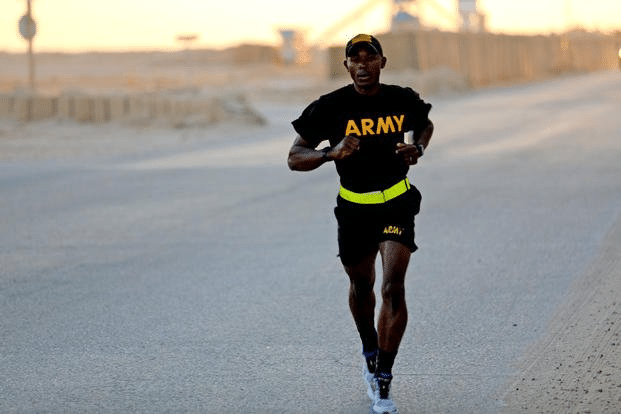
Thousands of TikTok runners report that this hack made running feel less exhausting. Some say it helped them go from gasping during short jogs to comfortably running 10–12 miles. Others note calmer nerves during races—the rhythm gives them something to focus on besides discomfort.
Even outside of running, similar techniques are used by cyclists to manage cadence, swimmers for oxygen efficiency, and weightlifters to prevent spikes in blood pressure.
One user shared, “I didn’t even realize I was doing this. No wonder I can go further than my friends.”
No products found.
Another said they used the technique during high school fire cadet training, learning to manage their breath as part of a lesson on cellular respiration.
Some even report running 10–12 miles comfortably using this method—after years of struggling with basic 5Ks.
“It finally clicked,” one soldier told fitness coach Stew Smith. “Once I started exhaling fully and using a rhythm, I ran faster and didn’t cramp at all.”
Others noticed how it helped calm race-day nerves. The rhythm gave them something to focus on besides discomfort or pace—resulting in more relaxed, consistent runs.
Not Just for Runners: The Breath-Performance Connection
While popular among runners, the same principles apply across many fitness domains:
- Cyclists use breath control to manage cadence and power output on hills.
- Swimmers rely on rhythmic breathing for timing and oxygen efficiency.
- Weightlifters are taught to exhale on exertion—a technique that protects against blood pressure spikes and injuries.
According to the American Lung Association, rhythmic breathing may also help reduce injury risk, particularly when alternated between feet (e.g., 3:2 or 2:1 patterns). This balances the impact of exhalation across both sides of the body.
No products found.
Increased oxygen intake doesn’t just boost performance—it can also help burn more fat, as oxygen plays a key role in metabolizing stored energy. When paired with proper hydration, structured breathing supports weight loss, recovery, and cardiovascular health.
The Hidden Power of Breath: Final Thoughts
Breathing might seem automatic. But mastering it could be the edge that transforms your fitness.
Whether you’re aiming to finish your first 5K or shave minutes off your half-marathon PR, training your lungs and nervous system through breath control offers benefits that go far beyond what the stopwatch shows.
You don’t need to be in the military to breathe like a soldier.
Try the “in, out, out” rhythm. Give your body time to adjust. Then, notice how something as simple as structured breath can make your runs feel stronger, longer—and yes, even enjoyable.
Running might not be the problem. It might just be how you breathe.
No products found.