Do your knees ache when you squat, climb stairs, or stand up from a chair?
You’re not the only one — and no, you’re not broken.
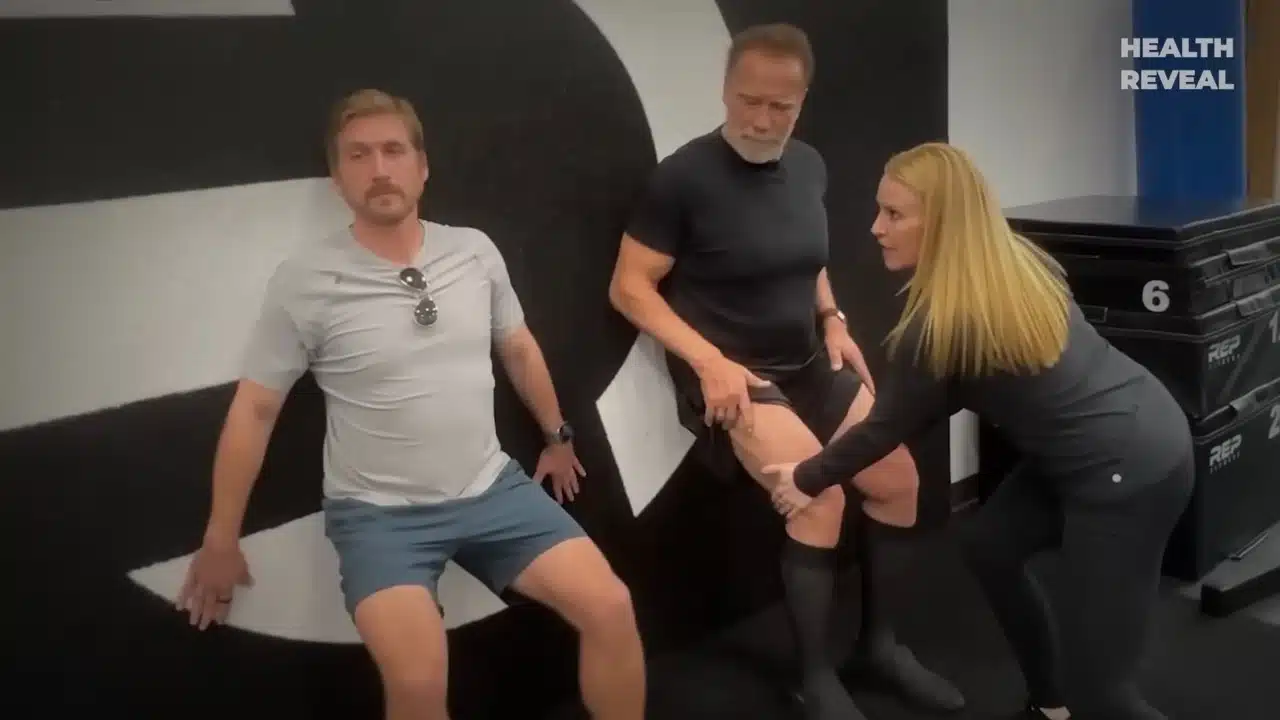
Even the legendary Arnold Schwarzenegger has battled long-term knee pain after years of intense training.
Luckily, two simple, low-impact exercises can help relieve discomfort, rebuild strength, and improve mobility — regardless of your age or fitness level.
Plus, there’s a bonus tip most people completely overlook, and it could be the key missing piece to restoring lasting knee health.
Here’s how to fix your knees from the ground up — starting today.
Jump to:
Why Knee Pain Happens — And Why You’re Not Doomed
Repetitive stress from running, squatting, stair climbing, or skiing can wear down the structures supporting your knees. Over time, this leads to inflammation, muscle imbalances, and joint sensitivity.
The good news? In most non-traumatic cases, the pain isn’t permanent damage — it’s a signal that your movement patterns need adjustment and your stabilizing muscles need strengthening.
And that starts with building strength without irritating the knee itself.
Exercise #1: Isometric Lunge Hold
This move teaches your body how to activate your glutes, hamstrings, and quads in perfect balance — without joint aggravation.
How to Do It
- Step into a lunge position, as if you’re frozen in mid-stride.
- Keep your chest upright, your torso stable, and your back straight.
- Hold this position without moving for 10 seconds, then release.
Key Tips for Effectiveness
- Focus on foot pressure. You want it centered — not on your heel or toes.
- Use support if needed. A wall, chair, or TRX strap can help stabilize you until your strength improves.
- Gradually increase intensity. Add more time under tension, reps, or light resistance over time.
According to physical therapist-led workouts, this exercise is effective because it strengthens stabilizing muscles without forcing movement through a painful range. It also helps rewire your brain to recruit the right muscles in the moment.
Exercise #2: Wall Sit With Variations
Wall sits are a tried-and-true way to build thigh endurance while minimizing knee pressure — and they’re especially useful for skiing, hiking, or sports that demand strong but resilient legs.
How to Do It
- Stand with your back against a wall.
- Walk your feet forward, then slowly slide down the wall until your thighs are nearly parallel to the floor — but not painfully low.
- Hold for 20 seconds and focus on form.
Form Cues To Prevent Pain
- Keep your knees stacked directly above your ankles.
- Make sure your weight is in the middle of your feet.
- Don’t let your knees drift past your toes.
Upgrade Your Wall Sit
- To activate outer hips: Wrap a loop band around your knees and gently push outward.
- To target inner thighs: Squeeze a yoga block or small ball between your knees.
- To challenge more: Increase the time or add reps as tolerance improves.
This move strengthens your entire lower body — including the underused muscles that protect your knees from shearing forces. And since it’s isometric (no movement), it’s safe even for arthritic or recovering joints.
Essential Recovery Tips for Happy Knees
Recovering well is just as important as training effectively. Without it, you risk chronic inflammation, delayed progress, or even setbacks.
1. Ice When Needed
If your knees feel warm, swollen, or tender after training, icing them for 10–15 minutes can naturally reduce inflammation.
As one expert put it: “It’s a natural anti-inflammatory that calms the joint after stress.”
2. Gentle Movement Is Medicine
Low-resistance cycling or walking nourishes joints by promoting blood flow and lubrication — almost like oiling a squeaky hinge.
Even five minutes of movement can help reduce stiffness and ease recovery post-workout.
3. Respect Rest Days
Sometimes your knees don’t need more training — they need less.
If you’re feeling unusually sore, sensitive, or stiff, take a day off. Overtraining prevents full recovery and may eventually lead to overuse injuries or burnout.
“Your body isn’t weak, it’s just overworked. Knowing when to rest is part of training smart.”
4. Avoid Sharp Pain
Discomfort is part of building strength. Sharp or stabbing pain is a red flag.
Always train within a pain-free range. Adjust depth, resistance, or variation as needed.
Bonus Tip: Unlock Full Knee Extension
Here’s a critical element most people miss — and it may be keeping them stuck in a cycle of knee pain.
Most rehab programs glorify flexion (bending the knee), but full straightening of the knee is just as essential.
“If your knee can’t lock out completely, your quads won’t fully activate,” explains one expert. “And without full extension, every step keeps stress on the front of the joint.”
What’s Blocking Your Extension?
- Tight hamstrings
- Shortened calves
- Stiff hip flexors
Stretch Daily To Fix It
Spend just five minutes per day stretching your hamstrings and calves — especially after workouts.
You should aim to be able to press your knee completely straight when sitting or standing, with no bend remaining.
Like training your triceps, if you don’t lock out the range — you don’t get the full payoff. Quads function the same.
Small Consistency = Big Results
These movements may look simple, but their impact is enormous — especially when practiced consistently.
From athletes navigating arthritis to weekend warriors rehabbing old sports injuries, isometric training, proper alignment, and recovery habits have helped thousands return to pain-free movement.
Add the lunge hold and wall sit to your routine daily. Monitor your form, listen to your knees, and prioritize full extension and recovery.
Your knees may not be perfect yet — but now, they have a plan.