Sitting in most kitchen cupboards right now is one of the cheapest, most powerful performance enhancers available.
According to Dr. Scott Sherr, an internal medicine physician and performance expert, sodium bicarbonate—simple baking soda—has profound metabolic and athletic effects when used correctly.
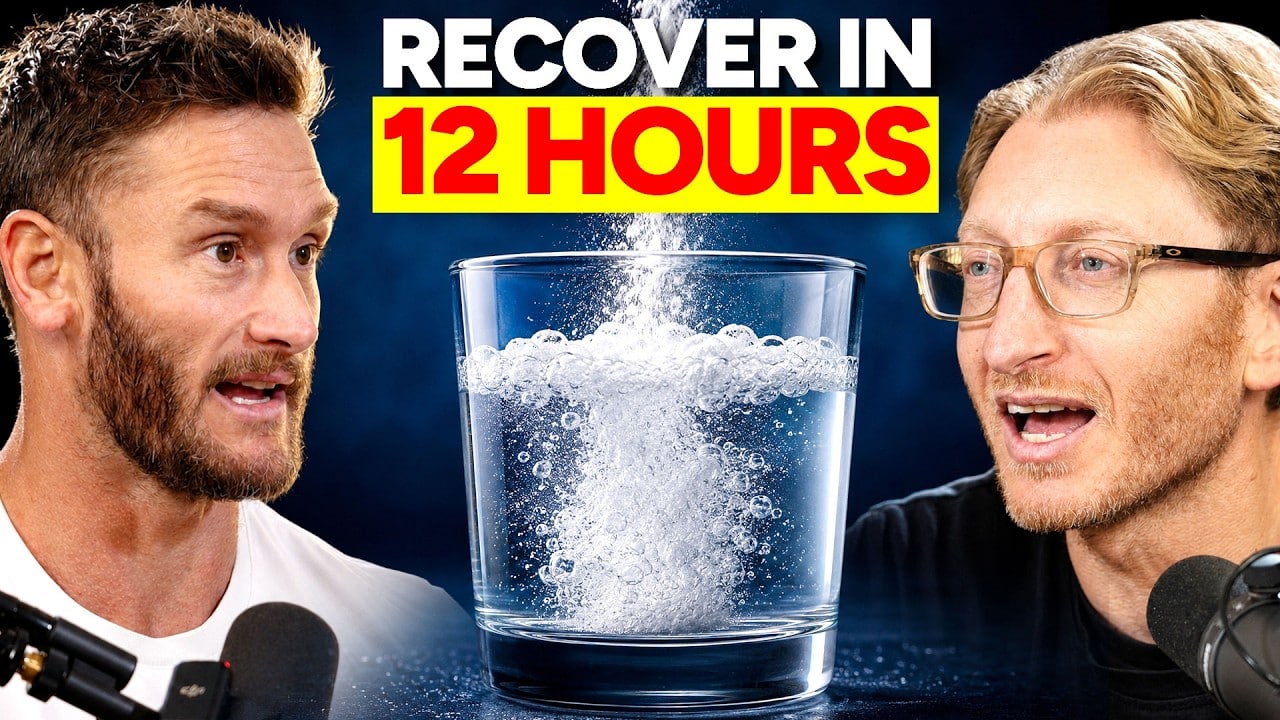
But there’s a catch: dosing matters immensely, and too much can backfire spectacularly.
In a recent conversation, Dr. Sherr explained how this humble compound buffers acid in the body, particularly during exercise, and why understanding acid-base balance could transform your performance and recovery.
Jump to:
- Understanding Acidosis: More Than Just a Workout Problem
- What Acidosis Actually Feels Like
- How Baking Soda Works as a Performance Enhancer
- Beyond Workouts: Everyday Applications
- Diet’s Role in Acid Load
- Practical Implementation Strategies
- The Lactate Revelation
- The Mitochondrial Foundation
- The Next Generation of Performance Support
Understanding Acidosis: More Than Just a Workout Problem
The human body maintains pH within an incredibly narrow range—roughly 7.35 to 7.45. Deviation from this window triggers serious problems.
As an internal medicine doc for many years we’d see people that go way too acidotic and can actually die from acidosis right if your pH isn’t kept within a very small range your body starts decompensating.
While severe metabolic acidosis can be fatal, even mild acidotic states create significant performance decline. Exercise pushes the body toward acidosis through free hydrogen ion buildup—not lactate, as previously believed.

If you want something simple that actually works, this is one of the most effective tools I’ve used to build strength, conditioning, and endurance without needing a full gym setup.
- Full-body training with one weight using swings, squats, and presses
- Solid cast iron build that feels stable and lasts for years
- Comfortable grip that makes high-rep workouts easier to handle
That burning sensation in muscles? It’s hydrogen ions, not lactic acid.
The Acidosis Causes You Don’t Expect
Exercise isn’t the only culprit creating acidotic states. Dr. Sherr outlined several surprising triggers:
- Diabetic ketoacidosis: When glucose can’t be utilized, ketones accumulate and drive severe acidosis
- Alcoholic ketoacidosis: Drinking without eating produces similar effects
- Severe dehydration: Insufficient water intake reduces buffering capacity
- Metabolic dysfunction: Creates a constant low-grade acidotic state
Even common beverages contribute. Many electrolyte drinks are mildly acidic, potentially adding stress to already-acidotic systems.
What Acidosis Actually Feels Like
Mild acidosis doesn’t announce itself with alarm bells. Instead, it creeps in through decreased function across all systems.
They’re going to have a performance decline in everything from brain function to muscle function to GI function. Everything is going to go down because the system needs to be in this very small window of pH to be able to function well.
Common symptoms include brain fog, fatigue, muscle pain, and delayed onset muscle soreness (DOMS). That inability to move three days post-workout? Acidosis that wasn’t cleared efficiently.
Energy production suffers dramatically. Excessive acidity creates bottlenecks in mitochondrial function, preventing efficient ATP synthesis.
If you want something simple that actually works, this is one of the most effective tools I’ve used to build strength, conditioning, and endurance without needing a full gym setup.
- Full-body training with one weight using swings, squats, and presses
- Solid cast iron build that feels stable and lasts for years
- Comfortable grip that makes high-rep workouts easier to handle
The Metabolic Dysfunction Connection
People with metabolic dysfunction exist in perpetual mild acidosis—essentially experiencing a continuous low-grade workout state. Their pH hovers at the lower end of normal range, reducing overall capacity before any actual stress occurs.
How Baking Soda Works as a Performance Enhancer
Sodium bicarbonate functions as an extracellular buffer, pulling hydrogen ions out of muscle cells through osmotic pressure.
All of a sudden, the muscles are now performing at a higher capacity. Your muscle fibers can are no longer mucked up by the acid because what the acid really does it kind of mucks up the connections between the fibbrals and the muscles like the actin mison fibbrals they get all mucked up and they can’t work as well.
Think of it like cleaning pistons in an engine. Remove the gunk (acid), and everything runs smoother.
This effect has been demonstrated extensively in endurance performance. Athletes show measurable improvements when properly buffered.
The Dosing Challenge
Here’s where things get tricky. Too much sodium bicarbonate creates the classic middle school volcano experiment—inside your stomach.
High doses (20-30 grams, often used in studies) frequently cause vomiting, diarrhea, or both. Not exactly performance-enhancing when you’re mid-race.
If you want something simple that actually works, this is one of the most effective tools I’ve used to build strength, conditioning, and endurance without needing a full gym setup.
- Full-body training with one weight using swings, squats, and presses
- Solid cast iron build that feels stable and lasts for years
- Comfortable grip that makes high-rep workouts easier to handle
Dr. Sherr’s recommendation? Micro-dosing—less than a gram every four to six hours—provides buffering benefits without gastrointestinal disasters.
Beyond Workouts: Everyday Applications
Sodium bicarbonate’s utility extends far beyond athletic performance. Daily stress, poor sleep, and metabolic challenges all increase acid load.
Small, regular doses help maintain optimal pH positioning within the normal range. Starting with higher pH provides greater capacity to handle subsequent stressors.
You just want to have more capacity right and by and this is a simple simple way to increase your capacity just by increasing your pH just a little bit so that your capacity goes up so that when you do go and have more stress and get more metabolically acidotic again you have more capacity to tolerate that.
The Alcohol Connection
Alcohol is highly acidic and dehydrating. Taking small amounts of bicarbonate before drinking increases buffering capacity, potentially reducing next-day hangover severity.
Morning-after rehydration works better when combined with bicarbonate, electrolytes, and compounds supporting neurotransmitter balance.
Diet’s Role in Acid Load
Certain foods significantly increase acidotic burden. Citric acid and malic acid—common in many processed foods and beverages—have pH levels around 4.5, well below the body’s optimal 7.35-7.45 range.
If you want something simple that actually works, this is one of the most effective tools I’ve used to build strength, conditioning, and endurance without needing a full gym setup.
- Full-body training with one weight using swings, squats, and presses
- Solid cast iron build that feels stable and lasts for years
- Comfortable grip that makes high-rep workouts easier to handle
For people already at the lower end of normal pH, high-acid foods further decrease buffering capacity and overall performance.
Interestingly, this explains why some people feel better consuming “alkaline” foods—they’re simply counteracting existing acidosis.
Practical Implementation Strategies
For exercise performance, timing matters. Pre-workout sodium bicarbonate at low doses works well, especially combined with electrolytes.
Dr. Sherr suggests pairing bicarbonate with neuroperformance ingredients for synergistic effects:
- Salidroside from Rhodiola: Mitigates cortisol response and acts as mild monoamine oxidase inhibitor, increasing serotonin and dopamine
- Yohimbine: Supports neurotransmitter balance
- Caffeine: Provides acute stimulation
- Electrolytes: Maintain mineral balance and hydration
This combination addresses multiple performance pathways simultaneously—buffering acid, supporting hydration, and optimizing brain function.
The Downregulation Question
Could regular bicarbonate use reduce natural buffering capacity? Dr. Sherr acknowledges the theoretical concern with high doses but considers micro-dosing safe.
If you want something simple that actually works, this is one of the most effective tools I’ve used to build strength, conditioning, and endurance without needing a full gym setup.
- Full-body training with one weight using swings, squats, and presses
- Solid cast iron build that feels stable and lasts for years
- Comfortable grip that makes high-rep workouts easier to handle
I don’t think if you’re using small doses, it’s going to be a problem. But I do think if you use big doses all the time, I do worry about that.
The body’s “use it or lose it” principle applies to many systems. Overwhelming natural buffering with massive external doses could potentially reduce endogenous production, though this hasn’t been demonstrated in literature—likely because people can’t tolerate such high amounts long-term.
The Lactate Revelation
For years, lactate was vilified as a waste product causing muscle burn and fatigue. Modern understanding reveals something radically different.
Lactate serves as crucial fuel for heart and brain tissue during high-demand states. The lactate shuttle brings it back into the citric acid cycle for continued energy production.
During intense exercise, significant cardiac output comes from lactate oxidation. That “second wind” feeling? It’s partly your heart and brain efficiently utilizing lactate as fuel.
The main source of fuel for the heart isn’t glucose, it’s actually fatty acids. And then in addition, they can it can use lactate as a fuel too, just like the brain can.
The Mitochondrial Foundation
Everything circles back to mitochondria—the actual engines producing ATP. These cellular powerhouses spin at approximately 6,000 RPM, generating roughly 150 pounds of ATP daily.
Under exercise stress, that production increases dramatically, throwing off massive amounts of free hydrogen ions that natural buffering can’t completely manage.
If you want something simple that actually works, this is one of the most effective tools I’ve used to build strength, conditioning, and endurance without needing a full gym setup.
- Full-body training with one weight using swings, squats, and presses
- Solid cast iron build that feels stable and lasts for years
- Comfortable grip that makes high-rep workouts easier to handle
Brain function depends entirely on mitochondrial health. Neurons require properly functioning mitochondria to produce neurotransmitters.
This is why mitochondrial support—through reduced acid load, proper hydration, and strategic supplementation—forms the foundation for both physical and cognitive performance.
The Next Generation of Performance Support
Dr. Sherr envisions performance optimization moving beyond simple electrolyte replacement toward comprehensive system support.
Future formulations will combine acid buffering, neurotransmitter balance, mitochondrial support, and mineral optimization in synergistic blends.
Sodium bicarbonate may taste less appealing than citric or malic acid, but its benefits far outweigh flavor concerns—especially for those already dealing with reflux or GI sensitivity from acidic sports drinks.
The takeaway? That box of baking soda in your pantry represents untapped potential for better workouts, faster recovery, improved mental clarity, and greater stress resilience—all for pennies per serving.
If you want something simple that actually works, this is one of the most effective tools I’ve used to build strength, conditioning, and endurance without needing a full gym setup.
- Full-body training with one weight using swings, squats, and presses
- Solid cast iron build that feels stable and lasts for years
- Comfortable grip that makes high-rep workouts easier to handle
Just remember: start small, stay consistent, and listen to your body’s response.