Ground meat is a weeknight staple—quick, versatile, and reliable. But let’s be honest: it often cooks up gray, dry, and disappointingly tough.
What if one simple ingredient could transform that same ground beef or turkey into something remarkably juicy, tender, and beautifully browned?
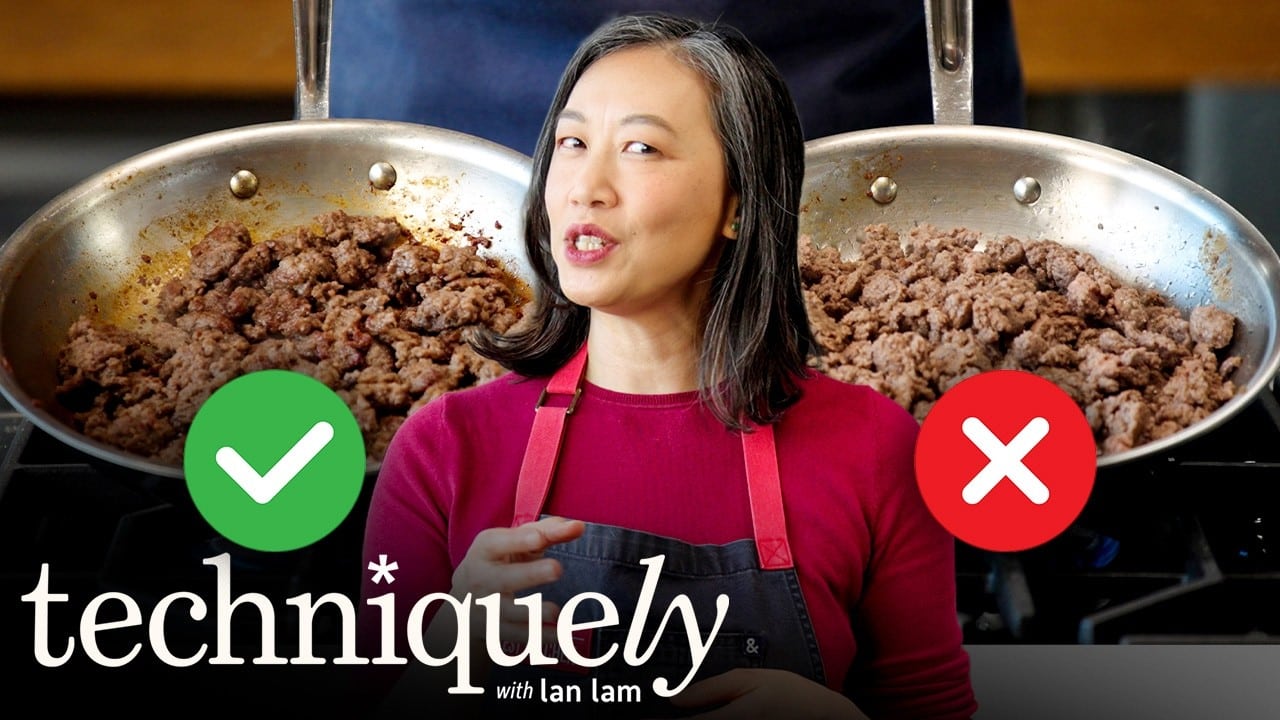
According to the culinary scientists at America’s Test Kitchen, that game-changing ingredient is already sitting in your pantry: baking soda.
In a recent cooking demonstration, Test Kitchen experts revealed how a tiny amount of this common leavening agent can revolutionize everything from chili to turkey burgers—and the science behind it is fascinating.
Jump to:
The Problem With Traditional Ground Meat Cooking
Most home cooks follow the same routine: heat oil in a pan, add ground meat, break it into chunks, and wait for browning. The results are functional but underwhelming.
The meat often turns pebbly and gray, swimming in an unappetizing grayish liquid. Those little bits aren’t just dry—they’re genuinely tough to chew.
This happens because of what’s occurring at the molecular level during cooking.
The Science: How Baking Soda Changes Everything
Understanding Protein Behavior
Ground meat consists of protein chains with both positively and negatively charged regions along their length. When heat is applied, these proteins change shape, bend, and flex.
The positively and negatively charged areas naturally attract each other, forming tight bonds. This cross-linking squeezes out moisture trapped between protein fibers, resulting in dry, tough meat.
Baking Soda’s Molecular Magic
Baking soda raises the pH of meat, making more regions along the protein chains negatively charged. Just like magnets with similar poles, these negatively charged areas repel each other rather than bonding tightly.
This looser protein structure retains significantly more moisture. The result? Meat that stays juicy and tender even after thorough cooking.
But moisture retention is only part of the story.
Superior Browning and Flavor Development
Browning requires temperatures above 230 degrees Fahrenheit. When meat releases lots of water during cooking, that liquid must evaporate before temperatures can climb above 212 degrees.
Since baking soda helps meat hold onto moisture more effectively, browning happens faster—even while the meat stays juicy inside.
Additionally, raising the pH lowers the temperature threshold for Maillard reactions—those complex chemical processes that create rich, savory flavors and appealing brown colors. Baking soda essentially turbocharges flavor development.
Practical Application: Ground Beef Chili
Andrew Janjigian’s ground beef chili from America’s Test Kitchen demonstrates this technique perfectly. The recipe calls for two pounds of 85% lean ground beef treated with 3/4 teaspoon of baking soda.
The Method
Rather than sprinkling baking soda directly onto meat and racing to mix it before it activates, the Test Kitchen uses a smarter approach:
- Dissolve 3/4 teaspoon baking soda in two tablespoons of water
- Add 1.5 teaspoons table salt to the solution
- Pour the mixture over the ground beef
- Toss gently to distribute evenly without overworking the meat
- Let stand briefly while preparing aromatics
This water-based solution ensures even distribution without clumping. Baking soda works fast—within just a couple of minutes—so efficient dispersal matters.
Cooking Results
After cooking aromatics, all two pounds of treated beef go into the pot simultaneously—no batching required. The meat breaks down into quarter-inch pieces, exposing maximum surface area for browning.
A rich fond (those flavorful browned bits) develops on the pot’s bottom and sides, creating deep, meaty flavor throughout the finished chili.
That first bite is just big and bold and really meaty. And then you get the little tender beans and the tender beef. I have so many chilis where the meat is just kinda dry and pebbly and an afterthought, it’s there for protein. Here, it’s satisfying to bite into.
The Ratio: Flexible Guidelines
The baking soda treatment adapts easily to different quantities and applications:
- General ratio: 1/4 to 1/2 teaspoon baking soda per pound of ground meat
- Water amount: 1 teaspoon to 2 tablespoons per pound
- Mixing method: Dissolving in water is easiest, but dry sprinkling works if thoroughly mixed
The key is even distribution. Whether using a solution or dry application, break up any clumps and ensure the baking soda contacts all the meat.
Beyond Beef: Transforming Turkey Burgers
Ground turkey presents unique challenges. With minimal fat content, turkey burgers typically turn out dry and bland—more health obligation than culinary delight.
Annie Petito’s skillet turkey burger recipe uses baking soda to create what the Test Kitchen calls the best turkey burger they’ve ever tasted.
Turkey-Specific Technique
For eight ounces of ground turkey (enough for two burgers), the treatment uses:
- 1/8 teaspoon baking soda
- 1 teaspoon water
The mixing approach differs from ground beef to avoid overworking the delicate turkey meat:
- Break turkey into half-inch pieces without compressing
- Drizzle the baking soda solution over the pieces
- Add other ingredients (soy sauce, melted butter, panko, Parmesan, gelatin, salt, pepper)
- Toss gently rather than kneading or squeezing
Overworked ground turkey develops a bouncy, sausage-like texture. Light handling preserves the proper burger consistency.
The Cold-Start Cooking Method
These burgers start in a cold nonstick skillet, then cook over medium heat. This gentle temperature increase prevents aggressive protein contraction.
Traditional burgers need a dimple pressed into the center to prevent ballooning during cooking. With the cold-start method, that step becomes unnecessary—the patties maintain their shape naturally.
Total cooking time? Less than 10 minutes, with minimal splatter and perfectly even doneness throughout.
This is so good. Honestly, it doesn’t even need a sauce. It’s big, it’s flavorful, it doesn’t get lost. The other toppings are just there, but what you really taste is that juicy, juicy turkey with just enough browning to give it some depth.
Universal Application Across Ground Meats
This technique isn’t limited to beef and turkey. Baking soda improves any ground meat in virtually any preparation:
- Ground pork for Asian stir-fries
- Ground lamb for Mediterranean dishes
- Ground chicken for lighter meatballs
- Meat sauce for pasta
- Sloppy Joe filling
- Taco or burrito meat
The fundamental chemistry remains consistent regardless of protein source or recipe.
Why This Simple Trick Matters
Ground meat appears in countless weeknight dinners precisely because it’s convenient and affordable. But convenience shouldn’t mean compromising on quality.
Adding baking soda requires no extra time, no special equipment, and costs virtually nothing. Yet it delivers restaurant-quality results: meat that’s tender, juicy, and deeply flavored rather than dry and forgettable.
The technique also reduces the margin for error. Even slightly overcooked meat retains more moisture and tenderness when treated with baking soda.
Implementation Tips
For best results, keep these points in mind:
- Don’t skip the resting time: Allow 2-3 minutes after mixing for the baking soda to work
- Mix thoroughly but gently: Even distribution matters, but overworking toughens meat
- Adjust for recipe size: Scale the baking soda proportionally when doubling or halving recipes
- Use standard baking soda: No need for special ingredients—regular sodium bicarbonate from any grocery store works perfectly
- Don’t worry about taste: In proper amounts, baking soda is undetectable in the finished dish
This single adjustment transforms ordinary ground meat from adequate to exceptional. Whether preparing a comforting pot of chili or healthier turkey burgers, baking soda ensures every bite delivers satisfaction instead of disappointment.
The next time ground meat appears on the menu, reach for that box of baking soda. A quarter-teaspoon and 30 seconds of effort stand between mediocre and memorable.