A new viral trend is sweeping TikTok and X, and it requires just two arms, a camera, and absolutely zero gym membership.
The Bicep Heart Trend has exploded across social media platforms since late October 2026, racking up millions of views and spawning countless variations.
What started as a playful fusion of fitness culture and romantic gesture has quickly become one of the year’s most accessible viral challenges.
And the best part? You don’t need bulging muscles to pull it off.
Jump to:
What Exactly Is the Bicep Heart?
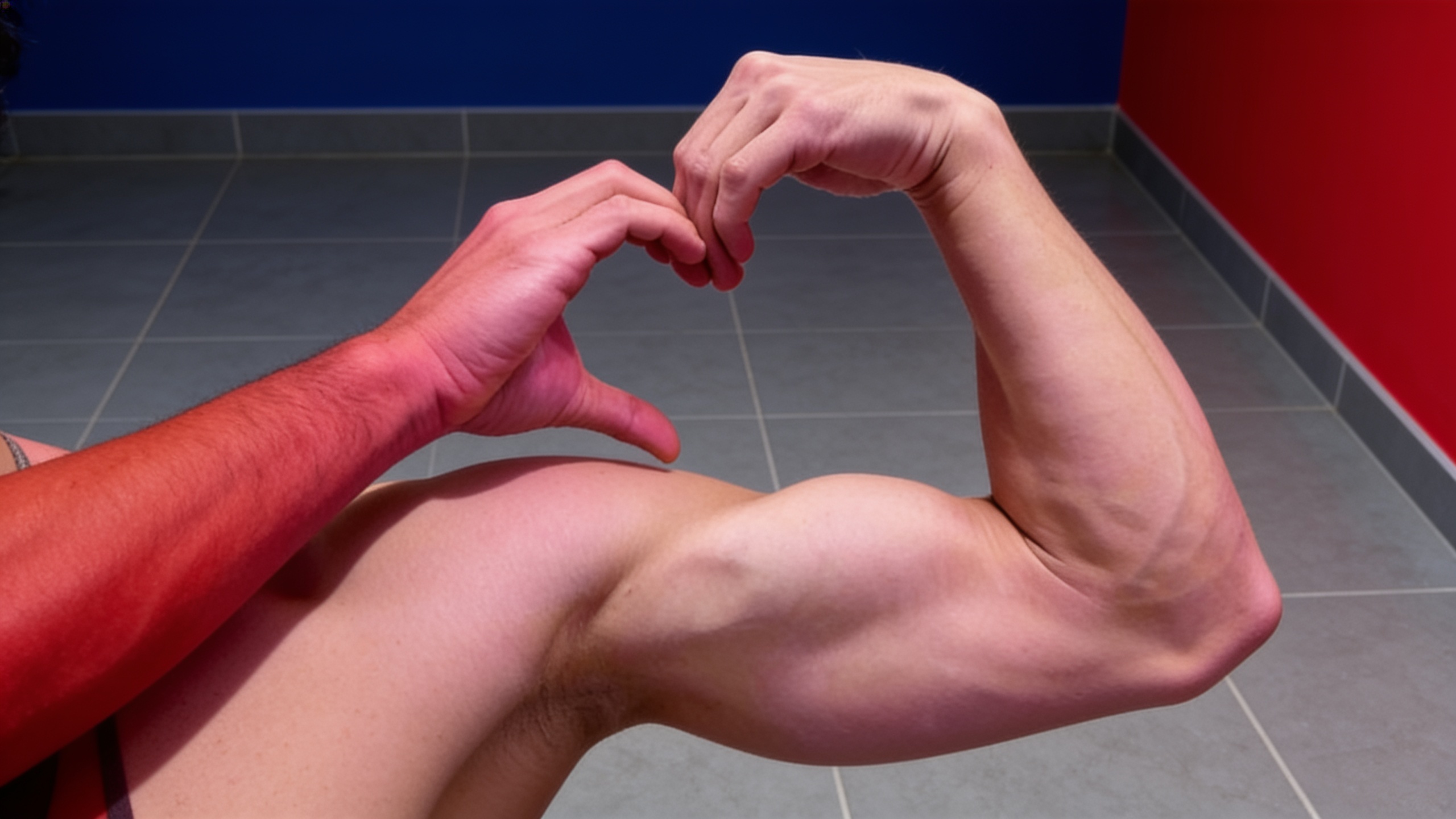
The move itself is deceptively simple. Flex one arm with your fist raised near your head, then press your opposite hand against the inside of that flexed bicep with your thumb pointing down and fingers curled.
When angled toward the camera, the curve of your arm and hand together form a recognizable heart shape.
The signature hook phrase that opens most videos? “Have you ever heard of a bicep heart…”
It’s a question that’s been asked more than 71,000 times on TikTok as of early November, all set to the same viral sound produced by @trendformusic.
How the Trend Took Off
The hashtag #bicepheart first appeared on TikTok on October 26, 2026, simultaneously spreading to X (formerly Twitter).
Within days, the trend exploded. Early adopters like @hunnybakes posted on October 30, followed by breakout videos from @mckennacrisp on October 31 that racked up 3.6 million views.
By November 1, @kavithageorge’s take on the trend had already reached 2.9 million views.
What makes this trend particularly sticky is its universal accessibility. Unlike many fitness-adjacent viral challenges that exclude people without specific body types, the bicep heart works for everyone.
The hand placement does most of the shape-forming work, meaning no significant musculature is required to create the heart silhouette.
AI Tools Jump on the Bandwagon
As with many viral trends in 2026, technology companies moved fast to capitalize on the moment.
Multiple AI video generation platforms—including MakeViral.ai, ViralVideoAI, and bicepheart.net—launched template tools within days of the trend’s emergence.
These platforms allow users to generate their own bicep heart videos from a single photo, using motion-transfer AI models like Kling 3.0.
Upload a headshot, select the bicep heart template, and within minutes you have a ready-to-post video complete with the trending sound.
This rapid commercialization raises interesting questions about authenticity in viral culture. When AI tools can replicate organic trends at scale, what happens to the spontaneous creativity that made them popular in the first place?
Why This Trend Resonates
The bicep heart sits at an interesting cultural crossroads. It blends gym culture with romantic expression, wrapped in a layer of playful humor.
For many participants, it offers a low-stakes way to express affection or flirtation without the vulnerability of more direct romantic gestures.
The trend also builds on an existing appetite for fitness-adjacent content on TikTok. Throughout 2025 and into 2026, bicep-focused videos have maintained steady engagement.
Earlier trends involved men revealing muscular arms from under ordinary T-shirts, and Vice published a feature in October 2026 exploring the cultural fascination with biceps as objects of attraction.
The bicep heart adds a clever twist: it transforms the flex from pure physical display into something softer and more relatable.
Creative Variations Multiply
As with any successful viral challenge, creative spins quickly emerged.
One particularly popular variation involves pets. Videos show dogs, cats, and other animals positioned with their front legs approximating the bicep heart pose, generating comedic content that extends the trend beyond human participants.
These pet versions often perform exceptionally well, tapping into the internet’s eternal appetite for animal content while riding the wave of an existing trend.
The Power of a Single Sound
Much of the bicep heart’s virality can be traced to @trendformusic’s audio clip.
TikTok’s algorithm favors content that uses trending sounds, creating a snowball effect. When 71,000+ videos all feature the same audio, each new post benefits from association with every previous one.
This audio-driven virality is a defining feature of modern short-form video platforms. A single catchy sound can unify disparate creators across continents into what feels like a coordinated global movement.
The result is a trend that feels both massive and intimate—millions participating in the same inside joke.
Fitness Culture Goes Mainstream
The bicep heart’s success signals something broader about how gym culture is evolving on social media.
Fitness content is increasingly crossing over into lifestyle, relationship, and comedy categories. This crossbreeding expands the audience far beyond traditional gym-goers.
Someone who has never stepped foot in a weight room can still participate in a bicep heart video. The barrier to entry is practically nonexistent.
This accessibility is crucial. Viral trends thrive when they’re easy to replicate and hard to mess up.
What Makes Content Go Viral in 2026
The bicep heart trend offers a case study in modern virality:
- Simple execution: Anyone can do it in seconds
- Visual appeal: The heart shape is instantly recognizable and camera-friendly
- Emotional hook: Romance and affection always perform well
- Humor element: The absurdity of making a heart from a flexed bicep is inherently funny
- Inclusivity: Works for all body types, ages, and even pets
- Sound unification: A single trending audio ties everything together
When all these elements align, explosive growth becomes almost inevitable.
The AI Generation Question
The rapid emergence of AI video generators specifically designed for this trend raises fascinating questions about the future of viral content.
When anyone can generate a trend-compliant video from a static photo, does that democratize participation or dilute authenticity?
There’s no clear answer yet. Some argue that AI tools lower barriers and allow more people to join the conversation. Others worry about floods of synthetic content drowning out genuine human creativity.
What’s undeniable is that technology companies are getting faster at monetizing organic cultural moments, often within hours of their emergence.
Beyond the Bicep
While the bicep heart will likely fade as quickly as it rose—such is the nature of viral trends—it reveals enduring patterns about what resonates online.
People crave connection, even in silly forms. They want to feel part of something larger than themselves.
The bicep heart offers that sense of belonging. For a brief moment, millions of strangers are all making the same goofy gesture, sharing the same inside joke.
That’s the magic of internet culture in 2026: profound connection through profoundly unserious means.
Whether you’re a fitness enthusiast showing off hard-earned muscle definition or someone who hasn’t flexed since middle school gym class, the bicep heart welcomes you.
And in an increasingly fragmented digital landscape, that kind of universal accessibility is rare and valuable.