Joe Manganiello, the 49-year-old actor known for his shredded physique in True Blood and the Magic Mike franchise, has revealed a seven-year battle with a mysterious autoimmune illness that nearly killed him.
The ordeal required emergency removal of his entire large intestine, caused him to lose approximately 60 pounds, and left him rebuilding his strength from zero.
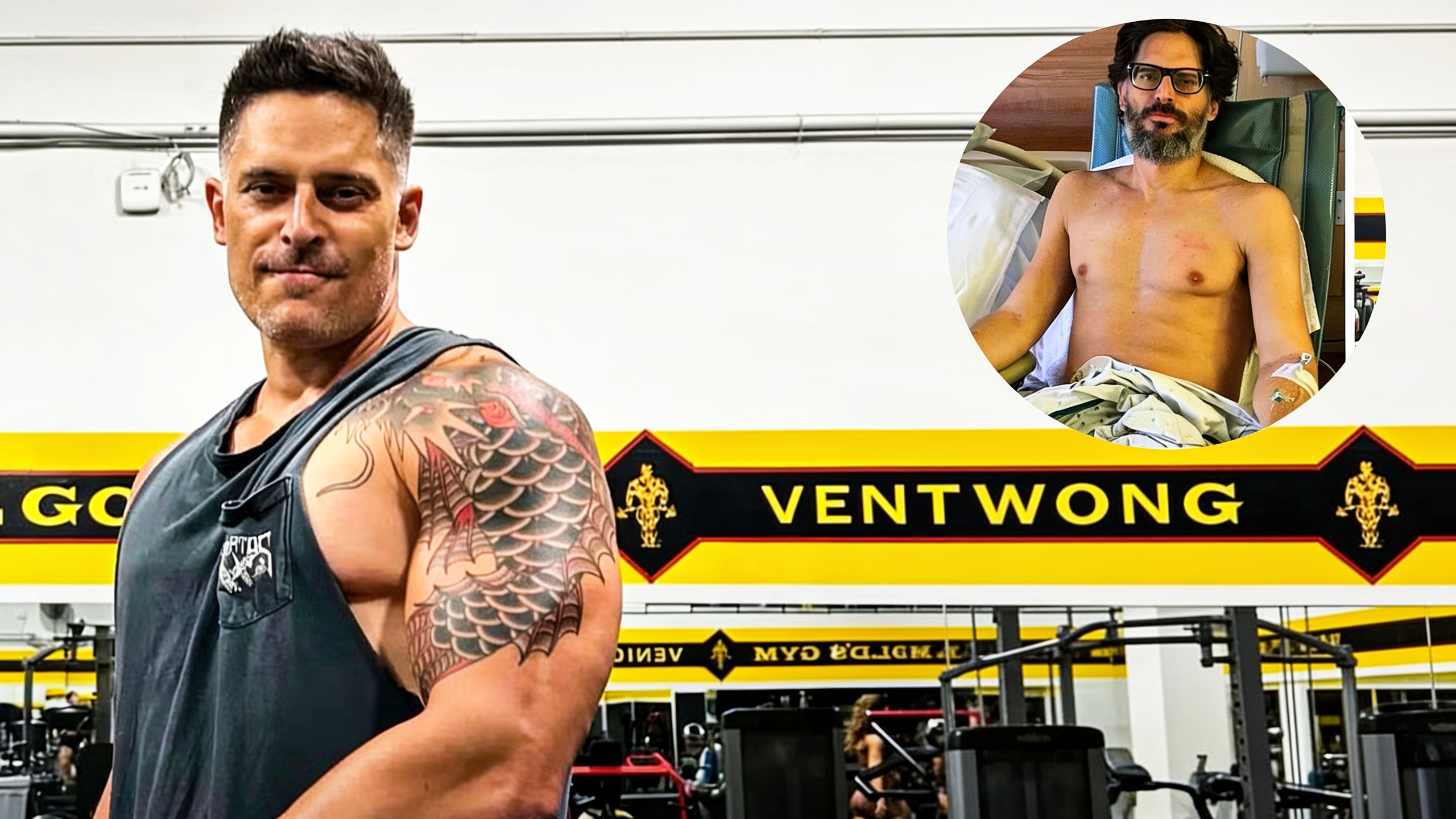
In his new memoir Bloodlines, published October 13 by Avid Reader Press, Manganiello details a harrowing medical journey that stands in stark contrast to his public image as a fitness icon.
His story offers both a cautionary tale about the limits of modern medicine and an inspiring roadmap for physical recovery after devastating illness.
Jump to:
- A Cascade of Mysterious Symptoms
- Emergency Surgery and Life with an Ostomy Bag
- The Physical Toll: Losing 60 Pounds
- Rebuilding Strength from Zero
- When Western Medicine Wasn’t Enough
- Inherited Trauma and Ancestral Connections
- The Personal Cost of Chronic Illness
- Lessons from a Fitness Icon’s Health Crisis
- Life After Major Intestinal Surgery
- The Broader Picture of Autoimmune Disease
- A Story of Resilience
- Sources
A Cascade of Mysterious Symptoms
Manganiello describes his condition as a “cascade of autoimmune-related illnesses” that attacked multiple organ systems simultaneously over roughly seven years.
His skin, thyroid, eyes, lungs, and digestive system all became targets. The symptoms were relentless and terrifying:
- Excruciating abdominal pain that prevented him from walking
- Ulceration throughout his digestive tract
- Rectal bleeding and digestive distress
- Fevers and blistering rashes across his skin
- Chronic headaches and fatigue
Despite countless colonoscopies and extensive medical investigation, doctors never provided a conclusive diagnosis.
Autoimmune conditions are a dumping ground for things [doctors] don’t understand.
This statement reflects a genuine challenge in modern medicine. Multi-system autoimmune conditions can be notoriously difficult to diagnose, particularly when symptoms don’t fit neatly into established diagnostic criteria. The immune system’s complexity means that sometimes illnesses manifest in ways that cross multiple specialties, leaving patients without clear answers even after extensive testing.
Emergency Surgery and Life with an Ostomy Bag
The crisis reached its peak in 2016 when emergency surgery became necessary.
Surgeons removed Manganiello’s entire large intestine—a procedure called total colectomy—and diverted his waste system to an ostomy bag, a medical pouch worn outside the body to collect digestive waste.
He wore the ostomy bag for approximately seven months while his body healed.
During this period, he faced not only physical recovery but also significant lifestyle adaptation. Ostomy bags require careful management, can affect body image and intimacy, and carry substantial social stigma despite being used by hundreds of thousands of people worldwide.
Remarkably, while recovering from major intestinal surgery and navigating life with an ostomy bag, Manganiello was offered the role of the main villain in Ben Affleck’s Batman film.
The timing underscores just how invisible chronic illness can be, even in Hollywood’s spotlight.
The Physical Toll: Losing 60 Pounds
For someone whose career partly depended on maintaining an impressive physique, the physical deterioration was devastating.
Manganiello lost approximately 60 pounds—roughly 27 to 30 kilograms—over a short timeframe. This wasn’t intentional weight loss; it was the result of severe illness attacking his body’s ability to absorb nutrients and maintain muscle mass.
The combination of chronic inflammation, digestive dysfunction, and major surgery left him heavily medicated and physically depleted.
For someone previously known for elite fitness, starting physical rehabilitation from scratch presented unique psychological challenges alongside the physical ones.
Rebuilding Strength from Zero
After major abdominal surgery and severe muscle wasting, the path back to fitness required patience and humility.
Manganiello had to rebuild his physical strength from the ground up, accepting that his previous training history didn’t exempt him from starting with basic movement progressions.
This approach is medically appropriate. After significant illness and surgery, the body needs time to heal foundational systems before tackling advanced training:
- Core stability must be reestablished after abdominal surgery
- Nutritional absorption changes dramatically after large intestine removal
- Muscle protein synthesis takes time to normalize after prolonged illness
- Energy systems need gradual reconditioning
The absence of a large intestine permanently alters digestion and nutrient absorption. The colon plays key roles in water absorption, electrolyte balance, and processing certain nutrients. Without it, managing hydration, mineral levels, and energy intake becomes more complex.
Recovery from this type of surgery typically involves working with gastroenterologists, nutritionists, and physical therapists to develop sustainable strategies for long-term health.
When Western Medicine Wasn’t Enough
Faced with medical uncertainty and persistent suffering, Manganiello pursued alternative healing approaches.
His journey took him to a neo-pagan Buddhist Hindu shaman from Australia, voodoo practitioners, and an animal sacrifice ceremony in Cuba. He also underwent spiritual healing at a Greek Orthodox monastery outside Pittsburgh, introduced to the Mother Superior by former Pittsburgh Steelers safety Troy Polamalu.
These choices reflect a reality many chronic illness patients face: when conventional medicine can’t provide answers or relief, people often turn to spiritual and alternative practices.
While these approaches lack rigorous scientific validation for treating autoimmune conditions, they can offer psychological comfort, community support, and a sense of agency during medical uncertainty.
The mental health burden of chronic undiagnosed illness is substantial. Patients often experience medical gaslighting, loss of identity, relationship strain, and existential distress when their suffering can’t be explained or effectively treated.
Inherited Trauma and Ancestral Connections
In Bloodlines, Manganiello traces his family lineage and connects his illness to inherited trauma, including ancestors who survived the Armenian Genocide.
The concept that ancestral trauma can manifest as physical illness is compelling but remains scientifically complex. Emerging research in epigenetics suggests that severe trauma may leave biological markers that can be passed through generations, but establishing direct causal links between historical events and individual autoimmune conditions is challenging.
What’s clear is that exploring family history and finding meaning in suffering can be psychologically beneficial, whether or not literal biological inheritance is at play.
The Personal Cost of Chronic Illness
Manganiello has stated that his illness contributed to the breakdown of his seven-year marriage to actress Sofía Vergara.
Chronic illness places enormous strain on relationships. The patient deals with physical suffering, identity loss, and lifestyle limitations. Partners often become caregivers, experiencing secondary trauma and their own grief over the life they expected to share.
Communication breaks down. Intimacy suffers. Financial stress mounts from medical bills and lost work opportunities.
Manganiello is now reportedly symptom-free and engaged to actress Caitlin O’Connor, suggesting a new chapter after surviving his medical ordeal.
Lessons from a Fitness Icon’s Health Crisis
Manganiello’s story carries several powerful takeaways for anyone facing health challenges:
Elite fitness doesn’t immunize you from illness. Even bodies maintained at peak performance can be vulnerable to autoimmune dysfunction. Genetics, environmental triggers, and immune system quirks don’t care about your training history.
Medical uncertainty is agonizing but not uncommon. Many patients with complex autoimmune conditions never receive definitive diagnoses. This doesn’t mean their suffering isn’t real or that effective management isn’t possible.
Recovery requires accepting where you are, not where you were. Rebuilding from major illness means starting with basics, no matter how humbling that feels. Progress happens through patience and consistency, not through forcing your body to meet past standards.
Seeking meaning in suffering is human. Whether through spiritual practices, ancestral exploration, or alternative healing, finding frameworks that make sense of inexplicable illness serves important psychological needs.
Life After Major Intestinal Surgery
Living without a large intestine requires permanent lifestyle adjustments.
Dietary management becomes crucial. Frequent, smaller meals help manage nutrient absorption. Hydration requires constant attention since the colon’s water-absorbing function is gone. Certain foods that previously posed no problems may now cause digestive distress.
Some patients continue using ostomy bags permanently. Others, depending on surgical approach and remaining intestinal health, may eventually have their digestive systems reconnected through additional procedures.
Physical activity remains possible and beneficial, though awareness of hydration, nutrition timing, and core stability becomes more important.
That Manganiello has reportedly achieved symptom-free status represents a best-case scenario that unfortunately isn’t guaranteed for all patients with severe autoimmune conditions.
The Broader Picture of Autoimmune Disease
Autoimmune conditions affect millions of people worldwide and remain among medicine’s most frustrating challenges.
These disorders occur when the immune system mistakenly attacks the body’s own tissues. They can target single organs or multiple systems simultaneously. Diagnosis often requires ruling out dozens of other conditions, a process that can take years.
Treatment typically focuses on managing inflammation, suppressing immune overactivity, and addressing specific organ damage—but rarely offers cures.
The unpredictability of autoimmune disease adds to patients’ burden. Symptoms can flare and remit without obvious triggers. What works for one patient may fail for another with the same diagnosis.
Manganiello’s experience of pursuing countless medical interventions without receiving a clear diagnosis mirrors the journeys of many autoimmune patients who feel lost in the healthcare system.
A Story of Resilience
Joe Manganiello’s willingness to share his medical ordeal in Bloodlines serves multiple purposes.
For fans who’ve only seen his carefully curated public image, it humanizes a celebrity often defined by physical perfection. For patients struggling with autoimmune disease or chronic undiagnosed illness, it offers validation that even people with resources and access to top medical care face similar frustrations and suffering.
Most importantly, it demonstrates that recovery—even from devastating illness requiring major surgery and causing massive physical decline—is possible.
The path isn’t linear. It involves setbacks, uncertainty, vulnerability, and accepting help from unexpected sources. But moving forward remains possible even when the road back seems impossibly long.
Manganiello grew up in Mt. Lebanon, Pittsburgh, and has since returned to his hometown roots. His journey from that upbringing through Hollywood success, through the valley of severe illness, and back to health represents a powerful narrative of resilience.
For anyone facing their own health battles, his story offers this reminder: strength isn’t just what you display when everything’s going well. It’s also what you rebuild, piece by piece, when everything falls apart.
Sources
- PEOPLE Magazine – https://people.com/joe-manganiello-reveals-7-year-battle-with-autoimmune-disease-that-nearly-killed-him-exclusive-12154936