Lowering cholesterol naturally is possible, but supplements alone won’t do the job.
Dr. Rhonda Patrick recently tackled a viewer question about cholesterol-lowering supplements, and her answer reveals a comprehensive strategy that goes far beyond popping pills.
While she emphasized she’s not providing medical advice—anyone with high cholesterol should consult their physician—her breakdown of evidence-based supplements offers a roadmap for those looking to support their cardiovascular health naturally.
But here’s the critical part most people miss: supplements are amplifiers, not replacements.
Jump to:
- The Foundation Comes First
- The Stress-Cholesterol Connection Nobody Talks About
- Supplement #1: Soluble Fiber Takes Top Billing
- Omega-3s: The Triglyceride Powerhouse
- Garlic: More Than Kitchen Seasoning
- Berberine and Probiotics Round Out the Arsenal
- The Red Yeast Rice Caution
- Niacin: The Double-Edged Sword
- Weight Loss: The Forgotten Intervention
- Building Your Personal Protocol
The Foundation Comes First
Before diving into any supplement regimen, Patrick stressed the absolute necessity of getting the basics right.
Exercise sits at the foundation—specifically routine cardiovascular exercise mixed with high-intensity work and resistance training. Diet follows closely behind, with Mediterranean-based eating patterns showing particular promise for cholesterol regulation.
If you want something simple that actually works, this is one of the most effective tools I’ve used to build strength, conditioning, and endurance without needing a full gym setup.
- Full-body training with one weight using swings, squats, and presses
- Solid cast iron build that feels stable and lasts for years
- Comfortable grip that makes high-rep workouts easier to handle
Supplements, you need to consider them as add-ons, things that are amplifying what you’re doing with your diet and your lifestyle.
For those prone to high cholesterol, limiting saturated fat becomes especially important.
The Stress-Cholesterol Connection Nobody Talks About
Patrick highlighted an often-overlooked factor: psychological stress directly raises cholesterol levels through a surprising mechanism.
When stressed, cortisol and glucocorticoids increase gut permeability—what’s commonly called leaky gut. This allows lipopolysaccharide, a component of bacterial cell membranes present in gram amounts in the digestive system, to leak into the bloodstream.
The immune system interprets this as a bacterial invasion, triggering inflammation throughout the body. Human studies have causally demonstrated this connection between stress, gut permeability, and elevated cholesterol.
Managing stress isn’t just good for mental health—it’s essential for cardiovascular wellness.
Supplement #1: Soluble Fiber Takes Top Billing
Patrick’s number-one supplement recommendation? Soluble, fermentable fiber.
If you want something simple that actually works, this is one of the most effective tools I’ve used to build strength, conditioning, and endurance without needing a full gym setup.
- Full-body training with one weight using swings, squats, and presses
- Solid cast iron build that feels stable and lasts for years
- Comfortable grip that makes high-rep workouts easier to handle
This includes psyllium husk and beta-glucans—the types of fiber found naturally in fruits, onions, artichokes, oats, and mushrooms.
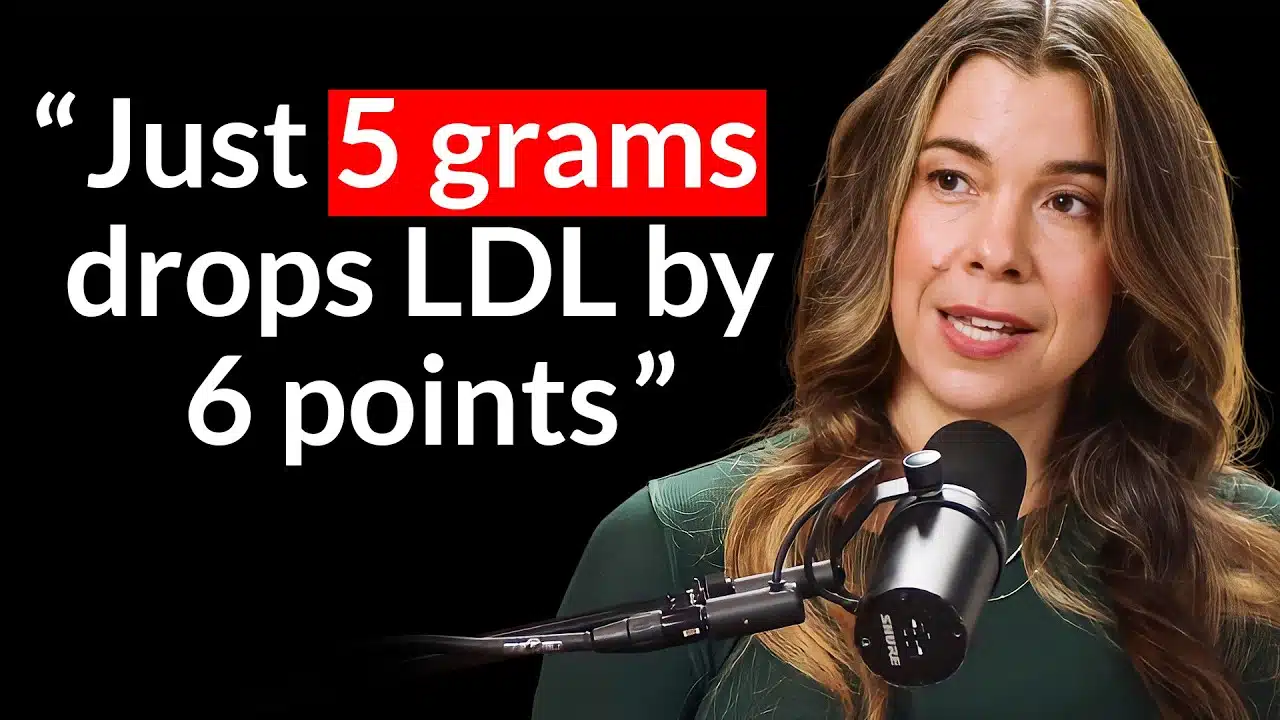
Meta-analyses of multiple studies show impressive results: every five-gram daily increase in soluble fiber supplementation reduces both total cholesterol and LDL cholesterol by approximately six milligrams per deciliter.
My husband for example, he takes five grams a day of psyllium husk. I think beta-glucans are even better.
Patrick expressed particular enthusiasm for beta-glucans, citing benefits beyond cholesterol reduction—they support gut microbiome health and animal studies suggest they help remove PFAS “forever chemicals” from the body.
She regularly gives her son oats specifically because of their beta-glucan content.
Omega-3s: The Triglyceride Powerhouse
Returning to what she calls “foundational supplements,” Patrick emphasized omega-3 fatty acids for their profound impact on triglycerides and total cholesterol.
While omega-3s don’t significantly affect LDL cholesterol, their triglyceride-lowering effects are so powerful that prescription forms exist specifically for patients with hypertriglyceridemia.
If you want something simple that actually works, this is one of the most effective tools I’ve used to build strength, conditioning, and endurance without needing a full gym setup.
- Full-body training with one weight using swings, squats, and presses
- Solid cast iron build that feels stable and lasts for years
- Comfortable grip that makes high-rep workouts easier to handle
The numbers are striking:
- Two grams daily of active EPA and DHA (not total fatty acids) reduces triglycerides by approximately 42 milligrams per deciliter
- Three grams daily pushes that reduction to nearly 70 milligrams per deciliter
This is a very very powerful tool for improving triglycerides.
Patrick noted that while the original question focused on LDL cholesterol, triglycerides form a crucial part of overall cardiovascular health.
Garlic: More Than Kitchen Seasoning
Garlic supplements—whether powder, oil, or other forms—demonstrate meaningful cholesterol-lowering effects.
Meta-analyses of randomized trials show garlic supplementation can reduce LDL cholesterol by up to 17 milligrams per deciliter.
That’s a significant reduction from a simple, well-tolerated supplement.
Berberine and Probiotics Round Out the Arsenal
Berberine earns a spot on Patrick’s list for its dual action—it effectively reduces LDL cholesterol while also helping regulate blood sugar.
If you want something simple that actually works, this is one of the most effective tools I’ve used to build strength, conditioning, and endurance without needing a full gym setup.
- Full-body training with one weight using swings, squats, and presses
- Solid cast iron build that feels stable and lasts for years
- Comfortable grip that makes high-rep workouts easier to handle
Probiotics show weaker but still notable effects. Specific strains like Lactobacillus reuteri and Lactobacillus plantarum can improve both blood glucose and lipids, including lowering LDL cholesterol.
Patrick suggested combining multiple supplements—fiber, omega-3s, garlic, and berberine—could produce additive or even synergistic effects, though she noted no trials have tested this comprehensive approach yet.
The Red Yeast Rice Caution
While red yeast rice extract has gained popularity for cholesterol reduction, Patrick expressed significant reservations.
The supplement works similarly to statins, inhibiting HMG-CoA reductase—the key enzyme for cholesterol synthesis. But that same enzyme plays a critical role in producing CoQ10 through the mevalonate pathway.
CoQ10 is essential for mitochondrial function, and Patrick’s concerns about red yeast rice mirror her hesitations about statins themselves—both can negatively impact cellular energy production.
I’m not too bullish on the red yeast rice extract because of the same reasons I’m not too bullish on taking a statin. I don’t like the direct negative effect on mitochondrial function.
Additional concerns include lack of FDA regulation creating a “wild west” situation with supplement quality, plus documented contamination with potential kidney and reproductive toxins.
If you want something simple that actually works, this is one of the most effective tools I’ve used to build strength, conditioning, and endurance without needing a full gym setup.
- Full-body training with one weight using swings, squats, and presses
- Solid cast iron build that feels stable and lasts for years
- Comfortable grip that makes high-rep workouts easier to handle
Niacin: The Double-Edged Sword
Vitamin B3, or niacin, has been used for cholesterol management for decades, with extensive research supporting its effectiveness.
Particularly noteworthy: niacin is one of very few interventions that meaningfully lowers Lp(a), a genetic risk factor for cardiovascular disease largely unaffected by diet and lifestyle changes.
However, high-dose niacin comes with unwanted side effects, most notably the uncomfortable flushing sensation many users experience.
Weight Loss: The Forgotten Intervention
Patrick ended with a reminder that isn’t technically a supplement but deserves emphasis nonetheless.
For individuals who are overweight or obese, weight loss through lifestyle interventions—caloric restriction combined with exercise—meaningfully reduces LDL cholesterol.
Every kilogram of body weight lost translates to measurable cholesterol improvement.
If you want something simple that actually works, this is one of the most effective tools I’ve used to build strength, conditioning, and endurance without needing a full gym setup.
- Full-body training with one weight using swings, squats, and presses
- Solid cast iron build that feels stable and lasts for years
- Comfortable grip that makes high-rep workouts easier to handle
Sometimes the most powerful “supplement” is simply achieving a healthier body composition through foundational habits.
Building Your Personal Protocol
Patrick’s evidence-based hierarchy for natural cholesterol management looks like this:
- Foundation: Exercise (cardio, HIIT, resistance training) and Mediterranean-style diet
- Stress management: Reduce psychological stress to prevent gut permeability and inflammation
- Top-tier supplements: Soluble fiber (5g daily), omega-3s (2-3g EPA/DHA daily)
- Supporting supplements: Garlic, berberine, specific probiotic strains
- Consider with caution: Niacin (effective but with side effects), red yeast rice (quality and safety concerns)
- Weight management: If overweight, prioritize sustainable weight loss
The key insight? No single supplement replaces solid lifestyle foundations, but the right combination—built on exercise, diet, and stress management—can create powerful, synergistic effects for cardiovascular health.