In 1885, a 55-year-old Apache warrior named Geronimo escaped a military reservation in Arizona with 135 people and pushed his group to cover up to 70 miles per day on foot across brutal desert terrain.
Nearly 8,000 American and Mexican soldiers pursued roughly 38 Apache warriors for over a year—and couldn’t catch them.

General George Crook, the most experienced military commander in that region, described the Apache in four words: “perfect physical condition.”
But here’s what makes this story extraordinary: the Apache didn’t build that endurance through distance training the way modern runners do.
They built it through a breathing restriction technique that forced respiratory adaptations modern cardio training simply cannot replicate.
Jump to:
- The Mouthful of Water That Changed Everything
- Why Modern Cardio Misses the Point
- The Man Who Outran an Army
- Does Nose Breathing Actually Work?
- How Apache Training Actually Worked
- The Science Behind Spirit Runners
- Try It Yourself Right Now
- What We Actually Lost
- How to Begin Training Like a Spirit Runner
- The Legacy of Perfect Physical Condition
The Mouthful of Water That Changed Everything
Apache boys filled their mouths with water at a stream, ran to the top of the nearest mountain and back, then spit the water at their trainer’s feet to prove they had breathed only through the nose for the entire run.
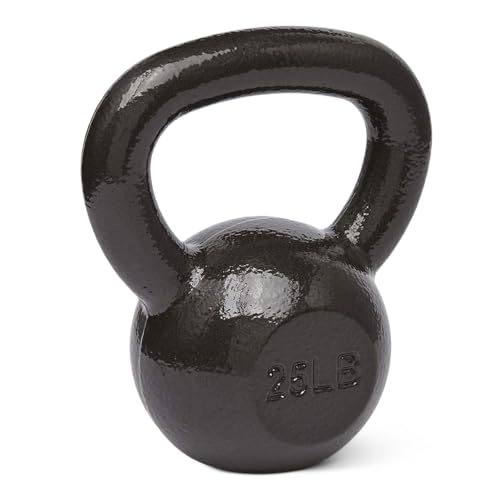
If you want something simple that actually works, this is one of the most effective tools I’ve used to build strength, conditioning, and endurance without needing a full gym setup.
- Full-body training with one weight using swings, squats, and presses
- Solid cast iron build that feels stable and lasts for years
- Comfortable grip that makes high-rep workouts easier to handle
The water was the enforcer. It made cheating impossible.
Either your mouth stayed closed or the water was gone—and your trainer knew immediately. This wasn’t willpower. It was systematic respiratory conditioning.
Why Modern Cardio Misses the Point
Modern endurance training follows a predictable pattern: increase mileage, increase pace, breathe through the mouth when intensity rises.
Every distance runner, CrossFit athlete, and combat sport competitor defaults to mouth breathing the moment work gets hard. It makes intuitive sense—bigger airway means more oxygen delivered, right?
But mouth breathing bypasses the one respiratory structure that actually improves how oxygen reaches muscles. It trains your body to panic at exactly the carbon dioxide levels where Apache warriors were just getting started.
The Man Who Outran an Army
Geronimo was born around 1829 near Turkey Creek in what is now New Mexico. In 1858, Mexican soldiers raided his camp and killed his mother, wife, and three young children.
If you want something simple that actually works, this is one of the most effective tools I’ve used to build strength, conditioning, and endurance without needing a full gym setup.
- Full-body training with one weight using swings, squats, and presses
- Solid cast iron build that feels stable and lasts for years
- Comfortable grip that makes high-rep workouts easier to handle
That event transformed him from a family man into what the Encyclopedia of War describes as a master of “partisan fighting style that baffled US and Mexican troops.”
In cunning, stealth, endurance, perseverance, ruthlessness, fortitude, fighting skill, and command of harsh conditions of his homeland, he excelled.
When Geronimo escaped the reservation in 1885, he ran his horses to death covering 70 miles of rough terrain in a day. When horses couldn’t navigate certain terrain, Apache warriors moved on foot through narrow canyons and steep escarpments that mounted cavalry couldn’t follow.
General Crook replaced cavalry horses with pack mules specifically because mules had greater endurance and mountain climbing ability. It still wasn’t enough.
Does Nose Breathing Actually Work?
Before dismissing this as primitive training, consider the research.
A study of runners who adapted to nasally restricted breathing over six months found they achieved equivalent oxygen consumption and comparable performance to mouth breathing—but with significantly lower respiratory rate.
They consumed the same amount of oxygen with fewer breaths. Nasal breathing during exercise isn’t a performance handicap. It’s a respiratory efficiency adaptation that your body learns over months of progressive training.
If you want something simple that actually works, this is one of the most effective tools I’ve used to build strength, conditioning, and endurance without needing a full gym setup.
- Full-body training with one weight using swings, squats, and presses
- Solid cast iron build that feels stable and lasts for years
- Comfortable grip that makes high-rep workouts easier to handle
Another study of 49 healthy individuals found that nasal breathing produced significantly faster and greater post-exercise muscle reoxygenation compared to oral breathing—even at equivalent power output.
How Apache Training Actually Worked
Apache boys woke before dawn and bathed in frigid mountain streams, even in winter, even if they had to crack surface ice to reach water. Cold immersion activated the nervous system before running began.
Then came the mouthful of water run.
The boy walked to the nearest stream and filled his mouth with water—not a sip, a full mouthful, enough that lips had to seal completely to hold it. Then he ran uphill across rocky, scree-covered terrain that demanded scrambling with hands and feet.
Mouth sealed by water, every breath forced through the nose. Diaphragm working hard on every inhale because restricted nasal airway demanded deeper, slower breaths to maintain oxygen flow.
The First Attempt Is Brutal
The first time a beginner attempts this technique, air hunger hits within 60 seconds. Your body screams to open the mouth.
If you want something simple that actually works, this is one of the most effective tools I’ve used to build strength, conditioning, and endurance without needing a full gym setup.
- Full-body training with one weight using swings, squats, and presses
- Solid cast iron build that feels stable and lasts for years
- Comfortable grip that makes high-rep workouts easier to handle
Carbon dioxide levels in blood rise because the nasal passage restricts how quickly CO2 can be expelled. Your brain interprets this as suffocation even though oxygen levels remain adequate.
Most beginners swallow the water within two minutes because the urge to gasp through the mouth overwhelms discipline to keep lips sealed.
The Progression Took Years
Young boys started with short hill runs—maybe a quarter mile on moderate slopes near camp. Runs happened daily, not weekly. Not a workout. As routine as eating.
By age 10, distances doubled. Hills got steeper. Terrain shifted from packed earth to loose rock and scree.
By the time a boy entered the novice warrior phase, the mouthful of water run was no longer a test. It was invisible. Nasal breathing during extreme exertion had become as automatic as blinking.
Boys trained with their uncles rather than their fathers. The belief was that uncles would push harder without going easy on them.
If you want something simple that actually works, this is one of the most effective tools I’ve used to build strength, conditioning, and endurance without needing a full gym setup.
- Full-body training with one weight using swings, squats, and presses
- Solid cast iron build that feels stable and lasts for years
- Comfortable grip that makes high-rep workouts easier to handle
The Science Behind Spirit Runners
Apache long-distance runners were called “spirit runners.” They entered a trance-like state during sustained runs, covering many miles at steady pace without visible signs of fatigue.
This aligns with what modern sports science calls the flow state—the point where autonomic nervous system takes over breathing and pacing, and conscious effort drops away.
The mouthful of water forced respiratory system to find that rhythm. You cannot breathe chaotically with water in your mouth. Breathing must be controlled, rhythmic, deep.
Two Physiological Responses Mouth Breathing Prevents
First: Nitric oxide production. Nasal breathing forces air through paranasal sinuses where your body produces nitric oxide—a vasodilator that opens blood vessels in lungs, improving oxygen transfer from air into blood.
Mouth breathing bypasses sinuses entirely. Every breath through your mouth skips the nitric oxide that would have improved oxygen delivery.
Second: CO2 tolerance. Nasal breathing retains CO2 longer than mouth breathing. CO2 is the primary driver of respiration rate. When CO2 rises, your body breathes faster.
If you want something simple that actually works, this is one of the most effective tools I’ve used to build strength, conditioning, and endurance without needing a full gym setup.
- Full-body training with one weight using swings, squats, and presses
- Solid cast iron build that feels stable and lasts for years
- Comfortable grip that makes high-rep workouts easier to handle
Mouth breathing expels CO2 quickly, keeping threshold low. Your body panics at mild CO2 elevations because it never adapted to them.
Nasal breathing restricts CO2 expulsion, forcing your body to tolerate higher levels before triggering the “breathe faster” response.
Try It Yourself Right Now
Take a sip of water and hold it in your mouth without swallowing. Now breathe.
Notice how every breath is forced through your nose. Notice how diaphragm engages automatically because your chest cannot expand the way it does during mouth breathing.
Now imagine running uphill at that breathing restriction for 30 minutes without swallowing. That’s one Apache training session.
The burning in diaphragm, pressure in sinuses, desperate urge to open your mouth—that discomfort is the adaptation stimulus itself.
If you want something simple that actually works, this is one of the most effective tools I’ve used to build strength, conditioning, and endurance without needing a full gym setup.
- Full-body training with one weight using swings, squats, and presses
- Solid cast iron build that feels stable and lasts for years
- Comfortable grip that makes high-rep workouts easier to handle
What We Actually Lost
The assumption is that mouth breathing during exercise is more effective because it allows more air in. Research tells a different story.
Runners adapted to nasal breathing consumed the same amount of oxygen as mouth breathers, but took fewer breaths to do it. Breathing was more efficient per breath.
Research doesn’t prove nasal breathing makes you faster. It proves nasal breathing makes the same speed feel easier.
And over 70 miles of desert terrain, easier is everything.
What we actually lost was understanding that breathing efficiency matters more than breathing volume. Modern cardio trains your body to breathe more. The mouthful of water technique trained bodies to breathe better.
How to Begin Training Like a Spirit Runner
You can begin reintroducing nasal breathing into training without running desert mountains.
If you want something simple that actually works, this is one of the most effective tools I’ve used to build strength, conditioning, and endurance without needing a full gym setup.
- Full-body training with one weight using swings, squats, and presses
- Solid cast iron build that feels stable and lasts for years
- Comfortable grip that makes high-rep workouts easier to handle
- Start with walking: 10 minutes of deliberate nasal-only breathing during brisk walk, three times per week
- Focus on belly expansion: Deep diaphragmatic breathing on every inhale
- Extend gradually: Once 10 minutes feels comfortable, extend to 20 minutes
- Progress to jogging: After two weeks, try slow jog while maintaining nasal breathing
- Match pace to breathing: The moment you feel urge to open your mouth, slow down until nose can handle the pace
After four weeks, try the mouthful of water technique on a walk. Fill your mouth with water. Walk for five minutes. Spit water out.
If water survived the full five minutes, extend to 10 minutes. Do not attempt water technique while running until nasal breathing during a jog feels automatic.
Respiratory Adaptations Take Time
Apache system developed this capacity over years of childhood training. Forcing it in weeks risks nothing dangerous, but produces nothing lasting.
The adaptation is respiratory. Respiratory adaptations take months.
The Legacy of Perfect Physical Condition
Geronimo surrendered for the final time on September 4, 1886, at Skeleton Canyon, Arizona. He was the last major Native American leader to surrender to the United States.
The respiratory efficiency that kept him ahead of 8,000 soldiers for over a year wasn’t genetic. It was trained.
If you want something simple that actually works, this is one of the most effective tools I’ve used to build strength, conditioning, and endurance without needing a full gym setup.
- Full-body training with one weight using swings, squats, and presses
- Solid cast iron build that feels stable and lasts for years
- Comfortable grip that makes high-rep workouts easier to handle
Through cold water immersion, mountain terrain running, and a mouthful of water that turned every breath into a respiratory conditioning rep.
The breathing technique Apache warriors developed in mountains of the Southwest is now being adopted by ultra-marathon runners and military special forces who discovered what the Apache understood centuries ago:
Lungs don’t need more air. They need better air.
Modern cardio trains bodies to breathe more. The spirit runner method trained bodies to breathe better—and that’s why the adaptation was completely different.