Retired bodybuilder Chris Bumstead recently shared a full day of eating that reveals a dramatically different approach to nutrition than his competitive years.
Gone are the days of 400 grams of protein and meticulously weighed meals.
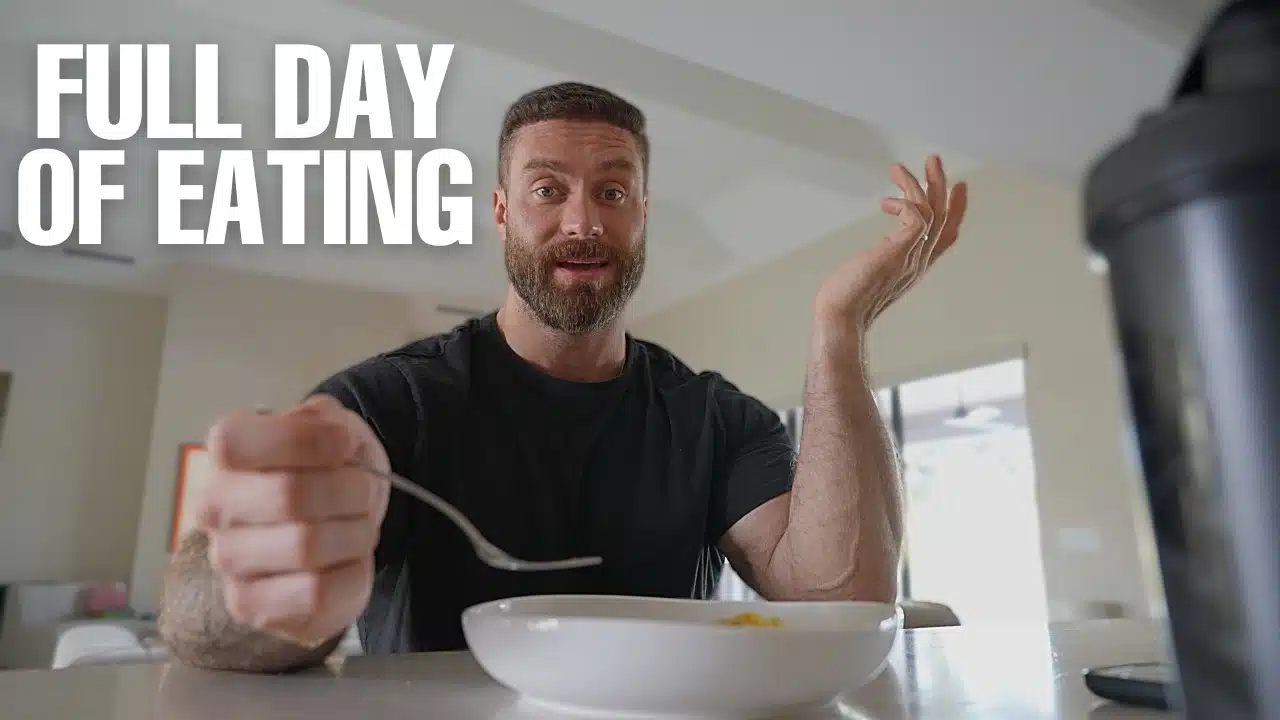
Instead, Bumstead now focuses on intuitive eating backed by years of tracking experience, fluctuating between 245-250 pounds while maintaining impressive conditioning.
His current philosophy? Build sustainable habits that make healthy eating feel effortless rather than restrictive.
Jump to:
- From Extreme to Sustainable: A Dramatic Shift
- The Power of Intuitive Eating (After a Decade of Practice)
- A Typical Day: What 2,226 Calories Looks Like
- The Mental Game: Building Systems Over Willpower
- Parenting Influences Food Philosophy
- Practical Takeaways for Sustainable Nutrition
- The Maintenance Advantage
- From Extreme to Sustainable: A Dramatic Shift
- The Power of Intuitive Eating (After a Decade of Practice)
- A Typical Day: What 2,226 Calories Looks Like
- The Mental Game: Building Systems Over Willpower
- Parenting Influences Food Philosophy
- Practical Takeaways for Sustainable Nutrition
- The Maintenance Advantage
From Extreme to Sustainable: A Dramatic Shift
Bumstead’s transformation from competitive bodybuilder to retired athlete showcases a radical change in nutritional priorities. During his competitive years, protein intake reached astronomical levels.
At one point I was eating up to 400 g of protein a day. At the minimum it was about 260 270 g of protein.
Now his daily intake sits around 183 grams of protein, significantly lower than traditional bodybuilding recommendations of one gram per pound of bodyweight.
This reduction isn’t accidental. Bumstead deliberately chose to give his digestive system a break after years of extreme protein consumption. While he admits the lower protein makes him slightly more hungry due to protein’s satiating effects, the trade-off feels worth it for long-term health.
The Power of Intuitive Eating (After a Decade of Practice)
Bumstead hasn’t tracked his food consistently in quite some time, yet maintains remarkable control over his physique. His secret? Ten years of meticulous tracking that essentially programmed his brain.
I can like just choose to hit a protein goal and then go up and down in weight from carbs and fat without weighing anything now because I’ve been doing it for so long. So it’s like intuitive eating is bullshit in my opinion. But after 15 years, your brain kind of becomes its own food scale.
This perspective challenges popular intuitive eating narratives. Bumstead argues that true food freedom comes from years of structured learning, not from immediately abandoning all tracking systems.
His approach represents educated intuition rather than complete spontaneity.
A Typical Day: What 2,226 Calories Looks Like
Bumstead’s daily intake breaks down to approximately 2,226 calories with 183 grams of protein, 87 grams of fat, and 173 grams of carbohydrates. This represents maintenance calories for someone weighing just under 250 pounds with visible abs.
Breakfast: Breaking the Fast Mindfully
Bumstead starts his day with 538 calories consisting of eggs, crispy potatoes, and turkey bacon. The meal delivers 49 grams of protein, 16 grams of fat, and 50 grams of carbs.
I eat my last meal now really early because it makes me sleep much better. And then I try and get like 12 hours in between my last meal and my breakfast just to have like a break on my digestive system and it makes me feel better.
Following breakfast, he adds a supplement shake containing creatine (5-10 grams), Sun Fiber prebiotic, and collagen. These additions support recovery, gut health, and joint function without significantly impacting calorie totals.
Lunch: Colorful and Satisfying
Midday nutrition centers around approximately 500 calories with 40 grams of protein. His typical lunch includes:
- 200 grams of turkey from turkey meatballs
- Mashed sweet potato (yellow and Japanese white varieties mixed together)
- Carrots and broccoli for added micronutrients
The combination of yellow and white sweet potatoes creates better texture than yellow alone, which can become watery when mashed.
Flexible Evening Meals
Bumstead’s afternoon and evening eating varies significantly based on schedule and availability. He frequently relies on frozen Meafit meals—custom-made options stored in his freezer for convenience.
It’s also goated cuz if they’re frozen and you keep it in your car, it’ll take like 5 hours to defrost and then it’s not frozen anymore, but it’s also fresh and you don’t need to keep it in the fridge.
Dinner might consist of chicken salad sandwiches on high-fiber bread, or whatever’s available in the refrigerator. This flexibility represents a stark departure from rigid bodybuilding meal plans.
Evening Treat: Overnight Oats
Before bed, Bumstead enjoys overnight oats mixed with vanilla protein powder, almond butter, blueberries, and sometimes banana. This dessert-like meal provides quality carbohydrates and protein while satisfying sweet cravings naturally.
The Mental Game: Building Systems Over Willpower
Bumstead’s most valuable insight centers on systems thinking rather than willpower-based dieting. He argues that obsessing over scientific studies and macro timing misses the bigger picture.
People think they need to understand scientific studies of protein intake and carb timing and all this shit when realistically it just comes down to creating a system in your life that feels easy to follow.
His approach emphasizes delayed gratification combined with strategic flexibility. By eating clean consistently, Bumstead earned the freedom to enjoy restaurant meals, travel food, and weekend indulgences without guilt or physical consequences.
The Feedback Loop Effect
Extended periods of clean eating create a powerful feedback mechanism. When Bumstead occasionally consumes sugar or processed foods, his body responds negatively, naturally reinforcing healthy choices.
When you eat healthy all the time, sometimes you have something like I’ll have a bunch of sugar or some shit and I immediately feel like shit and it encourages you to eat healthy more often because you’re getting a negative response from it.
This biological feedback transforms discipline into habit, eventually making healthy eating feel natural rather than restrictive.
Parenting Influences Food Philosophy
Fatherhood significantly shaped Bumstead’s current nutritional approach. He consciously chose to model balanced eating behaviors for his daughter rather than obsessive tracking and restriction.
Even with like having a daughter I feel like if I were like she were growing up and I’m like weighing everything being like oh I’m kind of fat today and like going to pull carbs and like living like that. She’d be like what the fuck.
His priority shifted toward creating positive food memories with his children. Saturday pancakes and family meals now take precedence over perfect macro adherence.
This perspective demonstrates maturity in understanding fitness as one component of overall life satisfaction rather than the sole focus.
Practical Takeaways for Sustainable Nutrition
Bumstead’s journey offers several actionable principles for anyone seeking long-term dietary success:
- Invest time in learning: Initial tracking builds nutritional literacy that enables future flexibility
- Prioritize consistency over perfection: Maintaining results requires less effort than achieving them
- Build convenient systems: Frozen meal prep and strategic food choices eliminate decision fatigue
- Allow strategic flexibility: Earning freedom through consistency prevents burnout
- Listen to biofeedback: Physical responses guide food choices more effectively than rigid rules
- Consider life context: Fitness goals should support overall life satisfaction, not dominate it
His approach challenges both extreme restriction and completely unstructured eating. The middle path requires initial discipline but ultimately delivers sustainable results with minimal mental stress.
The Maintenance Advantage
Perhaps Bumstead’s most encouraging message centers on maintenance being significantly easier than transformation.
Way easier to maintain abs than it is to get them. That’s for damn sure.
This reality means the initial investment in building healthy systems pays continuous dividends. Once established, maintaining impressive conditioning requires less restriction and mental energy than most people assume.
Bumstead’s current physique—lean at nearly 250 pounds—proves this principle. He maintains conditioning that would satisfy most fitness enthusiasts while eating intuitively, enjoying family meals, and prioritizing life beyond bodybuilding.
His evolution from extreme competitor to balanced athlete demonstrates that sustainable fitness doesn’t require perpetual suffering. Instead, it demands front-loaded learning followed by systematic implementation that eventually feels effortless.
Retired bodybuilder Chris Bumstead recently shared a full day of eating that reveals a dramatically different approach to nutrition than his competitive years.
Gone are the days of 400 grams of protein and meticulously weighed meals.
Instead, Bumstead now focuses on intuitive eating backed by years of tracking experience, fluctuating between 245-250 pounds while maintaining impressive conditioning.
His current philosophy? Build sustainable habits that make healthy eating feel effortless rather than restrictive.
From Extreme to Sustainable: A Dramatic Shift
Bumstead’s transformation from competitive bodybuilder to retired athlete showcases a radical change in nutritional priorities. During his competitive years, protein intake reached astronomical levels.
At one point I was eating up to 400 g of protein a day. At the minimum it was about 260 270 g of protein.
Now his daily intake sits around 183 grams of protein, significantly lower than traditional bodybuilding recommendations of one gram per pound of bodyweight.
This reduction isn’t accidental. Bumstead deliberately chose to give his digestive system a break after years of extreme protein consumption. While he admits the lower protein makes him slightly more hungry due to protein’s satiating effects, the trade-off feels worth it for long-term health.
The Power of Intuitive Eating (After a Decade of Practice)
Bumstead hasn’t tracked his food consistently in quite some time, yet maintains remarkable control over his physique. His secret? Ten years of meticulous tracking that essentially programmed his brain.
I can like just choose to hit a protein goal and then go up and down in weight from carbs and fat without weighing anything now because I’ve been doing it for so long. So it’s like intuitive eating is bullshit in my opinion. But after 15 years, your brain kind of becomes its own food scale.
This perspective challenges popular intuitive eating narratives. Bumstead argues that true food freedom comes from years of structured learning, not from immediately abandoning all tracking systems.
His approach represents educated intuition rather than complete spontaneity.
A Typical Day: What 2,226 Calories Looks Like
Bumstead’s daily intake breaks down to approximately 2,226 calories with 183 grams of protein, 87 grams of fat, and 173 grams of carbohydrates. This represents maintenance calories for someone weighing just under 250 pounds with visible abs.
Breakfast: Breaking the Fast Mindfully
Bumstead starts his day with 538 calories consisting of eggs, crispy potatoes, and turkey bacon. The meal delivers 49 grams of protein, 16 grams of fat, and 50 grams of carbs.
I eat my last meal now really early because it makes me sleep much better. And then I try and get like 12 hours in between my last meal and my breakfast just to have like a break on my digestive system and it makes me feel better.
Following breakfast, he adds a supplement shake containing creatine (5-10 grams), Sun Fiber prebiotic, and collagen. These additions support recovery, gut health, and joint function without significantly impacting calorie totals.
Lunch: Colorful and Satisfying
Midday nutrition centers around approximately 500 calories with 40 grams of protein. His typical lunch includes:
- 200 grams of turkey from turkey meatballs
- Mashed sweet potato (yellow and Japanese white varieties mixed together)
- Carrots and broccoli for added micronutrients
The combination of yellow and white sweet potatoes creates better texture than yellow alone, which can become watery when mashed.
Flexible Evening Meals
Bumstead’s afternoon and evening eating varies significantly based on schedule and availability. He frequently relies on frozen Meafit meals—custom-made options stored in his freezer for convenience.
It’s also goated cuz if they’re frozen and you keep it in your car, it’ll take like 5 hours to defrost and then it’s not frozen anymore, but it’s also fresh and you don’t need to keep it in the fridge.
Dinner might consist of chicken salad sandwiches on high-fiber bread, or whatever’s available in the refrigerator. This flexibility represents a stark departure from rigid bodybuilding meal plans.
Evening Treat: Overnight Oats
Before bed, Bumstead enjoys overnight oats mixed with vanilla protein powder, almond butter, blueberries, and sometimes banana. This dessert-like meal provides quality carbohydrates and protein while satisfying sweet cravings naturally.
The Mental Game: Building Systems Over Willpower
Bumstead’s most valuable insight centers on systems thinking rather than willpower-based dieting. He argues that obsessing over scientific studies and macro timing misses the bigger picture.
People think they need to understand scientific studies of protein intake and carb timing and all this shit when realistically it just comes down to creating a system in your life that feels easy to follow.
His approach emphasizes delayed gratification combined with strategic flexibility. By eating clean consistently, Bumstead earned the freedom to enjoy restaurant meals, travel food, and weekend indulgences without guilt or physical consequences.
The Feedback Loop Effect
Extended periods of clean eating create a powerful feedback mechanism. When Bumstead occasionally consumes sugar or processed foods, his body responds negatively, naturally reinforcing healthy choices.
When you eat healthy all the time, sometimes you have something like I’ll have a bunch of sugar or some shit and I immediately feel like shit and it encourages you to eat healthy more often because you’re getting a negative response from it.
This biological feedback transforms discipline into habit, eventually making healthy eating feel natural rather than restrictive.
Parenting Influences Food Philosophy
Fatherhood significantly shaped Bumstead’s current nutritional approach. He consciously chose to model balanced eating behaviors for his daughter rather than obsessive tracking and restriction.
Even with like having a daughter I feel like if I were like she were growing up and I’m like weighing everything being like oh I’m kind of fat today and like going to pull carbs and like living like that. She’d be like what the fuck.
His priority shifted toward creating positive food memories with his children. Saturday pancakes and family meals now take precedence over perfect macro adherence.
This perspective demonstrates maturity in understanding fitness as one component of overall life satisfaction rather than the sole focus.
Practical Takeaways for Sustainable Nutrition
Bumstead’s journey offers several actionable principles for anyone seeking long-term dietary success:
- Invest time in learning: Initial tracking builds nutritional literacy that enables future flexibility
- Prioritize consistency over perfection: Maintaining results requires less effort than achieving them
- Build convenient systems: Frozen meal prep and strategic food choices eliminate decision fatigue
- Allow strategic flexibility: Earning freedom through consistency prevents burnout
- Listen to biofeedback: Physical responses guide food choices more effectively than rigid rules
- Consider life context: Fitness goals should support overall life satisfaction, not dominate it
His approach challenges both extreme restriction and completely unstructured eating. The middle path requires initial discipline but ultimately delivers sustainable results with minimal mental stress.
The Maintenance Advantage
Perhaps Bumstead’s most encouraging message centers on maintenance being significantly easier than transformation.
Way easier to maintain abs than it is to get them. That’s for damn sure.
This reality means the initial investment in building healthy systems pays continuous dividends. Once established, maintaining impressive conditioning requires less restriction and mental energy than most people assume.
Bumstead’s current physique—lean at nearly 250 pounds—proves this principle. He maintains conditioning that would satisfy most fitness enthusiasts while eating intuitively, enjoying family meals, and prioritizing life beyond bodybuilding.
His evolution from extreme competitor to balanced athlete demonstrates that sustainable fitness doesn’t require perpetual suffering. Instead, it demands front-loaded learning followed by systematic implementation that eventually feels effortless.