

Building muscle without a gym membership might seem impossible, but fitness expert Jeff Cavaliere is proving otherwise.
In a recent video, the physical therapist and strength coach shared his top 10 bodyweight exercises that create real muscle-building overload.
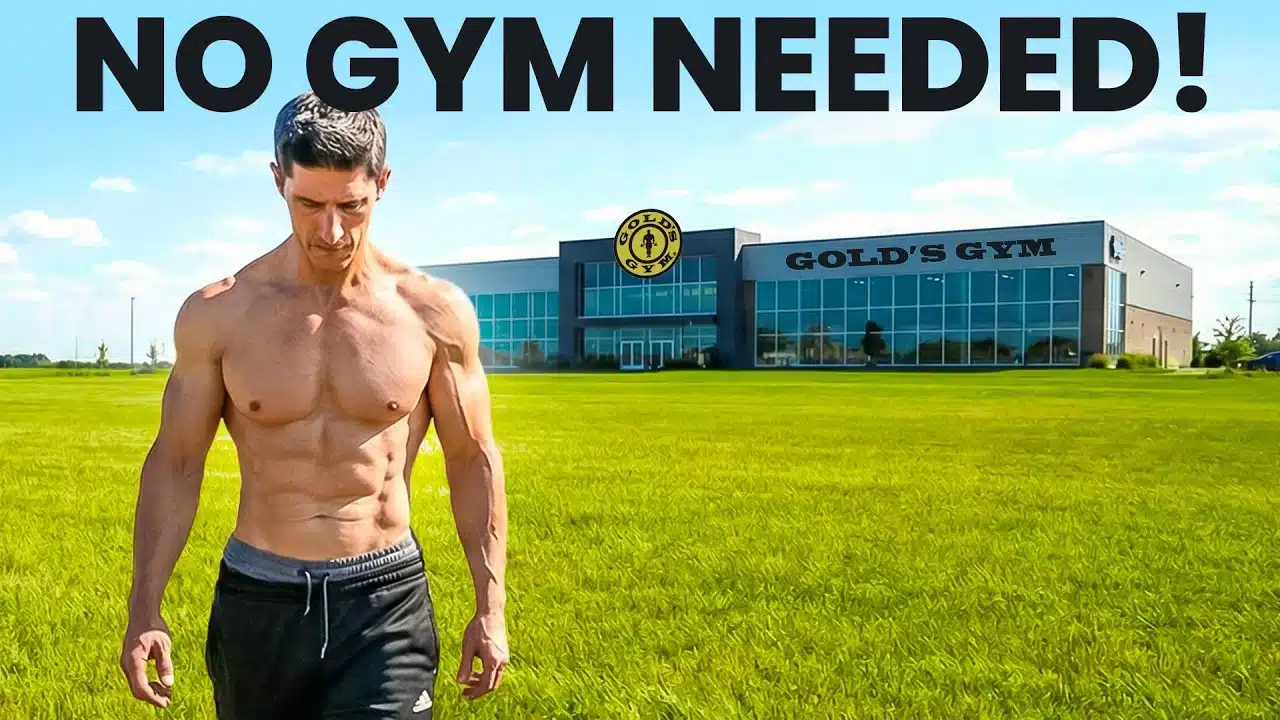
These aren’t your typical push-ups and sit-ups—they’re strategic movements designed to maximize tension and drive serious gains.
Whether you’re training at home or looking to add variety to your routine, these exercises deliver results without requiring a single dumbbell.
Jump to:
- The Human Pullover: A Lat-Building Game Changer
- Skater Squats: Single-Leg Strength Without Equipment
- Behind-the-Neck Chin-Ups: Maximum Bicep Activation
- Deficit Push-Ups: Intensifying a Classic Movement
- Slick Floor Bridge Curls: Posterior Chain Powerhouse
- Doorway Face Pulls: Upper Back Without Bands
- Bodyweight Dips: Full Upper Body Development
- Handstand Push-Ups: The Ultimate Shoulder Builder
- Hanging Leg Raises: Building Visible Abs
- Pull-Ups: The Undisputed Bodyweight King
- Programming Bodyweight Training for Maximum Growth
The Human Pullover: A Lat-Building Game Changer
Cavaliere kicks off his list with what he calls the “human pullover,” though he admits it could just as easily be called a “human straight arm pushdown.”
This exercise mimics the lat isolation you’d get from a cable machine by using relative motion—moving your body through space rather than your arms. The setup resembles a dragon flag, but with significantly less core involvement.
What I want you to do is push with your hands. Drive your hands into something fixed like this or anything that’s not going to move to allow yourselves to engage the lats.
By driving through fixed hands and powering through the lats, you lift your legs with minimal ab engagement. This creates the same arm adduction position that engages lats during traditional pulldowns, generating real overload and impressive growth potential.
Skater Squats: Single-Leg Strength Without Equipment
When it comes to building legs without weights, Cavaliere swears by the skater squat—a single-leg variation that immediately doubles the load on your working leg.
The arm positioning reduces balance demands while the slight forward lean equally targets quads, hamstrings, and glutes. Even better? Adding just a quarter of your bodyweight in each hand would equate to a 2x bodyweight squat.
Cavaliere recommends using a mat underneath for comfort when your rear knee touches down. This simple adjustment makes the movement sustainable for higher volume training while protecting your joints.
Behind-the-Neck Chin-Ups: Maximum Bicep Activation
Pull-up bars typically mean pull-ups or chin-ups, but Cavaliere has a different favorite for bicep development.
When it came to building my biceps as a kid, one of my favorite ways to do it was with an exercise called behind the neck chin-up.
Before dismissing this as shoulder-dangerous, understand that the forward elbow position—unlike behind-the-neck pulldowns—keeps shoulders completely protected. The unique positioning increases shoulder flexion at the top, which combines with elbow flexion and supination for superior bicep contraction.
His key technique tip? Slow down the negative portion to maximize elongation, stretch, and stress on the biceps during each repetition.
Deficit Push-Ups: Intensifying a Classic Movement
Regular push-ups too easy? Don’t abandon them—modify them instead.
Cavaliere uses stacked books or weight plates to create a deficit setup that increases range of motion. Lowering your chest past your hands creates significantly more stretch and tension on the pecs, driving greater gains from a simple bodyweight exercise.
Common mistakes to avoid:
- Creating the deficit but not utilizing the full range of motion
- Failing to touch your chest all the way down (if shoulder mobility allows)
- Short-arming the top position instead of reaching full extension
- Not progressing to harder variations when sets exceed 15 reps
The goal is finding a variation that limits you to 12-15 reps to failure, ensuring continued muscle-building stimulus.
Slick Floor Bridge Curls: Posterior Chain Powerhouse
This deceptively simple exercise requires nothing more than socks and a smooth floor—yet it brutally overloads hamstrings and glutes.
Starting in a full bridge position engages the glutes through hip extension. Extending legs outward loads the hamstrings eccentrically, while pulling back in creates that hamstring curl action in a closed-chain environment with feet maintaining ground contact.
Most people reach failure within eight to 10 reps, proving this movement’s effectiveness. Advanced variations include single-leg versions or alternating bicycle patterns for additional challenge.
Doorway Face Pulls: Upper Back Without Bands
No cables or resistance bands? No problem when you have a doorway.
Cavaliere’s creative solution involves placing the back of your hands against each side of a door frame, walking your feet through, and creating body angle for resistance. The farther you walk through, the more challenging the exercise becomes.
You push the back of your hands into the door frame and get that same feel that you get from that face pull with the high elbow position, that bicep flex position or opening of the elbows at 90°.
This variation hits rear delts, upper traps, and scapular muscles with the same effectiveness as traditional face pulls, making it perfect for home training environments.
Bodyweight Dips: Full Upper Body Development
Dips simultaneously target chest, shoulders, and triceps—but only when performed correctly.
The critical factor is shoulder positioning throughout the movement. Most people allow shoulders to ride up as they sink between bars, losing shoulder girdle stability and risking injury.
Proper dip technique:
- Set shoulder blades down at the top position
- Maintain that depression throughout the entire movement
- Only descend as far as you can while keeping shoulders stable
- Stop immediately if shoulders begin shrugging upward
Cavaliere recommends one-and-a-half reps to prolong time under tension in the stretched position, maximizing chest engagement without compromising shoulder health.
Handstand Push-Ups: The Ultimate Shoulder Builder
This challenging movement demands significant strength but delivers unparalleled shoulder development.
Wall-assisted handstand push-ups can be adjusted for difficulty based on body angle—steeper angles increase gravity’s resistance, while more moderate angles reduce it slightly. What makes this exercise special is the closed-chain loading that creates exceptional stability feedback through the shoulder girdle.
Though range of motion is somewhat limited, the heavy load and proprioceptive benefits compensate significantly. Advanced lifters can add deficit by placing plates under hands, though Cavaliere notes this isn’t necessary for excellent results.
Hanging Leg Raises: Building Visible Abs
Most ab exercises fail to create enough overload for actual muscle growth. Hanging leg raises solve this problem by using leg weight as resistance.
Bottom-up exercises where legs move through space generate sufficient tension for hypertrophy—crucial for making abs pop when body fat is low enough.
Make sure that whoever’s standing in front of you can see your ass. I know it sounds strange, but you need to make sure that you’re curling from the pelvis and actually engaging the abs.
This unconventional cue ensures proper pelvic curl and ab engagement rather than simply lifting legs with hip flexors. Visible glutes at the top means proper form—and actual abdominal development.
Pull-Ups: The Undisputed Bodyweight King
Cavaliere crowns pull-ups as the ultimate bodyweight exercise, and for good reason.
This compound movement builds back width, thickness, and arm strength simultaneously. For those struggling with pull-ups, Cavaliere has previously detailed progressions to go from zero to five pull-ups in just 22 days.
The key is avoiding common mistakes like kipping excessively, using momentum, or failing to achieve full range of motion. Proper pull-ups demand controlled negatives, dead hangs between reps, and complete chin-over-bar positions at the top.
Programming Bodyweight Training for Maximum Growth
Understanding individual exercises is one thing—programming them effectively is another entirely.
Cavaliere’s approach emphasizes finding variations that limit you to appropriate rep ranges for hypertrophy, typically 8-15 reps to failure. When exercises become too easy, progress to more challenging variations rather than simply adding endless reps.
The exercises above demonstrate that bodyweight training isn’t about limitation—it’s about creativity and proper execution. Each movement creates genuine overload through leverage, range of motion, or positioning adjustments that translate directly to muscle growth.
Whether you’re training at home by necessity or preference, these 10 exercises prove that significant muscle development doesn’t require expensive equipment. What it requires is intelligent exercise selection, proper form, and consistent progressive overload—all achievable with nothing more than your own bodyweight.










