

Deborah Moore has a message that might surprise you: getting stronger at 55 meant letting go of habits she thought were helping her.
The Canadian midlife fitness coach recently shared on Instagram that she’s now “the strongest I’ve ever been” – but only after quitting seven common fitness and nutrition practices.
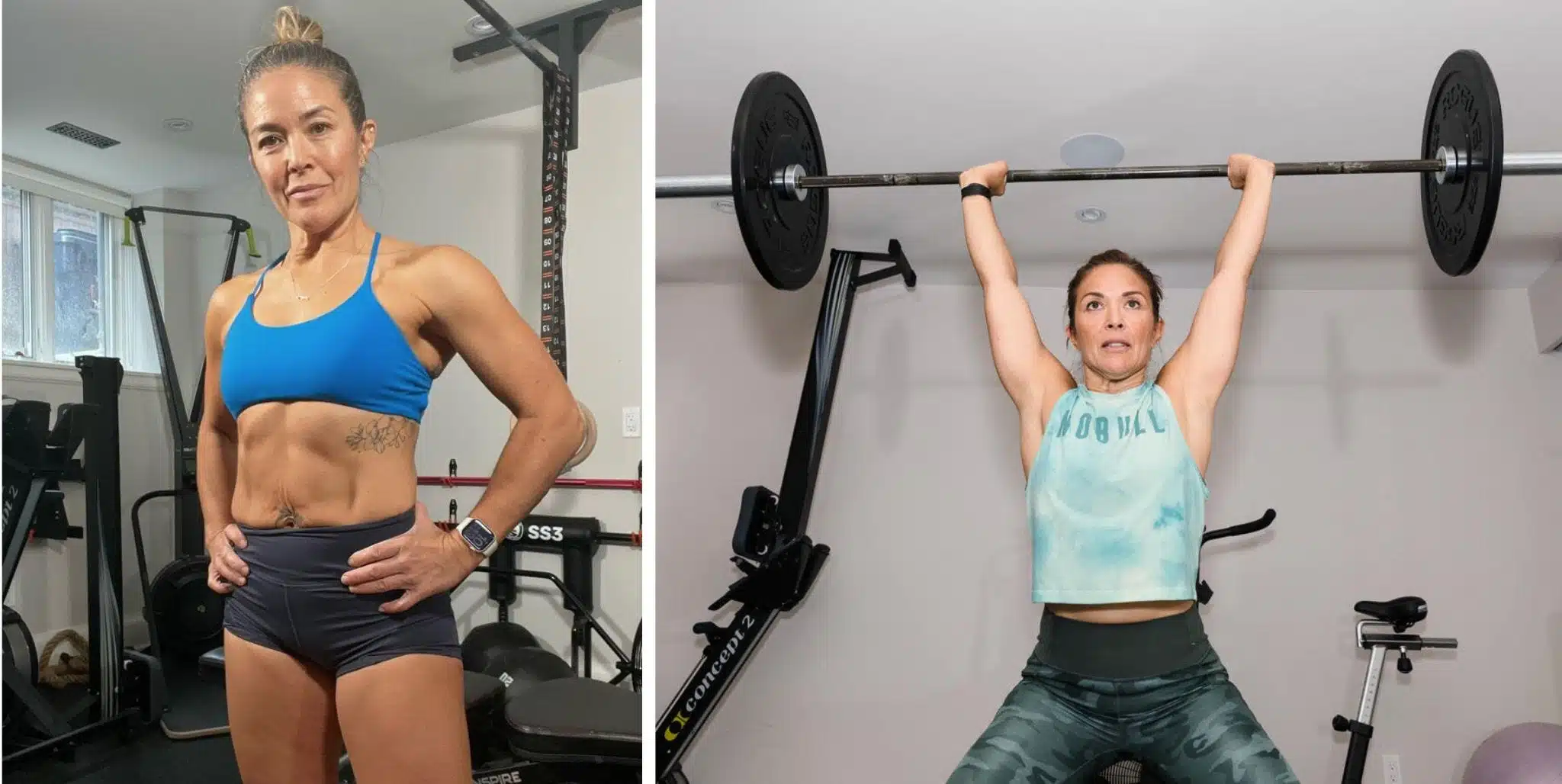
Her transformation wasn’t about adding more to her routine.
Instead, it required releasing outdated beliefs about exercise, food, and what a “healthy” body should look like.
Jump to:
From Restriction to Performance
Moore’s relationship with fitness wasn’t always empowering. For years, she struggled with restrictive eating patterns and tied her self-worth to clothing sizes.
I never saw myself getting this strong. I was doing all the things that many of you are likely doing – trying to eat as little as I could get away with and still get through my workouts. My value was attached to the size of the jeans that I fit into, and whether I was as skinny as the women I saw around me (which I never seemed to be).
Everything changed when she discovered CrossFit and picked up a barbell for the first time at 50.
Food was a minefield, and I never thought that I would break free of the body image prison that I had created for myself. Enter CrossFit and the barbell – life changed.
Whether it was reaching her fifties or simply exhaustion from negative self-talk, Moore made a pivotal decision: trust the process, trust food to nourish her body, and trust her body to perform.
The 7 Habits She Quit
1. Obsessing Over Body Weight and Body Fat Percentage
What she does instead: Moore focuses on how much weight she can move with a barbell.
At her lightest, she weighed under 120 pounds (54kg) with less than 15% body fat, wearing US size 0-2. Now she’s gained 10 pounds, increased body fat by 5%, and wears size 4-6 – but can lift over 100 pounds on the barbell.
2. Restricting Calories and Training Fasted
What she does instead: Eats approximately 2,300 calories daily with 155g of protein, occasionally tracking macros to fuel performance.
While fasted training does increase fat oxidation for fuel, fat loss ultimately depends on overall calorie deficit. Moore explains that fueling properly before workouts allows for greater intensity and longer duration, potentially burning more calories overall than half-hearted fasted efforts.
This increased intensity also provides greater benefits for building muscle tissue.
3. Fearing Heavy Weights
What she does instead: Pushes her limits by lifting super heavy – up to twice her body weight.
I stopped being afraid of lifting super heavy (as in 2x my body weight) and started pushing my limits, and I love it!
4. Worrying About Looking “Too Muscular”
What she does instead: Embraces building muscle without concern for societal expectations of how women “should” look.
5. Treating Food as Reward or Punishment
What she does instead: Views food as energy and nourishment for both body and mind, removing emotional attachment from eating decisions.
6. Chasing Quick Fixes
What she does instead: Commits to long-term consistency rather than pursuing short-term goals like achieving a “summer beach body.”
Moore trusts the process and understands that sustainable results require patience.
7. Seeking Validation Through Appearance
What she does instead: Derives validation from consistency and measurable progress in strength and performance.
Clothing sizes and external appearance no longer define her self-worth.
What She Can Do Now That She Couldn’t in Her 30s
Moore’s shift in mindset delivered remarkable physical results. At 55, she can perform feats she never achieved in younger decades.
It wasn’t an overnight 180, but over the next couple of years being part of this community helped me to see that the way my body performed was so much more important than how it looked.
Her current capabilities include:
- Deadlift twice her body weight and squat 1.4 times her body weight
- Execute Olympic lifts like clean and jerk
- Perform advanced gymnastics movements including toes-to-bar and chin-ups
- Complete weighted pull-ups (she couldn’t do a single unweighted pull-up in her 30s)
- Push a 335-pound (152kg) sled
- Walk on her hands
- Stand tall and genuinely love her body
The Biggest Mindset Shift
Moore credits CrossFit with transforming not just her physical capabilities, but her entire relationship with fitness and self-image.
To say that my self-confidence, my attitude towards my body, and my nutrition had been a bit of a mess for pretty much my whole adult life is an understatement.
The transition from prioritizing skinny to prioritizing strong represents her single most significant mental transformation. This wasn’t instantaneous – it developed gradually over several years within a supportive fitness community.
Perhaps most telling is Moore’s reflection on her appearance.
The funny thing is, I think I look better now having let go of all of these ridiculous rules for myself. But one thing is clear: being strong (vs skinny) has been the single biggest mindset shift for me, but it was a real learning process.
For women navigating midlife fitness, Moore’s story offers valuable perspective. Strength training doesn’t just build muscle – it can rebuild confidence, reshape self-image, and redefine what health means.
Her journey demonstrates that sometimes the most powerful fitness transformation comes not from doing more, but from letting go of limiting beliefs that no longer serve you.










