Most lifters still aren’t eating enough protein to maximize muscle growth, despite what popular recommendations suggest.
That’s according to recent analysis of the scientific literature, which challenges the long-held belief that 1.6 grams of protein per kilogram of body weight represents an upper limit.
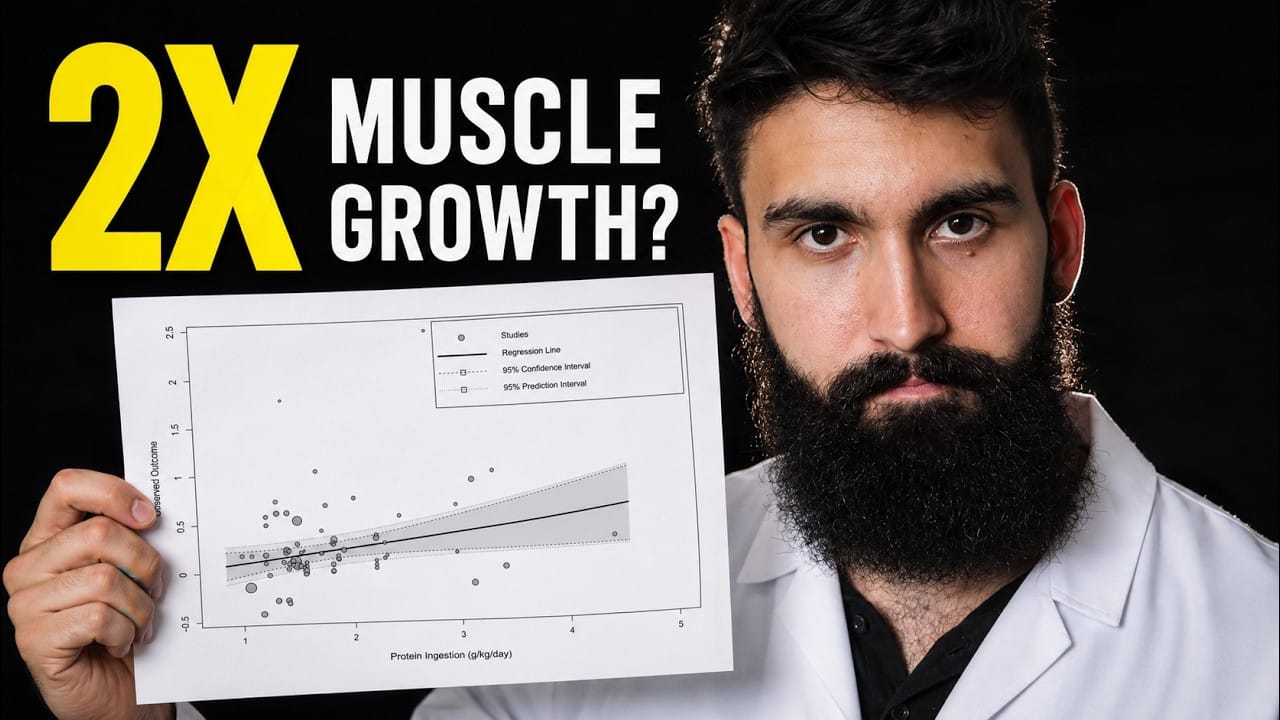
In fact, newer research suggests lifters might need significantly more—closer to 2.35 grams per kilogram for men and 2.05 grams per kilogram for women as a minimum for optimization.
And if you’re cutting? Those numbers might need to climb even higher.
Jump to:
Why The Old 1.6g Recommendation Refuses To Die
The original recommendation of 1.6 grams per kilogram came from a widely-cited 2017-2018 meta-analysis by Morton and colleagues. This paper included prominent protein researchers like Stu Phillips and Eric Helms, eventually garnering over a thousand citations—a massive achievement in research terms.
That widespread influence turned 1.6 grams into gospel for coaches and lifters worldwide. But here’s the problem: when a recommendation becomes that entrenched, new data struggles to change minds, even when it directly contradicts earlier findings.
No products found.
Even if new data comes out, it is surprisingly difficult for people to change their mind.
The Morton meta-analysis had significant limitations. The breakpoint analysis showing no benefit above 1.6 grams was exploratory—conducted after the fact—and wasn’t even statistically significant by the researchers’ own framework.
Three Meta-Analyses That Changed Everything
Since Morton’s paper, three separate meta-analyses have challenged the 1.6-gram ceiling, each incorporating more recent studies and larger datasets.
The Tagawa Analysis: More Studies, Different Conclusions
Published in 2020, Tagawa and colleagues conducted a meta-analysis with more studies than Morton’s. When controlling for calorie status (cutting versus bulking) and including only studies with strength training participants, they found benefits above 1.6 grams per kilogram.
This matters because meta-analyses improve with recency. Later analyses include all previous studies plus newly published research, adding statistical power and better conclusions.
The Nunes Study: Multiple Approaches, Same Result
Another meta-analysis by Nunes and colleagues took different statistical approaches to analyzing protein intake. Whether categorizing intakes as low (below 1.2g), medium (1.2-1.6g), or high (above 1.6g), or using meta-regression analysis, the finding remained consistent.
Going above 1.6 grams improved hypertrophy.
No products found.
The Rafalo Research: Protein During Cuts
Rafalo and colleagues examined protein’s effects on lean body mass during calorie deficits. Not only did they find more protein was better, but the effect was magnified during cuts.
Their analysis showed 97-99% probability that consuming an extra gram per kilogram enhanced lean mass gains, even above 1-2 grams per kilogram. Leaner individuals—men below 12% body fat and women below 19%—benefited even more.
The benefit was even larger in people in a deficit.
The New Numbers: What Science Actually Supports
After reviewing randomized controlled trials and indicator amino acid oxidation studies, researcher Greg Knuckles at Stronger by Science identified tentative breakpoints based on current evidence:
- Men: 2.35 grams of protein per kilogram of body weight
- Women: 2.05 grams of protein per kilogram of body weight
These represent minimum recommendations for optimizing muscle growth, not confirmed ceilings. There’s limited research above these amounts, so higher intakes might provide additional benefits—science simply hasn’t tested thoroughly enough yet.
Practical Protein Ranges
To maximize hypertrophy without obsessing over every gram:
- Men maintaining or bulking: 2.35-3.0 grams per kilogram
- Men cutting: Aim toward 3.0 grams per kilogram or slightly above
- Women maintaining or bulking: 2.05-2.6 grams per kilogram
- Women cutting: Closer to 2.6 grams per kilogram or higher
During cuts, protein becomes increasingly critical for preserving muscle mass. That’s when higher intakes matter most.
No products found.
Why 1.6 Grams Still Has Its Place
Claiming 1.6 grams is a confirmed ceiling contradicts recent comprehensive research. However, context matters tremendously here.
For casual lifters prioritizing convenience, budget, or environmental concerns, 1.6 grams per kilogram produces solid results. You can build muscle effectively at this intake—just not optimally.
Training variables matter significantly more than perfect protein intake. Training harder, including more stretch-biased exercises, and managing training volume will impact muscle growth far more than the difference between 1.6 and 2.35 grams per kilogram.
I think 1.6 grams of protein is still a good recommendation for some lifters, for the more casual lifters, for some hypertrophy, but to say that 1.6 is the ceiling is simply not accurate.
Getting extra protein requires effort, expense, and can displace other important nutrients. Those trade-offs don’t make sense for everyone.
How To Actually Hit These Protein Targets
Distribution matters almost as much as total intake. Aim for at least three protein-containing meals spread throughout your waking hours.
The Three-Meal Framework
- Morning: Include protein as early as possible—most people under-consume at breakfast. Add a protein shake if needed.
- Midday: Have another protein-rich meal around halfway through your waking hours.
- Evening: Consume protein as close to bedtime as practical.
If you’re consuming 180 grams daily, split that into three 60-gram servings at breakfast, lunch, and dinner. Add snacks around workouts if convenient, but if you train within 2-4 hours of a meal, you’re covered from a timing perspective.
No products found.
The infamous “anabolic window” becomes largely irrelevant when you’re eating protein regularly throughout the day.
The Bottom Line On Protein For Lifters
Science evolves, and recommendations should evolve with it. Multiple recent meta-analyses consistently show benefits beyond 1.6 grams per kilogram, particularly for dedicated lifters and especially during cuts.
For optimization: Men should target 2.35+ grams per kilogram, women 2.05+ grams per kilogram, with increases during calorie deficits.
For solid results with flexibility: 1.6 grams per kilogram remains perfectly reasonable for casual lifters.
Protein stands out as one of the few nutrition variables that genuinely impacts hypertrophy in dose-dependent fashion. Carbohydrate and fat ratios matter far less, as long as minimum thresholds are met.
As a scientist, we have to be open to changing our minds.
The research is clear: most serious lifters benefit from consuming more protein than conventional wisdom suggests. Whether that trade-off makes sense depends entirely on individual goals, resources, and priorities.
No products found.