Olympic triathlon champion Kristian Blummenfelt recorded a VO2 max of 101—the highest value ever measured in a human being.
But that achievement required elite genetics, decades of training, and up to 30 hours of exercise every week.
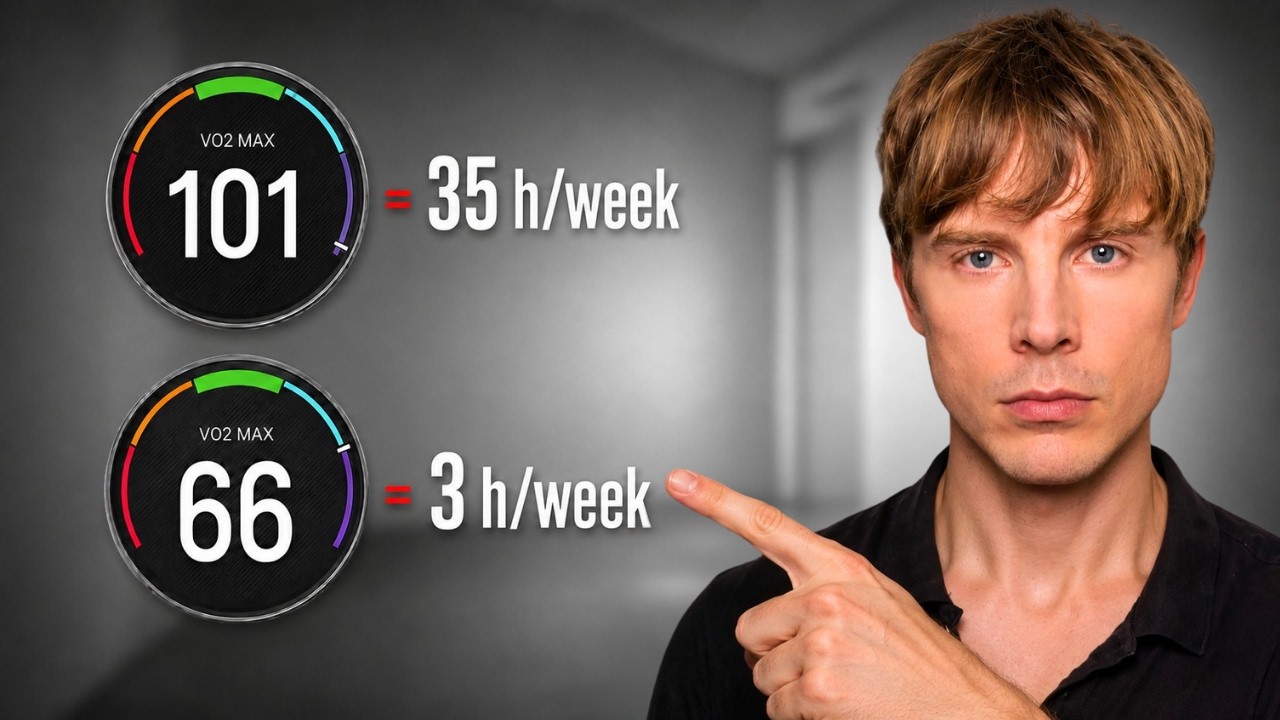
And even that pales in comparison to an Alaskan sled dog, whose VO2 max soars above 200 from pulling sleds for hours daily.
The good news? You don’t need those extremes to reap the longevity and heart disease benefits—research suggests a VO2 max of 50 is probably good enough, and one fitness enthusiast recently shared how he increased his from 53 to 66 in just months without overtraining.
Jump to:
- The 25% Improvement That Didn’t Require Superhuman Effort
- Understanding What Your VO2 Max Score Actually Means
- Why VO2 Max Isn’t As Genetic As You Think
- The Interval Versus Endurance Debate: What Science Actually Shows
- Training Frequency: More Sessions Equal Better Results (To a Point)
- The Exact Protocol That Delivered a 25% VO2 Max Increase
- The 40% Non-Responder Myth Debunked
- Your Roadmap Based on Current Fitness Level
- The Weekend Warrior Protocol: Same Results, Half the Frequency
- The Optimal Weekly Training Split
- Interval Length Matters More Than You Think
- Sprint Intervals: The Beginner-Friendly Alternative
- Why Zone Two Still Matters for Maximum Gains
- Your Complete VO2 Max Training Protocol
- Progression Strategy: When to Add Volume Versus Intensity
- The Real Secret: Choose Something You’ll Actually Stick With
The 25% Improvement That Didn’t Require Superhuman Effort
This wasn’t a case of cardio at all costs. The individual continued resistance training throughout the process while strategically incorporating cardiovascular work.
The improvement—approximately 25%—was confirmed by lab testing, not smartwatch estimates. This distinction matters because wearable devices often provide inaccurate readings.

If you want something simple that actually works, this is one of the most effective tools I’ve used to build strength, conditioning, and endurance without needing a full gym setup.
- Full-body training with one weight using swings, squats, and presses
- Solid cast iron build that feels stable and lasts for years
- Comfortable grip that makes high-rep workouts easier to handle
Understanding What Your VO2 Max Score Actually Means
There’s no universal perfect score because VO2 max depends heavily on age and sex. As a simplified reference for younger and middle-aged men, above 60 is generally considered elite.
Around 50 is excellent, while approximately 40 can be good depending on age. Below 30 is generally poor for younger adults.
Women generally have population reference values about 10 to 15% lower. VO2 max also declines with age, and values approaching 20 to 25 represent the minimum aerobic capacity needed for independent living, particularly in older adults.
Why VO2 Max Isn’t As Genetic As You Think
VO2 max depends on three main systems: heart’s ability to pump blood, blood’s ability to transport oxygen, and muscles’ ability to extract and use that oxygen.
If you’re currently unfit, doing almost anything that repeatedly increases heart rate can improve these systems. Research has found that resistance training can produce modest improvements in VO2 max, particularly in older or previously untrained people.
For older individuals, resistance training works if VO2 max is below 25. For younger people, it’s effective below 40.
If you want something simple that actually works, this is one of the most effective tools I’ve used to build strength, conditioning, and endurance without needing a full gym setup.
- Full-body training with one weight using swings, squats, and presses
- Solid cast iron build that feels stable and lasts for years
- Comfortable grip that makes high-rep workouts easier to handle
But as fitness improves, some form of cardiovascular exercise becomes necessary because resistance training alone won’t be enough.
The Interval Versus Endurance Debate: What Science Actually Shows
Research shows that both low-intensity cardio and high-intensity interval training increase VO2 max. However, in the short term, high-intensity interval training does so more effectively.
Low-intensity cardio refers to zone two of max heart rate or below—less than 70% of maximum heart rate. High-intensity training is usually zone four and five, over 80% of max heart rate.
A recent meta-analysis revealed something fascinating: over longer training periods of 10 to 15 weeks, low-intensity endurance training continued improving steadily, and overall VO2 max gains were ultimately similar to high-intensity training.
Sprint Training Plateaus Faster Than You’d Expect
The same analysis found that in the first few weeks, sprint interval training outperforms even high-intensity interval training. However, benefits plateau after 10 weeks, after which HIIT becomes more effective.
In the ultra-long term, traditional endurance training catches up and might even be superior.
If you want something simple that actually works, this is one of the most effective tools I’ve used to build strength, conditioning, and endurance without needing a full gym setup.
- Full-body training with one weight using swings, squats, and presses
- Solid cast iron build that feels stable and lasts for years
- Comfortable grip that makes high-rep workouts easier to handle
The takeaway? Intervals work faster, but aerobic volume keeps working over longer periods.
Training Frequency: More Sessions Equal Better Results (To a Point)
Six weekly sessions produce larger VO2 max and mitochondrial gains than four, but four outperforms two sessions.
The problem is that frequency partly reflects total volume. More sessions simply mean more accumulated training hours.
Total weekly volume matters most. You don’t necessarily need six days per week—the practical target is enough weekly work distributed across sessions you can recover from.
The Exact Protocol That Delivered a 25% VO2 Max Increase
The individual who increased his VO2 max from 53 to 66 followed this simple plan:
- Three days per week: Resistance training focused on strength, no cardiovascular effect
- Two to three times per week: Zone two cardio for 50 to 60 minutes
- Once per week: Intense intervals, mostly two to four-minute intervals at near-maximum intensity for three to four rounds
This protocol worked because he was already relatively fit. As the meta-analysis suggested, advanced trainees become more dependent on regular zone two cardio rather than short interval training.
If you want something simple that actually works, this is one of the most effective tools I’ve used to build strength, conditioning, and endurance without needing a full gym setup.
- Full-body training with one weight using swings, squats, and presses
- Solid cast iron build that feels stable and lasts for years
- Comfortable grip that makes high-rep workouts easier to handle
I increased my VO2 max from 53 to 66 by mostly doing low-intensity zone two cardiovascular exercise, and I did minimal types of high-intensity exercise.
The 40% Non-Responder Myth Debunked
You might have heard that about 40% of people don’t respond to low-intensity exercise and therefore need high-intensity training.
While some studies show many people don’t see improvements on standardized programs, increasing weekly training volume makes almost every non-responder start responding.
You don’t always need to increase training intensity. Just increase training volume.
This matters because low-intensity training has a lower barrier to entry. Most people aren’t prepared to do all-out intervals, but zone two cardio is relatively effortless.
Your Roadmap Based on Current Fitness Level
If Your VO2 Max Is Below 40
Keep lifting weights and walking to improve general fitness. Aim for up to 10,000 steps daily while lifting weights a few times weekly.
If Your VO2 Max Is 40 to 50
Add aerobic exercise. Start with zone two cardio because it’s low intensity, whereas resistance training is already high intensity.
If you want something simple that actually works, this is one of the most effective tools I’ve used to build strength, conditioning, and endurance without needing a full gym setup.
- Full-body training with one weight using swings, squats, and presses
- Solid cast iron build that feels stable and lasts for years
- Comfortable grip that makes high-rep workouts easier to handle
If Your VO2 Max Is 50 to 60
You need a mix of zone two cardio and either HIIT or sprint interval training. Both work with slight nuances in application.
If Your VO2 Max Is Above 60
Increase total volume of cardio training. More intervals, more zone two—total weekly volume becomes the key variable.
The Weekend Warrior Protocol: Same Results, Half the Frequency
An interesting recent study found you can get equal VO2 max adaptations training only twice weekly—if you train twice as long on those workout days.
One group trained four times weekly: two sessions of 35 minutes continuous cardio at 80% max heart rate, plus two HIIT sessions with four-minute intervals at 95% max heart rate.
The weekend warrior group followed the same plan but compressed everything into two days: one day of 70 minutes continuous cardio at 80%, and one day of HIIT with eight four-minute intervals at 95%.
Both groups achieved identical results.
If you want something simple that actually works, this is one of the most effective tools I’ve used to build strength, conditioning, and endurance without needing a full gym setup.
- Full-body training with one weight using swings, squats, and presses
- Solid cast iron build that feels stable and lasts for years
- Comfortable grip that makes high-rep workouts easier to handle
This discovery has implications: you can compress workouts into one or two days, but you must do twice the volume.
The Optimal Weekly Training Split
Realistically, aim for 70 minutes of zone two cardio weekly, ideally in one session. If doing 120 minutes, split into two sessions.
Zone two works best in slightly longer sessions rather than 20 to 30 minutes. Add 30 minutes of high-intensity interval training, either in one session or multiple sessions.
Because intensity is higher, you can divide HIIT into two sessions, but one session is also time-efficient.
Interval Length Matters More Than You Think
A 2019 meta-analysis of 53 studies showed all intervals—even short ones under 30 seconds—are effective. However, for maximum benefits, longer intervals lasting over two minutes, done for over 15 minutes total, and performed for 4 to 12 weeks are superior.
Translation: longer intervals, more total interval time, over longer training periods.
If you want something simple that actually works, this is one of the most effective tools I’ve used to build strength, conditioning, and endurance without needing a full gym setup.
- Full-body training with one weight using swings, squats, and presses
- Solid cast iron build that feels stable and lasts for years
- Comfortable grip that makes high-rep workouts easier to handle
The Norwegian 4×4 Method: Brutal But Effective
One popular HIIT method is the Norwegian 4×4: four-minute intervals at 85 to 95% max heart rate, repeated four times with three to four minutes low-intensity rest between rounds.
Total workout time is 32 minutes.
A 2016 randomized trial on overweight and obese individuals showed this protocol was superior to both ten one-minute HIIT intervals and 45 minutes of moderate continuous training for increasing VO2 max over six weeks.
However, it’s also the most brutal protocol. Beginners shouldn’t start here—save the hardest training for when VO2 max is already high, perhaps above 55.
Sprint Intervals: The Beginner-Friendly Alternative
If you’re starting out, try sprint interval training instead. It’s shorter and still effective, though not as powerful as longer intervals.
A 2017 meta-analysis found that two to three all-out 20-second sprints may be enough to increase VO2 max. Four to seven sprints could be excessive as long as sprints are truly all-out.
If you want something simple that actually works, this is one of the most effective tools I’ve used to build strength, conditioning, and endurance without needing a full gym setup.
- Full-body training with one weight using swings, squats, and presses
- Solid cast iron build that feels stable and lasts for years
- Comfortable grip that makes high-rep workouts easier to handle
More sprints increase fatigue but may provide diminishing returns.
Why Zone Two Still Matters for Maximum Gains
Zone two allows you to accumulate much more aerobic volume with less fatigue. Recovery is faster while still building mitochondrial capacity.
Benefits of low-intensity cardio appear mostly after 10-plus weeks of training. If your goal is truly maximizing VO2 max, zone two should be part of your strategy.
You don’t need zone two to reach a VO2 max of 50, but you’ll likely need it to push beyond that threshold.
Your Complete VO2 Max Training Protocol
Based on all available research, here’s a realistic protocol:
Aim for two to three cardio sessions weekly: one harder, two lighter and easier.
If you want something simple that actually works, this is one of the most effective tools I’ve used to build strength, conditioning, and endurance without needing a full gym setup.
- Full-body training with one weight using swings, squats, and presses
- Solid cast iron build that feels stable and lasts for years
- Comfortable grip that makes high-rep workouts easier to handle
Session One and Two: Zone Two Foundation
Perform 50 to 60 minutes of zone two twice weekly. Jog, cycle, row, or walk uphill. Keep pace conversational at approximately 60 to 70% maximum heart rate.
Session Three: Interval Work
Perform one interval workout weekly.
If you’re unfit and beginning: Start with three 20-second all-out sprints once weekly.
If you’re already fit: Do the 4×4 Norwegian protocol. You can also start with four rounds of two-minute intervals at 85 to 95% max heart rate, but progress toward four-minute intervals over time.
In the classic Norwegian study, the 4 by 4 method increased VO2 max by 7.2% in 8 weeks.
Progression Strategy: When to Add Volume Versus Intensity
Follow this protocol for 8 to 12 weeks. If progress slows, don’t automatically increase intensity or add more high-intensity exercise.
Instead, try more volume with low-intensity exercise first. High-intensity work requires more recovery time, which can actually slow progress.
If you want something simple that actually works, this is one of the most effective tools I’ve used to build strength, conditioning, and endurance without needing a full gym setup.
- Full-body training with one weight using swings, squats, and presses
- Solid cast iron build that feels stable and lasts for years
- Comfortable grip that makes high-rep workouts easier to handle
Low-intensity exercise basically requires no recovery.
If doing shorter intervals, increase length. Progress from 20-second sprints to two-minute intervals, then to four-minute intervals for the full Norwegian 4×4.
The Real Secret: Choose Something You’ll Actually Stick With
Most people fail because they can’t choose a routine they’ll maintain long-term.
Yes, there are multiple ways to increase VO2 max. Different cardio sessions work—it doesn’t have to be exactly 4×4 or exactly sprint intervals.
The main idea is to elevate heart rate consistently with a mix of zone two and high-intensity exercise.
You don’t need a VO2 max of 101, or even 60. But ideally, aim to get above 50 and maintain it as long as possible, because VO2 max declines with age—and declines even faster when you stop training it.
If you want something simple that actually works, this is one of the most effective tools I’ve used to build strength, conditioning, and endurance without needing a full gym setup.
- Full-body training with one weight using swings, squats, and presses
- Solid cast iron build that feels stable and lasts for years
- Comfortable grip that makes high-rep workouts easier to handle